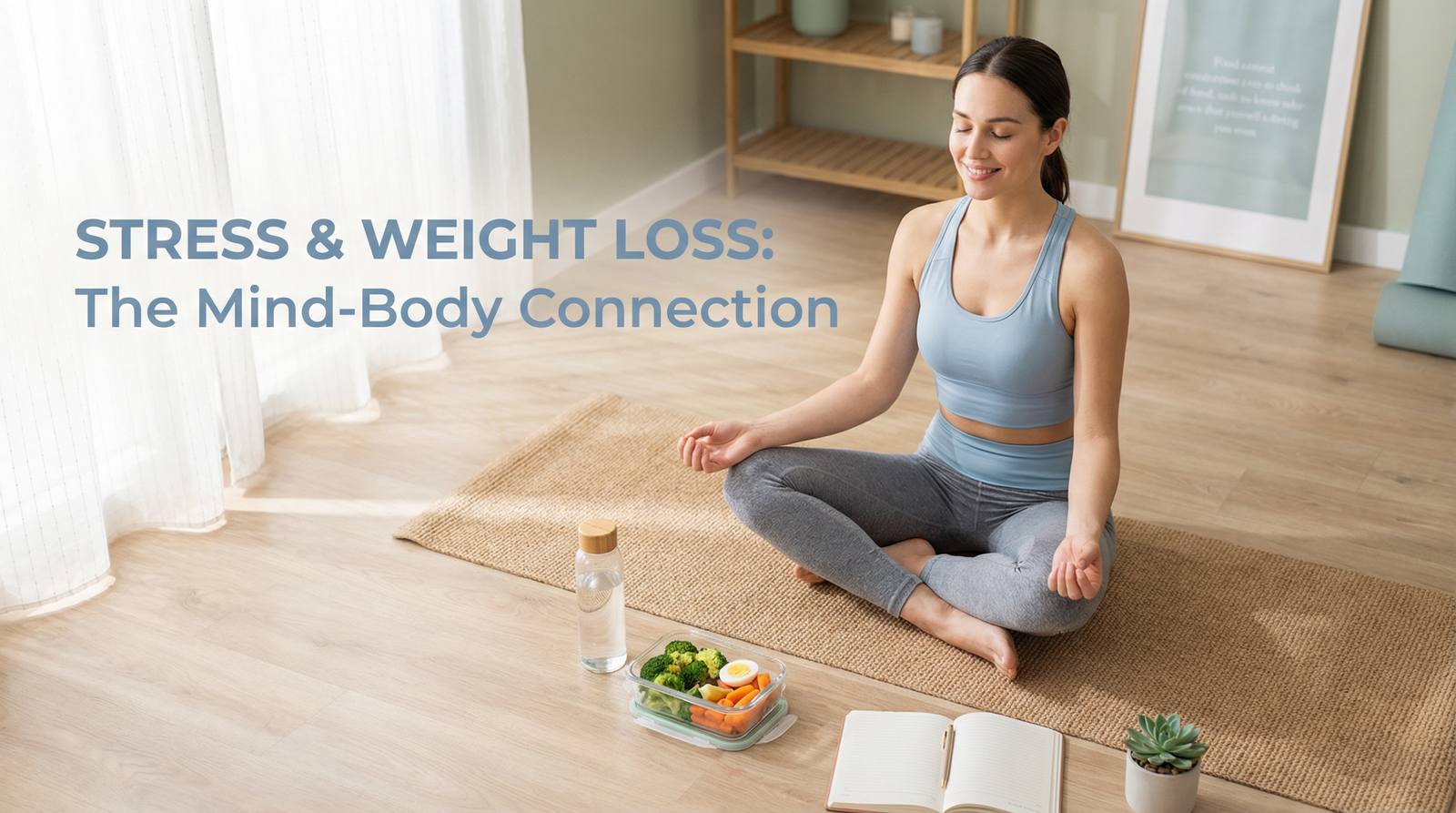

For decades, the weight loss narrative has been dominated by a seemingly simple equation: eat less, move more. While the principles of calorie balance and physical activity remain fundamental, this perspective often overlooks a powerful and insidious saboteur of our best intentions: stress. In our fast-paced, high-pressure world, chronic stress has become a silent epidemic, and its physiological consequences can directly undermine even the most disciplined diet and exercise plans.
Understanding the intricate connection between your mind and your metabolism is not just an interesting biological footnote; it is the missing piece of the puzzle for millions who struggle to achieve and maintain a healthy weight. This article explores the science behind how stress impacts weight, moving beyond hype to provide evidence-based strategies for managing it effectively. By learning to address the root cause, you can unlock a more sustainable and compassionate path to your weight loss goals.
The Science of Stress: How Cortisol Derails Weight Loss
When you experience stress, your body initiates a primal cascade of hormonal responses known as the “fight-or-flight” mechanism. This system, while brilliant for evading acute threats, is ill-equipped for the chronic, low-grade stressors of modern life, such as work deadlines, financial worries, and traffic jams. The primary hormone involved in this long-term stress response is cortisol.
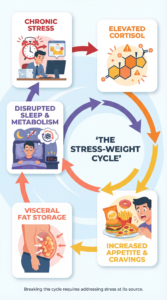
Under normal circumstances, cortisol helps regulate energy, reduce inflammation, and manage blood sugar levels. However, when stress becomes chronic, cortisol levels remain persistently elevated, leading to a host of metabolic disruptions that actively promote weight gain.
1. Increased Appetite and Cravings
Elevated cortisol has been shown to significantly increase appetite, particularly for foods that are high in fat, sugar, and salt . This isn’t a simple failure of willpower. Stress triggers the release of dopamine, a neurotransmitter associated with pleasure and reward, which makes these hyper-palatable foods seem far more appealing. Your brain is essentially seeking a quick, easy source of energy and comfort to deal with the perceived threat, creating a powerful biological drive to reach for calorie-dense options.
2. Promotion of Visceral Fat Storage
Perhaps most concerning is where the body chooses to store this excess energy. Chronic high cortisol levels are strongly linked to an increase in visceral fat—the deep abdominal fat that surrounds your vital organs . This type of fat is metabolically active and far more dangerous than subcutaneous fat (the fat just under the skin). Visceral fat is a major risk factor for serious health conditions, including type 2 diabetes, cardiovascular disease, and certain cancers.
3. Disrupted Metabolism and Sleep
Chronic stress can slow down your overall metabolic rate, meaning you burn fewer calories at rest. Furthermore, the stress-cortisol cycle is deeply intertwined with sleep. Elevated cortisol levels can disrupt sleep patterns, and poor sleep, in turn, further increases cortisol, creating a vicious cycle . Sleep deprivation also dysregulates the hormones that control hunger and satiety—ghrelin (the “hunger hormone”) increases, while leptin (the “fullness hormone”) decreases, leading to increased hunger and calorie consumption the following day.
Emotional Eating vs. Physical Hunger: Know the Difference
One of the most common behavioral outcomes of stress is emotional eating—using food to soothe, numb, or distract from uncomfortable feelings. Learning to distinguish between emotional hunger and true physical hunger is a critical first step in breaking the cycle.
|
Feature
|
Physical Hunger
|
Emotional Hunger
|
|
Onset
|
Develops gradually over time
|
Comes on suddenly and feels urgent
|
|
Food Craving
|
Open to a variety of food options
|
Craves specific, often unhealthy, comfort foods
|
|
Sensation
|
Felt in the stomach (growling, emptiness)
|
Felt as a craving in the head or mouth
|
|
Mindfulness
|
You are aware of what and how much you are eating
|
Often mindless, eating without awareness or enjoyment
|
|
Satisfaction
|
Stops when you are full
|
Doesn’t stop with fullness; may lead to overeating
|
|
Feeling After
|
Neutral or satisfied
|
Often followed by feelings of guilt, shame, or regret
|
Evidence-Based Strategies for Managing Stress
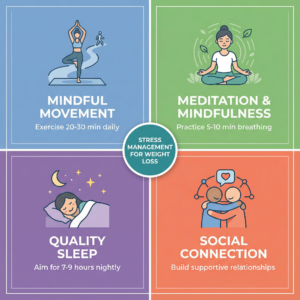
Because stress is a physiological response, it requires a physiological solution. The following strategies are evidence-based approaches to lower cortisol, regulate your nervous system, and build resilience against stress.
1. Embrace Mindful Movement and Exercise
Physical activity is arguably the most powerful tool for combating stress. Exercise helps metabolize excess stress hormones and boosts the production of endorphins, the brain’s natural mood elevators and painkillers .
“Exercise improves your health and sense of well-being, which gives you more energy every day. Exercise also has some clear benefits to relieve your stress.” – Mayo Clinic
•Find Joy in Movement: You don’t need to engage in grueling workouts. Activities like brisk walking, dancing, swimming, cycling, or yoga are highly effective. The key is consistency and enjoyment.
•Practice “Meditation in Motion”: Focus on the physical sensations of your body as you move—the rhythm of your breath, the feeling of your feet on the ground. This helps anchor you in the present moment and quiet a racing mind.
•Schedule It: Treat your exercise time as a non-negotiable appointment with yourself. Even 20-30 minutes most days of the week can make a profound difference.
2. Cultivate a Mindfulness and Meditation Practice
Mindfulness is the practice of paying attention to the present moment without judgment. Research has shown that mindfulness interventions can significantly reduce cortisol levels and decrease stress-related eating, particularly in individuals with obesity .
•Start with Your Breath: Find a quiet place and set a timer for just five minutes. Close your eyes and bring your full attention to the sensation of your breath entering and leaving your body. When your mind wanders, gently guide it back to your breath. This simple practice trains your brain to disengage from stressful thought patterns.
•Use Guided Meditations: Apps like Calm, Headspace, or even free resources on YouTube offer thousands of guided meditations for stress reduction.
3. Prioritize High-Quality Sleep
Sleep is not a luxury; it is a biological necessity for stress regulation and metabolic health. Aim for 7-9 hours of quality sleep per night.
•Create a Relaxing Bedtime Routine: An hour before bed, dim the lights and disengage from screens (phones, TVs, computers). The blue light from these devices can suppress melatonin production, the hormone that signals your body it’s time to sleep.
•Optimize Your Sleep Environment: Keep your bedroom dark, quiet, and cool.
•Avoid Stimulants: Refrain from caffeine and alcohol in the hours leading up to bedtime.
4. Build Strong Social Connections
Meaningful social connection is a powerful buffer against stress. Sharing your feelings with trusted friends, family, or a therapist can provide perspective and reduce feelings of isolation. Make time for people who uplift you and make you feel understood.
Conclusion: A Holistic Path to a Healthier You
The journey to sustainable weight loss is about more than just what you eat or how much you exercise; it’s about cultivating a lifestyle that supports your overall well-being. Chronic stress is a formidable barrier to this goal, working against your biology and your best efforts. By acknowledging its impact and integrating evidence-based stress management techniques into your daily life, you are not just adding another task to your to-do list—you are addressing the root cause of metabolic dysfunction.
Embracing practices like mindful movement, meditation, quality sleep, and social connection will not only help you manage your weight but will also enhance your mood, improve your health, and build a foundation of resilience that will serve you for a lifetime. It’s time to move beyond the restrictive mindset of dieting and embrace a more holistic, compassionate, and ultimately more effective approach to becoming your healthiest self.
References