

Introduction: The Maintenance Paradox
For decades, the weight loss narrative has been dominated by a deceptively simple mantra: eat less, move more. Millions embark on this journey, achieving remarkable short-term success through sheer willpower and discipline. Yet, an estimated 80% of individuals who successfully lose weight will regain it, often with more, within one to two years . This frustrating phenomenon, known as the “yo-yo effect,” points to a fundamental flaw in the conventional approach. It suggests that the battle for weight loss is not won at the dinner table or in the gym alone, but in the quiet, consistent practice of self-care.
Sustainable weight management is not a war to be waged against the body, but a partnership to be nurtured with it. This article explores the critical, evidence-based connection between self-care and long-term weight loss maintenance. We will delve into the science of how practices like stress management and adequate sleep directly influence the physiological and psychological drivers of weight regain, and provide actionable strategies for integrating self-care into your daily life to finally break the cycle.
The Science of Self-Care: How Stress and Sleep Sabotage Your Success
Weight regain is not a moral failing or a lack of discipline; it is often a predictable biological response to the physiological stress of dieting. The body’s primary objective is survival, and it perceives significant calorie restriction as a threat, triggering a cascade of hormonal and metabolic defenses designed to restore lost weight. Self-care practices directly counteract these defenses.
The Cortisol Connection: How Stress Drives Weight Gain
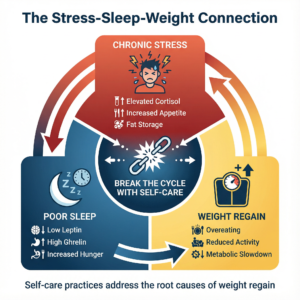
Chronic stress is arguably the most potent saboteur of weight loss maintenance. When the body is under constant stress—whether from work, personal life, or even the psychological pressure of restrictive dieting—it overproduces the hormone cortisol. While essential in short bursts for the “fight-or-flight” response, chronically elevated cortisol levels create a perfect storm for weight regain.
1.Increased Appetite and Cravings: Cortisol directly stimulates appetite, particularly for high-fat, high-sugar “comfort foods.” It disrupts the brain’s reward system, making these foods more appealing and harder to resist.
2.Visceral Fat Storage: Cortisol promotes the storage of fat deep within the abdominal cavity, known as visceral fat. This type of fat is metabolically active and strongly linked to insulin resistance, type 2 diabetes, and cardiovascular disease.
3.Metabolic Slowdown: Chronic stress can interfere with thyroid function and slow down metabolism, making it easier to regain weight even on a reduced-calorie diet.
A groundbreaking randomized controlled trial published in J Mol Biochem demonstrated this connection with stunning clarity. Obese adults who participated in an 8-week stress management program alongside a standard lifestyle intervention lost 78% more weight (as measured by BMI reduction) than the group receiving only lifestyle advice. The stress management group also showed significantly greater reductions in perceived stress, depression, and anxiety .
The Sleep Factor: Your Hormonal Reset Button
Sleep is not a luxury; it is a non-negotiable pillar of metabolic health. A consistent lack of quality sleep—a reality for at least 25% of US adults—wreaks havoc on the hormones that regulate hunger and satiety .
•Ghrelin (The “Go” Hormone): This hormone stimulates appetite. When you are sleep-deprived, ghrelin levels rise, making you feel hungrier throughout the day.
•Leptin (The “Stop” Hormone): This hormone signals fullness to the brain. With inadequate sleep, leptin levels fall, meaning you feel less satisfied after eating and are more prone to overeating.
This hormonal imbalance creates a powerful biological drive to consume more calories, particularly from energy-dense junk foods. As research from UCLA Health confirms, this is not a failure of willpower but a direct physiological consequence of sleep deprivation . While studies show that simply adding a sleep intervention may not dramatically increase initial weight loss on its own, experts agree that establishing healthy sleep habits is fundamental for preventing regain and supporting long-term metabolic function .
The Four Pillars of Self-Care for Weight Maintenance
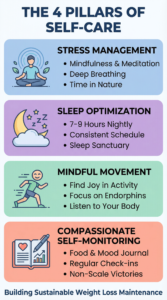
Integrating self-care is about shifting the focus from restriction and punishment to nourishment and respect for the body. This involves building a foundation of practices that support both mental and physical well-being.
Pillar 1: Proactive Stress Management
Given the profound impact of cortisol on weight, managing stress must be a cornerstone of any maintenance plan. This involves moving beyond simply reacting to stress and proactively building resilience.
•Mindfulness and Meditation: Practices like Mindfulness-Based Stress Reduction (MBSR) have been shown to alter brain connectivity in regions associated with stress, helping to regulate emotional responses to food . Even 10-15 minutes of daily meditation can lower cortisol and reduce stress-related eating.
•Deep Breathing Exercises: Simple diaphragmatic breathing techniques can instantly activate the parasympathetic nervous system (the “rest and digest” system), lowering heart rate and cortisol levels.
•Time in Nature: Spending time outdoors has been consistently linked to reduced stress and improved mood.
Pillar 2: Sleep Optimization
Prioritizing sleep is one of the most effective forms of self-care for weight maintenance. Aim for 7-9 hours of quality sleep per night by establishing a consistent routine.
•Create a Sleep Sanctuary: Keep your bedroom cool, dark, and quiet. Avoid using electronic devices for at least an hour before bed, as the blue light can disrupt melatonin production.
•Establish a Wind-Down Ritual: Engage in calming activities before bed, such as taking a warm bath, reading a book, listening to calming music, or practicing gentle stretching.
•Maintain a Consistent Schedule: Go to bed and wake up at the same time every day, even on weekends, to regulate your body’s internal clock.
Pillar 3: Mindful Movement
While exercise is crucial for calorie expenditure, its role in self-care is primarily about stress reduction and mental health. Successful weight maintainers, as tracked by the National Weight Control Registry, consistently engage in about one hour of physical activity per day .
•Find Joy in Movement: Choose activities you genuinely enjoy, whether it’s dancing, hiking, swimming, or team sports. When exercise feels like a pleasure rather than a punishment, you are far more likely to stick with it.
•Focus on Endorphins: Moderate-intensity exercise is a powerful tool for boosting endorphins, the body’s natural mood elevators, which helps combat stress and emotional eating .
•Listen to Your Body: On days when you feel exhausted, opt for restorative activities like yoga or a gentle walk instead of pushing through a high-intensity workout. This honors your body’s needs and prevents burnout.
Pillar 4: Compassionate Self-Monitoring
Self-monitoring is a proven strategy for long-term success. However, it must be approached from a place of curiosity and self-compassion, not judgment.
•Food and Mood Journaling: Instead of just tracking calories, note how different foods make you feel physically and emotionally. This can help you identify personal trigger foods and emotional eating patterns.
•Regular Check-Ins: Weighing yourself regularly (daily or weekly) can be an effective tool for catching small regains before they escalate. However, if the scale causes anxiety, focus on other metrics like how your clothes fit, your energy levels, and your overall sense of well-being.
•Celebrate Non-Scale Victories: Acknowledge and celebrate progress that isn’t reflected on the scale, such as improved energy, better sleep, looser clothing, and a more positive mindset.
Practical Tips for Integrating Self-Care
Building a self-care routine doesn’t have to be overwhelming. Start with small, manageable changes and build from there.
|
Practice
|
Daily Action (5-15 minutes)
|
Weekly Action (30-60 minutes)
|
|
Stress Management
|
Practice 5 minutes of deep breathing upon waking.
|
Schedule a 60-minute walk in nature.
|
|
Sleep
|
Set a digital curfew 1 hour before bed (no screens).
|
Plan and prep healthy, light dinners for the week.
|
|
Mindful Movement
|
Take a 10-minute walk after lunch.
|
Attend a yoga class or go for a long bike ride.
|
|
Personal Well-being
|
Journal for 5 minutes about non-scale victories.
|
Block out 1 hour for a hobby you love.
|
|
Mindful Eating
|
Eat one meal per day without distractions (no phone/TV).
|
Prep healthy, grab-and-go snacks for the week.
|
Conclusion: The Shift to Sustainable Well-Being
The high rate of weight regain is not a reflection of personal failure but a testament to the limitations of a paradigm focused solely on restriction. The evidence is clear: the body’s intricate web of hormones and metabolic processes cannot be controlled by willpower alone, especially in the face of chronic stress and sleep deprivation.
True, lasting weight loss maintenance is achieved when we shift our focus from fighting our bodies to supporting them. By integrating self-care practices like stress management, sleep optimization, and mindful movement into our daily lives, we address the root physiological and psychological drivers of weight regain. This compassionate, holistic approach is not only more effective but also creates a foundation for a healthier, happier, and more sustainable relationship with our bodies for life.
References