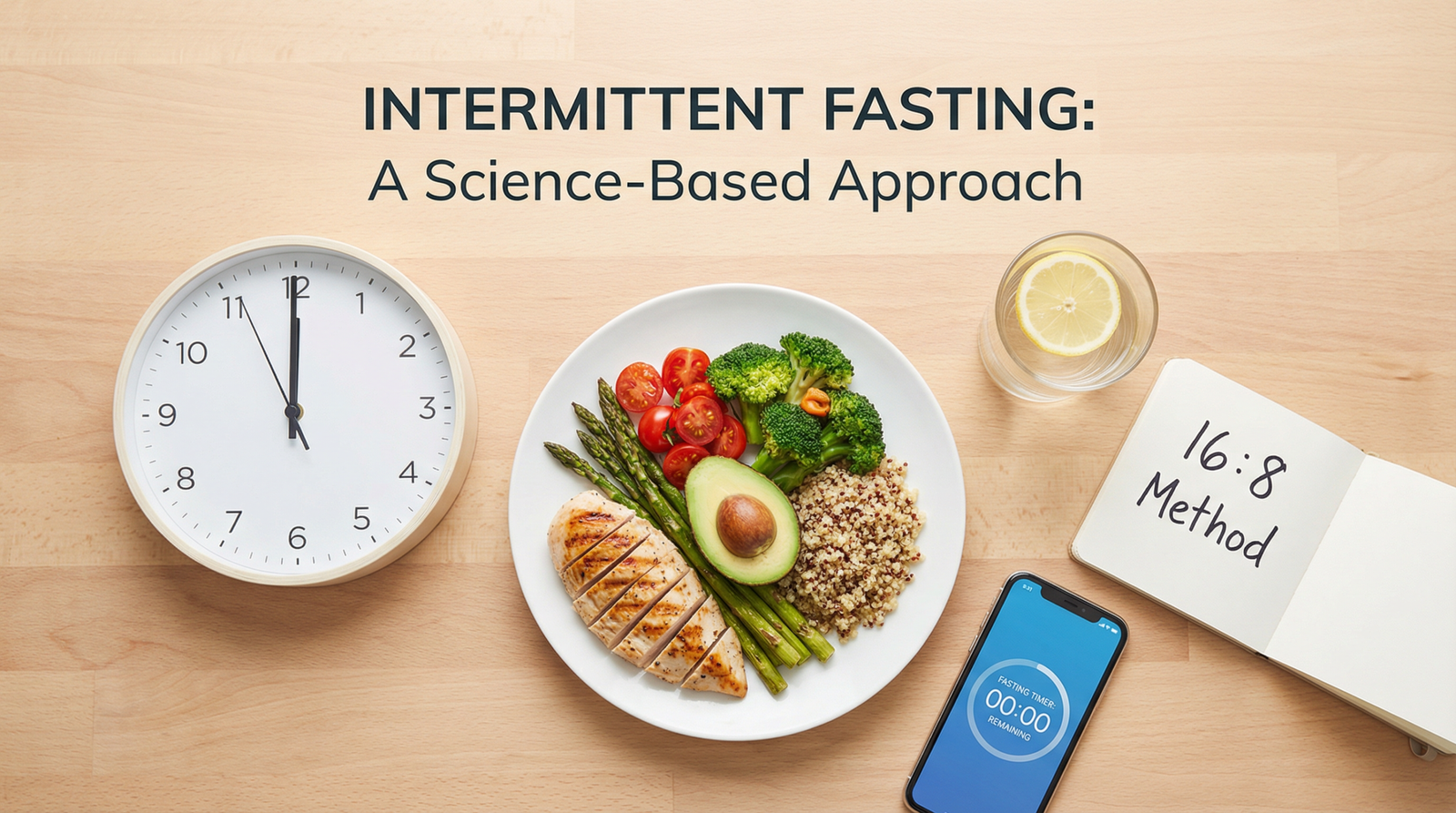
Intermittent fasting (IF) has emerged as a popular dietary approach, shifting the focus from what we eat to when we eat. While many diets concentrate on calorie counting and food restrictions, intermittent fasting is a structured eating pattern that cycles between periods of eating and fasting. This approach is not a new fad; it has roots in human history, as our ancestors were hunters and gatherers who evolved to function for extended periods without food. Today, research is uncovering the potential health benefits of this ancient practice, from weight loss to improved metabolic health.
This article will explore the principles of intermittent fasting, discuss the most common methods, and examine the evidence-based benefits and considerations for beginners. We will also provide practical tips for implementing intermittent fasting into your daily routine.
The Science Behind Intermittent Fasting
At its core, intermittent fasting works by extending the period when your body has burned through the calories from your last meal and begins to burn fat. Johns Hopkins neuroscientist Mark Mattson, who has studied intermittent fasting for 25 years, calls this process metabolic switching . When you fast for a certain number of hours, your body exhausts its sugar stores and starts using fat for energy. This contrasts with the typical Western eating pattern of three meals a day plus snacks, where the body is constantly running on calories from food rather than tapping into fat reserves.
Common Intermittent Fasting Methods
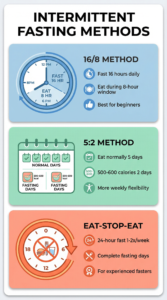
There are several ways to practice intermittent fasting, each with its own set of rules and schedules. The most popular methods include:
The 16/8 Method (Time-Restricted Eating)
This method involves fasting for 16 hours a day and restricting your eating to an 8-hour window. For example, you might eat between 12:00 PM and 8:00 PM and fast from 8:00 PM until 12:00 PM the next day. This is one of the most popular methods due to its flexibility and ease of adherence. Research from Harvard suggests that daily intermittent fasting can help people lose weight, equivalent to about 250 calories a day, or half a pound a week .
The 5:2 Method
This approach involves eating normally for five days of the week and restricting calorie intake to 500-600 calories on two non-consecutive days. For example, you might eat a normal diet on all days except Tuesdays and Fridays, when you would consume a single, small meal. This method allows for more flexibility on non-fasting days, which some people find easier to maintain.
Eat-Stop-Eat
This method involves a 24-hour fast once or twice a week. For example, you might finish dinner at 7:00 PM on Monday and not eat again until 7:00 PM on Tuesday. This method is more challenging and may not be suitable for beginners.
|
Method
|
Description
|
Best For
|
|
16/8 Method
|
Fast for 16 hours, eat during an 8-hour window
|
Beginners, those who prefer a daily routine
|
|
5:2 Method
|
Eat normally 5 days, restrict to 500-600 calories 2 days
|
Those who prefer more flexibility on most days
|
|
Eat-Stop-Eat
|
24-hour fast once or twice a week
|
Experienced fasters, those who prefer full fasting days
|
Potential Benefits of Intermittent Fasting
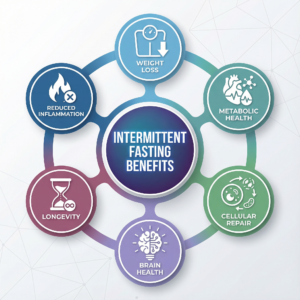
Research has uncovered a range of potential health benefits associated with intermittent fasting, extending beyond weight loss.
Weight Loss and Metabolic Health
Intermittent fasting can be an effective tool for weight loss because it helps you eat fewer calories and boosts metabolism. Studies have shown that it can lead to significant weight loss and reductions in waist circumference . It also has a positive impact on metabolic health, with research showing improvements in blood sugar, insulin resistance, and cholesterol levels .
Cellular Repair and Longevity
Fasting triggers a cellular repair process called autophagy, where cells remove waste products and repair themselves. This process is crucial for cellular health and may play a role in longevity. Animal studies have shown that intermittent fasting can extend lifespan and protect against age-related diseases .
Brain Health
Intermittent fasting may also have benefits for brain health. Studies in animals have shown that it can increase the growth of new neurons and protect against neurodegenerative diseases like Alzheimer’s and Parkinson’s . In humans, research has found that intermittent fasting can improve working memory and verbal memory .
Considerations for Beginners
While intermittent fasting is safe for many people, it’s not suitable for everyone. It’s important to consult with a healthcare professional before starting, especially if you have any underlying health conditions. Intermittent fasting is not recommended for:
•Pregnant or breastfeeding women
•Individuals with a history of eating disorders
•Children and adolescents
•People with diabetes who are on medication (due to the risk of low blood sugar)
It’s also important to be aware of potential side effects, which can include hunger, fatigue, headaches, and irritability, especially during the initial adaptation period, which can last two to four weeks .
Timing Matters: The Importance of When You Eat
Research suggests that the timing of your eating window significantly impacts the benefits you receive from intermittent fasting. According to Harvard researchers, eating an earlier dinner—ideally by 6:00 PM—provides the most substantial benefits for blood sugar control and blood pressure reduction . This approach is particularly beneficial for women, as eating larger meals earlier in the day may improve fertility outcomes. If an early dinner window doesn’t fit your lifestyle, the next best option is to follow the principle of eating breakfast like a king, lunch like a prince, and dinner like a pauper, meaning you consume larger meals earlier in the day and smaller meals in the evening. While intermittent fasting later in the day still provides some benefits, such as weight loss and reduced oxidative stress, these benefits are considerably smaller than those achieved with earlier eating windows.
Practical Tips for Implementing Intermittent Fasting
If you’re new to intermittent fasting, here are some practical tips to help you get started:
1.Start Slowly: Begin with a shorter fasting window, such as 12 or 14 hours, and gradually increase it as you become more comfortable. Most experts recommend working toward an 8-hour or shorter eating window, as this is where the most significant benefits begin to appear.
2.Stay Hydrated: Drink plenty of water, black coffee, or tea during your fasting periods to stay hydrated and manage hunger. Zero-calorie beverages are permitted and can help you feel fuller during fasting windows.
3.Focus on Nutrient-Dense Foods: During your eating window, prioritize whole, unprocessed foods like fruits, vegetables, lean proteins, and healthy fats to ensure you’re getting the nutrients your body needs. Avoid the temptation to fill your eating window with high-calorie junk food, as this will undermine your weight loss and health goals.
4.Plan for the Adaptation Period: Expect the first two to four weeks to be challenging as your body adjusts to the new eating pattern. You may experience hunger, irritability, or fatigue, but research shows that people who make it through this adjustment period tend to stick with the plan because they feel better .
5.Listen to Your Body: Pay attention to how you feel and adjust your fasting schedule as needed. Intermittent fasting should not feel like a punishment or cause excessive discomfort.
6.Be Flexible: You don’t have to be perfect. Research shows that you only need to follow intermittent fasting at least five days a week to see benefits, so you can have “break” days. If you have a social event or a special occasion, it’s okay to take a break from your fasting schedule.
Important Safety Considerations
While intermittent fasting is safe for many people, certain individuals should avoid it or practice it only under medical supervision. People with diabetes who take medications should consult their doctor before starting intermittent fasting, as they may need to adjust their medication doses to avoid dangerously low blood sugar levels. Additionally, some people may experience side effects such as increased thirst (due to increased sodium excretion), headaches, or mood changes during the adaptation period. These side effects typically subside as your body adjusts to the new eating pattern.
It’s also worth noting that intermittent fasting may not be practical for everyone. People with certain jobs, such as teachers or shift workers, may find it difficult to maintain a consistent fasting schedule due to work demands. Similarly, if dinners and social outings are important parts of your social life, intermittent fasting may present challenges. In such cases, a simpler approach—such as avoiding eating too late at night or eating larger meals earlier in the day—may be more sustainable.
Conclusion
Intermittent fasting is a powerful dietary tool supported by decades of research, offering a range of potential health benefits from weight loss and improved metabolic health to cellular repair and enhanced brain function. By focusing on when you eat rather than what you eat, it provides a flexible and sustainable approach to improving your overall well-being. The key to success is choosing a method that aligns with your lifestyle, prioritizing an eating window that ends earlier in the day when possible, and maintaining a focus on nutrient-dense foods. However, intermittent fasting is not a one-size-fits-all solution, and it’s important to consult with a healthcare professional before starting, especially if you have any underlying health conditions. With a gradual approach, realistic expectations, and a commitment to the adaptation period, intermittent fasting can be a valuable addition to a healthy lifestyle.
References