The Whole30 program is widely known for its 30-day elimination phase, but its ultimate goal extends far beyond a temporary dietary reset. The true aim of the Whole30 is to achieve “Food Freedom,” a concept that empowers individuals to develop a healthier, more mindful relationship with food. This article explores the concept of food freedom within the context of the Whole30, explaining how the program helps participants recognize their body’s signals, make conscious food choices, and maintain a balanced, sustainable approach to eating long after the 30 days are over.
What Food Freedom Is (and What It Isn’t)
Food freedom, as defined by Whole30 co-founder Melissa Urban, is the state of being in control of the food you eat, rather than food controlling you. It is the antithesis of the yo-yo dieting cycle, which often leads to stress, guilt, and a negative relationship with food. Food freedom is not about being able to eat whatever you want, whenever you want, without consequences. Instead, it is about making conscious, deliberate choices that support your physical and mental well-being.
It is a personalized approach to eating that is unique to each individual. It acknowledges that there is no one-size-fits-all diet and that the foods that work well for one person may not work well for another. Food freedom is about finding a sustainable balance that allows you to enjoy the foods you love while still feeling your best.
Why It Matters / When It’s Useful
The concept of food freedom is particularly valuable for individuals who have struggled with yo-yo dieting, emotional eating, or a general sense of being out of control around food. The Whole30 program provides a structured framework for breaking these cycles and developing a new, healthier relationship with food. By temporarily eliminating potentially problematic foods, participants can reset their bodies and minds, and then use the reintroduction phase to learn how different foods affect them personally.
This process is useful for anyone who wants to:
•Understand their body’s unique needs and sensitivities.
•Make informed decisions about food, rather than being driven by cravings or emotions.
•Develop a sustainable, long-term approach to healthy eating.
•Enjoy food without guilt or anxiety.
Key Concepts Readers Must Understand
The Three-Part Plan for Food Freedom
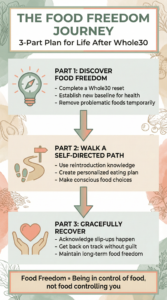
Melissa Urban outlines a three-part plan for achieving food freedom in her book, Food Freedom Forever:
1.Discover Food Freedom: This involves completing a reset, like the Whole30, to establish a new baseline for your health and well-being.
2.Walk a Self-Directed Path: This is the process of using the knowledge gained from your reset to create a personalized, sustainable diet.
3.Gracefully Recover: This acknowledges that there will be times when you slip back into old habits, and provides strategies for getting back on track without guilt or shame.
The Role of Reintroduction
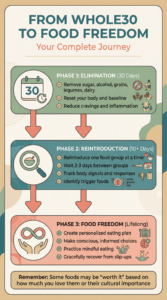
The reintroduction phase is the cornerstone of food freedom. It is during this time that you will systematically reintroduce the food groups you eliminated during the 30-day program and pay close attention to your body’s response. This process is not just about identifying foods that cause negative symptoms; it is also about discovering which foods you can enjoy without any adverse effects.
Recognizing Your Body’s Signals
A key aspect of food freedom is learning to recognize and interpret your body’s signals. The Whole30 program helps you tune into these signals by removing the “noise” of processed foods and other potential triggers. During the reintroduction phase, you will learn to pay attention to a wide range of signals, including:
•Digestion: Bloating, gas, constipation, diarrhea
•Energy levels: Slumps, fatigue, or sustained energy
•Sleep quality: Difficulty falling asleep, waking up during the night
•Cravings: The return of sugar or carb cravings
•Mood and mental clarity: Brain fog, anxiety, irritability, or improved focus and mood
•Skin: Acne, eczema, psoriasis
•Physical performance: Changes in athletic performance and recovery
Step-by-Step: How to Approach/Implement/Evaluate Food Freedom
Step 1: Complete a Whole30 Reset
The first step to achieving food freedom is to complete a full 30-day Whole30 program. This will give you a clean slate and allow you to accurately assess your body’s response to different foods during the reintroduction phase.
Step 2: Follow the Reintroduction Protocol
After your 30 days are up, it is crucial to follow the reintroduction protocol as outlined by the Whole30 program. This involves reintroducing one food group at a time and waiting 2-3 days before reintroducing the next. This will allow you to isolate the effects of each food group and identify any sensitivities.
Step 3: Create Your Personalized Food Freedom Plan
Based on your experience during the reintroduction phase, you can begin to create your personalized food freedom plan. This will involve deciding which foods are “worth it” to you, and which ones you are better off avoiding. It is important to remember that this is not a rigid set of rules, but rather a flexible framework that can be adjusted as your needs and preferences change.
Step 4: Practice Mindful Eating
Mindful eating is a key component of food freedom. This involves paying attention to your body’s hunger and fullness cues, eating slowly and without distraction, and savoring the flavors and textures of your food. By practicing mindful eating, you can develop a more intuitive and enjoyable relationship with food.
Common Pitfalls and How to Avoid Them
•The “All or Nothing” Mindset: It is easy to fall into the trap of thinking that you are either “on” or “off” your diet. Avoid this by embracing the concept of graceful recovery and getting back on track as soon as you realize you have slipped up.
•Social Pressure: Holidays, vacations, and social gatherings can be challenging. Avoid this by planning ahead, bringing your own food, or communicating your needs to your host.
•Ignoring Your Body’s Signals: It can be tempting to ignore your body’s signals and eat something you know will make you feel less than your best. Avoid this by reminding yourself of your long-term goals and how good it feels to be in control of your food choices.
Options / Approaches (Compare Tradeoffs)
|
Approach
|
Description
|
Pros
|
Cons
|
|
Strict Paleo/Whole30
|
Continuing to follow the Whole30 or a similar paleo-style diet long-term.
|
May be beneficial for individuals with significant food sensitivities or autoimmune conditions.
|
Can be restrictive and difficult to sustain long-term.
|
|
Flexible Food Freedom
|
A more flexible approach that allows for the occasional indulgence in “less healthy” foods.
|
More sustainable and enjoyable for most people.
|
Requires a strong sense of self-awareness and mindful decision-making.
|
|
80/20 Approach
|
Eating “healthy” 80% of the time and allowing for more flexibility 20% of the time.
|
Provides a clear framework for balancing healthy eating with occasional indulgences.
|
May not be suitable for individuals who have difficulty with moderation.
|
Practical Checklist (Actionable Bullets)
•Keep a food journal to track your food intake and symptoms during the reintroduction phase.
•Identify your personal trigger foods and decide how you want to incorporate them into your life (if at all).
•Plan your meals and snacks to ensure you always have healthy options on hand.
•Practice mindful eating techniques, such as eating slowly and without distractions.
•Find a supportive community of like-minded individuals.
•Be kind to yourself and remember that food freedom is a journey, not a destination.
FAQs (3–6 Questions, Concise Answers)
1. What if I find out I am sensitive to a food I love?
This is a common experience. The goal of food freedom is not to deprive yourself, but to make informed choices. You may decide that the food is “worth it” on special occasions, or you may find a suitable alternative that you enjoy just as much.
2. How do I handle social situations where there are no compliant options?
It is always a good idea to eat before you go to a social event. You can also bring a compliant dish to share, or politely decline the food that is offered.
3. What if I slip up and eat something that is not part of my food freedom plan?
Don’t beat yourself up. The concept of graceful recovery is a key part of food freedom. Simply get back on track with your next meal and remember that one off-plan choice does not derail your progress.
Conclusion
Food freedom is the ultimate goal of the Whole30 program. It is a personalized, sustainable approach to eating that empowers you to make conscious choices that support your health and well-being. By completing the Whole30 and following the reintroduction protocol, you can develop a deeper understanding of your body’s unique needs and create a healthy, enjoyable relationship with food that will last a lifetime.
Key Takeaways:
•Food freedom is about being in control of your food choices, not food controlling you.
•The reintroduction phase is the key to unlocking your personal food freedom.
•Learning to recognize and interpret your body’s signals is a crucial skill for long-term success.
•A balanced and sustainable approach to eating is more effective than a restrictive, all-or-nothing mindset.
Next Step:
If you have completed a Whole30 and are ready to embark on your food freedom journey, the next step is to carefully and systematically reintroduce the eliminated food groups. Pay close attention to your body’s response and use this information to create a personalized food freedom plan that works for you.
References