The conventional approach to weight loss, focused on diet and exercise, often creates a frustrating cycle of temporary results. A more effective path is a holistic approach, which recognizes the connection between our physical, mental, and emotional states.
This method moves beyond a simple caloric equation to build a lifestyle integrating healthy eating, physical activity, adequate sleep, and stress management. The U.S. Centers for Disease Control and Prevention (CDC) confirms this strategy supports a healthy weight and overall wellness .
This article explores the evidence-based principles of a holistic approach, detailing the mind-body connection in weight management and providing a practical framework for implementation.
What a Holistic Approach Is (and What It Isn’t)
A holistic approach to weight loss is a comprehensive strategy addressing the entire person—mind, body, and spirit. It is a commitment to building sustainable habits, not a prescriptive diet.
The CDC defines this as a lifestyle combining healthy eating, regular physical activity, sufficient sleep, and stress management . It encourages gradual weight loss of one to two pounds per week, a pace that improves long-term maintenance .
This is not a quick fix. It is a patient process of lifestyle adjustment, where change comes from small, consistent actions.
Why It Matters: The Interconnectedness of Mind and Body
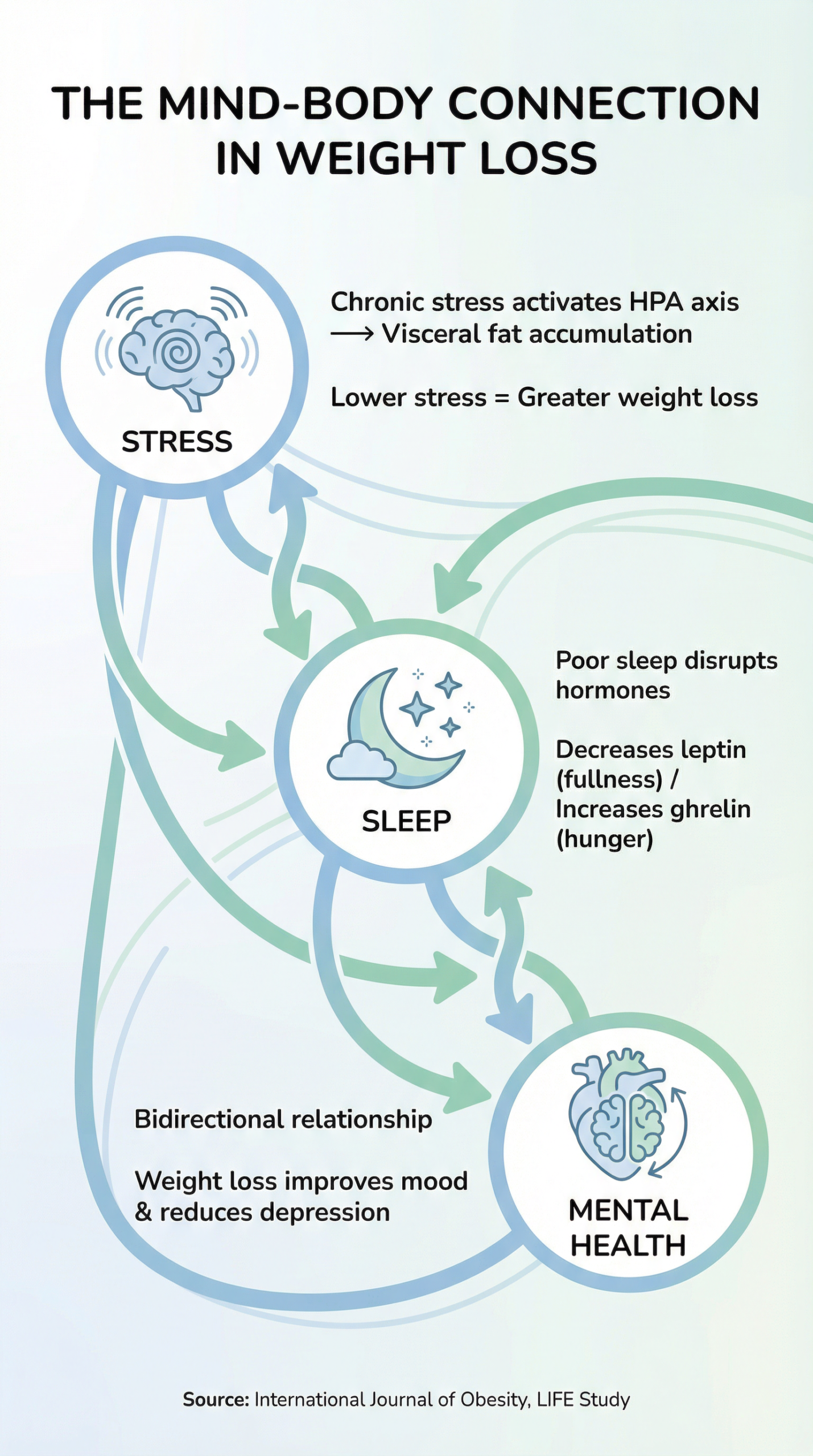
Effective weight management is not purely physical; psychological factors like stress, sleep, and mental well-being directly impact our weight.
The Critical Roles of Stress and Sleep
Chronic stress, for instance, triggers physiological responses that promote weight gain. A study in the International Journal of Obesity found that chronic stress activates the body’s HPA axis, leading to visceral fat accumulation . Lower baseline stress was a significant predictor of greater weight loss .
Sleep is another critical pillar. Disordered sleep is a known risk factor for obesity, as it can disrupt appetite-regulating hormones, decreasing leptin (fullness) and increasing ghrelin (hunger) .
The Mental Health Connection
The link between weight and mental health is often bidirectional. A meta-analysis suggests obesity increases depression risk, while depression can predict obesity . This underscores the need to address mental health in any weight management plan. As participants in one study lost weight, they reported declines in stress and depression, creating a positive feedback loop .
Key Concepts Readers Must Understand
Adopting a holistic approach requires understanding concepts that shift focus from restriction to awareness.
|
Key Concept
|
Description
|
Source
|
|
Behavioral Modification
|
The understanding that habits are modifiable. A cornerstone of this is self-monitoring, such as keeping food and activity diaries, to increase awareness and accountability.
|
NIH
|
|
Mindful Eating
|
An intentional, non-judgmental focus on the eating experience. It involves using all senses to appreciate food and recognizing internal hunger and fullness cues.
|
Harvard
|
|
Sustainable Energy Balance
|
While the principle of energy intake versus expenditure is valid, it is influenced by a complex interplay of genetics, hormones, stress, and environmental factors.
|
NIH
|
|
The Power of Modest Loss
|
Even a 5% reduction in body weight can lead to significant improvements in health markers like blood pressure, cholesterol, and blood sugar.
|
CDC
|
Mindful eating is a powerful tool for changing one’s relationship with food. Harvard researchers describe it as a strategy to combat mindless eating, which is linked to overeating . By paying full attention while eating, individuals can better distinguish between emotional and physical hunger, helping manage behaviors like emotional and binge eating .
Step-by-Step: How to Implement a Holistic Approach
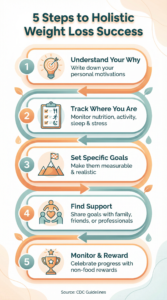
The CDC provides a five-step framework emphasizing self-awareness, planning, and effort.
•Step 1: Understand Your “Why”: Reflect on and write down your core motivations. Your personal reasons provide a powerful anchor to stay focused.
•Step 2: Track Where You Are: Monitor your habits for a few days without judgment. Tracking nutrition, activity, sleep, and stress provides a baseline for making impactful changes.
•Step 3: Set Specific, Realistic Goals: Set measurable objectives like, “Walk for 15 minutes, three days a week.” Focus on a few small goals at a time.
•Step 4: Find Support: Share your goals with supportive family, friends, or professionals. A support system is key to success .
•Step 5: Monitor Progress & Reward Success: Regularly evaluate your progress. When you meet a goal, add a new one, and celebrate with non-food rewards.
Common Pitfalls and How to Avoid Them
Recognizing common challenges helps navigate the non-linear process of adopting a new lifestyle.
•All-or-Nothing Thinking: A single unplanned meal is not a failure. The NIH suggests using cognitive restructuring to reframe these moments as learning opportunities and get back on track .
•Ignoring Mental Health: If stress or poor sleep consistently derails your efforts, make them a priority. Integrate stress management and improve sleep hygiene.
•Unrealistic Expectations: The desire for rapid results leads to frustration. Focus on a gradual pace and celebrate non-scale victories like increased energy.
Options & Approaches: Building Your Toolkit
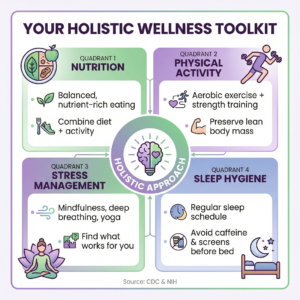
A holistic approach is not one-size-fits-all; find strategies that fit your body, preferences, and lifestyle.
•Nutrition: Prioritize a balanced, nutrient-rich eating pattern. The NIH confirms that combining diet with physical activity yields superior and more sustainable results .
•Physical Activity: Include both aerobic exercise and strength training. The NIH notes that strength training helps preserve lean body mass and maintain metabolic rate during weight loss .
•Stress Management: Find healthy coping mechanisms that work for you, such as mindfulness, deep breathing, or yoga.
•Sleep Hygiene: The CDC recommends a regular sleep schedule, avoiding late-day caffeine, and turning off electronics before bed .
Practical Checklist
To begin your journey, consider these actionable steps:
•Track your food, activity, and sleep for one week to establish a baseline.
•Set one specific, measurable activity goal for the upcoming week.
•Identify one stress-reduction technique to practice for a few minutes each day.
•Implement two mindful eating practices, such as eating without screens or chewing each bite thoroughly.
•Schedule a consistent bedtime and wake-up time, even on weekends.
•Write down your core reasons for pursuing better health and place them where you can see them daily.
FAQs
1. How is this different from a diet?
A holistic approach focuses on creating a sustainable lifestyle that promotes overall well-being, not just on temporary food restrictions. It integrates mental and emotional health as key components of success.
2. How much weight should I expect to lose?
A healthy and sustainable rate of weight loss is about one to two pounds per week, according to both the CDC and the NIH . This gradual pace is associated with better long-term maintenance.
3. What if I have a bad day?
Occasional setbacks are a normal part of the process. Acknowledge it without judgment and focus on getting back on track with your next meal or planned activity. A single day does not define your entire journey.
4. Do I need to exercise every day?
Consistency is more important than intensity, especially when you are starting. The NIH recommends a gradual build-up to 30 minutes of activity on most days . Find activities you enjoy to make it easier to stick with them.
5. Is this approach effective without weight loss?
Absolutely. The habits central to a holistic approach—such as balanced nutrition, regular activity, better sleep, and stress management—improve overall health, mood, and energy levels, regardless of what the scale says.
Conclusion
Lasting well-being is achieved by looking beyond the scale. Sustainable weight management is a holistic process attending to the interconnected needs of our minds and bodies.
Integrating these strategies helps build a lifestyle that is both effective for managing weight and deeply rewarding.
Key Takeaways
•Sustainable weight management is holistic, integrating mind and body.
•Mental and emotional well-being, including stress and sleep, are as crucial as diet and exercise.
•Gradual changes, self-monitoring, and mindful practices are more effective than extreme, short-term measures.
•A structured, step-by-step approach that includes setting realistic goals and finding support increases the likelihood of long-term success.
Your first step need not be dramatic. Commit to tracking your current habits for one week. This observation, without pressure to change, provides the awareness to start your journey with intention.
References