Transitioning to a plant-based diet is gaining attention for its potential health benefits. With over 42% of Americans classified as obese according to the Centers for Disease Control and Prevention, many are seeking sustainable lifestyle changes. Interest in plant-based eating has grown substantially, with one report noting a 600% increase in individuals identifying as vegan in the U.S. between 2014 and 2018.
This article provides a practical, evidence-based guide for individuals considering a transition to a more plant-centric way of eating. Readers will learn about tangible health benefits, critical nutritional concepts, common challenges, and a step-by-step framework for making the change successfully. Adopting a plant-based diet is not an all-or-nothing proposition; the principles can be applied across a spectrum of dietary patterns.
What Plant-Based Eating Is (and What It Isn’t)
A plant-based diet emphasizes foods derived from plants, including vegetables, fruits, whole grains, legumes, nuts, and seeds. The term encompasses a wide spectrum: flexitarian (primarily vegetarian with occasional meat), vegetarian (excludes meat and fish but includes eggs and dairy), vegan (excludes all animal products), and whole-food plant-based (vegan diet centered on whole, unprocessed foods).
It is a critical misconception that all plant-based foods are inherently healthy. The market for plant-based “junk food”—highly processed products high in sodium, refined sugars, and unhealthy fats—is growing. A successful transition prioritizes whole foods over these processed alternatives.
Why It Matters: The Evidence for Plant-Based Eating
The shift toward plant-based nutrition is supported by scientific evidence demonstrating significant health benefits, particularly in the prevention and management of chronic diseases.
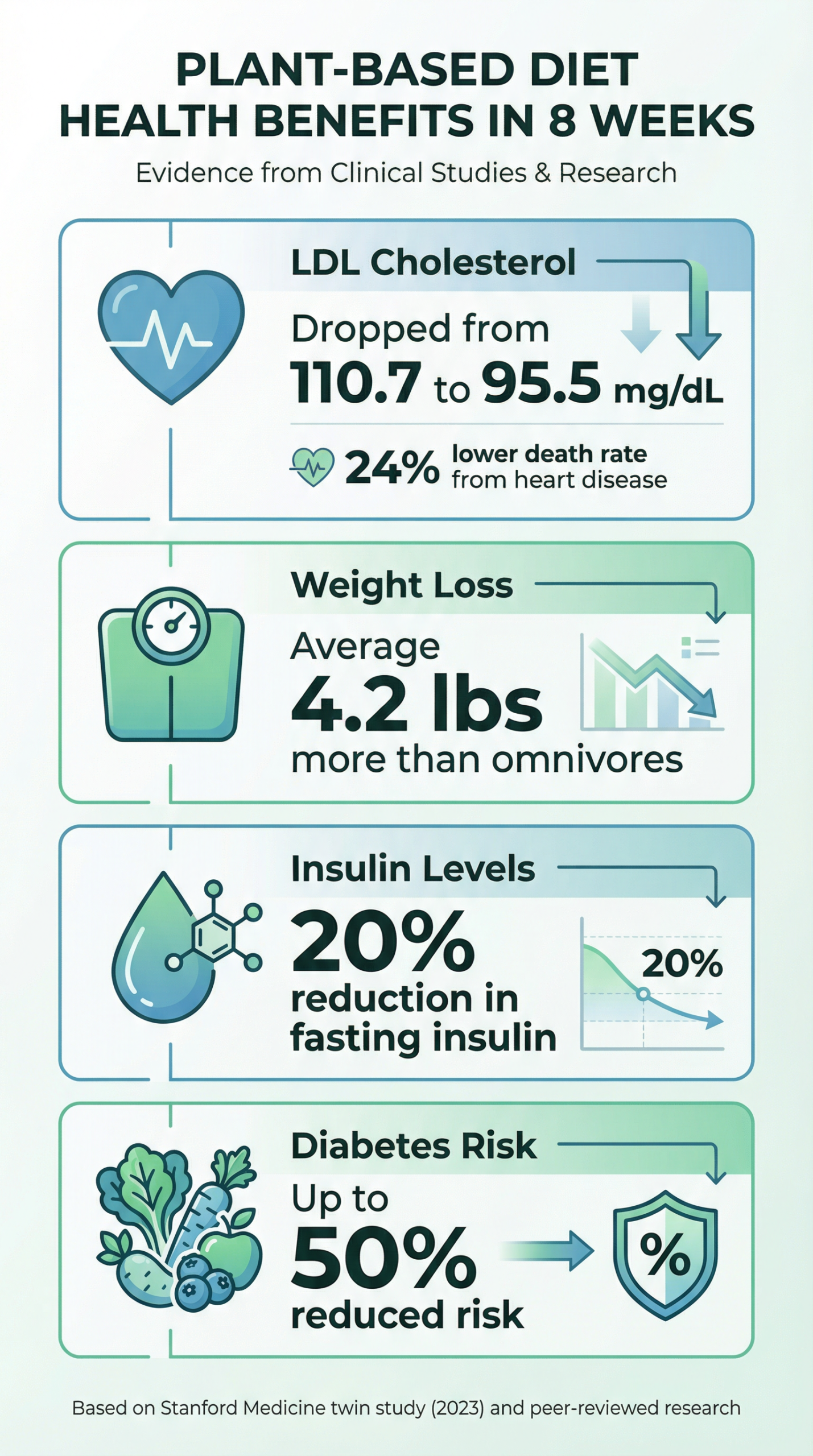
Cardiovascular disease remains the leading cause of death in the United States. Research consistently shows that plant-based diets are highly effective in promoting heart health. A combined analysis of five prospective studies found that vegetarians have a 24% lower rate of death from ischemic heart disease compared to meat-eaters. A 2023 Stanford Medicine study involving identical twins provided compelling evidence. After just eight weeks, the twin on a healthy vegan diet saw their LDL cholesterol drop from an average of 110.7 mg/dL to 95.5 mg/dL, approaching the optimal level of below 100 mg/dL.
Multiple studies have linked plant-based diets to lower body mass index and successful weight management. The Stanford twin study found that vegan participants lost an average of 4.2 more pounds than their omnivorous twins over eight weeks and experienced a 20% drop in fasting insulin levels, a key marker for diabetes risk. A separate 10-year study of over 300,000 individuals found that higher fruit and vegetable intake was associated with up to a 50% reduced risk of developing type 2 diabetes.
Key Concepts Readers Must Understand
Before beginning a transition, it is crucial to grasp fundamental concepts to ensure the diet is both healthy and sustainable.
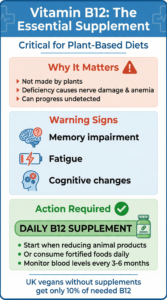
The Critical Importance of Vitamin B12 is the most important nutritional consideration. Vitamin B12 is produced by microorganisms, not by plants. According to a 2022 report in the European Journal of Nutrition, deficiency is common in vegan and vegetarian populations and can lead to severe, sometimes irreversible, neurological damage and anemia. Symptoms include fatigue, memory impairment, and cognitive changes. Because a plant-based diet is high in folate, it can mask blood markers of B12 deficiency, allowing neurological damage to progress undetected. Therefore, regular supplementation with vitamin B12 is non-negotiable for individuals on a vegan or near-vegan diet.
Protein adequacy is a common concern but generally overstated. The Institute of Medicine suggests that protein should make up 10–35% of daily calories, a target easily met with plant-based foods. A varied diet of legumes, whole grains, nuts, and seeds provides all essential amino acids.
Quality over labels is essential. The benefits described in research are tied to diets rich in whole foods. A diet of vegan cookies, refined pasta, and processed meat substitutes will not confer the same advantages as one centered on vegetables, legumes, and whole grains.
Step-by-Step: How to Approach the Transition
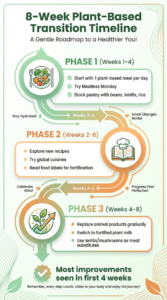
A gradual, phased approach is more sustainable than an abrupt overnight switch. The Stanford study noted that participants successfully adapted within weeks.
Phase 1: Gradual Introduction (Weeks 1–4). Start by incorporating one plant-based meal per day or dedicating one day a week to plant-based eating. Stock your pantry with versatile staples like brown rice, lentils, canned beans, and potatoes.
Phase 2: Building Knowledge (Weeks 2–6). Explore recipes and experiment with different cuisines. Many global food traditions, such as Indian, Thai, and Ethiopian, are rich in naturally plant-based dishes. Start reading food labels to identify fortified nutrients like vitamin B12 and calcium.
Phase 3: Crowding Out (Weeks 4–8). Begin to systematically replace animal products. Switch from dairy milk to fortified plant milk. Use lentils or mushrooms in place of ground meat. The goal is to have plant foods naturally “crowd out” animal products.
Common Pitfalls and How to Avoid Them
Avoid relying on heavily processed meat and cheese alternatives. While useful as occasional transition tools, they should not be staples. The most critical mistake is forgetting to supplement B12. Begin taking a daily vitamin B12 supplement from the moment you significantly reduce animal product intake. Finally, avoid the “all or nothing” mindset. Be flexible and focus on consistency over time.
Options and Approaches: Finding the Right Fit
|
Diet Type
|
Pros
|
Cons
|
Best For…
|
|
Flexitarian
|
Easiest to adopt; socially flexible
|
Health benefits may be less pronounced
|
Beginners seeking gradual change
|
|
Vegetarian
|
More options; B12 from dairy/eggs
|
Still contains saturated fat from dairy
|
Transitioning from omnivore diet
|
|
Vegan
|
Maximum cardiovascular benefits
|
Requires mandatory B12 supplementation
|
Those motivated by health or ethics
|
|
WFPB
|
Maximizes nutrient density
|
Most restrictive
|
Optimizing health outcomes
|
Practical Checklist for a Successful Transition
Getting Started: Clarify why you are making this change. Find 5–10 simple plant-based recipes. Stock your pantry with beans, lentils, quinoa, oats, and nuts. Purchase a reliable B12 supplement.
First Month: Introduce 1–3 plant-based meals per week. Adapt favorite meals with plant-based ingredients. Pay attention to your energy levels and digestion.
Ongoing: Eat a wide range of colorful produce. Plan meals ahead. Consult a dietitian or physician if you are pregnant, over 60, or managing a health condition.
Frequently Asked Questions
Will I get enough protein? Yes. Only 10–35% of daily calories need to come from protein, readily achievable through beans, lentils, quinoa, nuts, and tofu.
How quickly can I expect to see health benefits? The Stanford study observed significant improvements in LDL cholesterol, fasting insulin, and body weight within four to eight weeks.
Is vitamin B12 supplementation truly necessary? Yes. Vitamin B12 is not reliably found in plant foods. Typical UK vegans who did not supplement consumed only about 10% of the recommended B12 intake.
Do I have to eat expensive meat alternatives? No. The most affordable plant-based diets are built on staples like dried beans, lentils, rice, potatoes, and seasonal vegetables.
What are the main challenges? Beyond nutritional planning, common challenges are social. Navigating restaurant menus and social gatherings may require practice.
Conclusion
Transitioning to a more plant-based diet is a well-supported strategy for improving health. The evidence clearly indicates that even modest shifts away from animal products can yield significant benefits, often in a matter of weeks.
Key Takeaways: Progress, not perfection, is the goal. Measurable improvements in LDL cholesterol, insulin sensitivity, and body weight can be achieved in under two months. Vitamin B12 supplementation is non-negotiable for anyone significantly reducing animal products. Health benefits are linked to diets rich in vegetables, fruits, legumes, and whole grains, not processed alternatives. A slow, phased approach that focuses on adding new foods is more likely to lead to lasting change.
Your Next Step: Take one concrete action this week. Choose a single plant-based recipe to try, or stock your pantry with three foundational staples like lentils, brown rice, and canned beans. If you are planning a significant dietary shift, purchase a reliable vitamin B12 supplement and make it part of your daily routine.
References