When embarking on a weight loss journey, the primary focus is almost always on diet and exercise. While these are undeniably critical components, a growing body of evidence reveals a third, equally important pillar of weight management that is often overlooked: sleep. The quantity and quality of your sleep can profoundly influence your metabolism, hunger hormones, and food choices, making it either a powerful ally or a significant obstacle in your efforts.
This article provides a thorough, evidence-based guide to understanding the intricate connection between sleep and weight loss. We will explore what the science says about how sleep deprivation can sabotage your goals and, more importantly, provide practical, actionable strategies to improve your sleep hygiene. For anyone trying to lose weight, optimizing sleep is not a luxury; it is a fundamental requirement for success.
What the Sleep-Weight Connection Is (and What It Isn’t)
The connection between sleep and weight is a complex interplay of hormonal and metabolic factors. It is not simply a matter of being too tired to exercise. Insufficient sleep directly alters your body’s chemistry in ways that make weight loss significantly more difficult.
According to UCLA Health, most adults need seven to nine hours of sleep most nights. People who consistently log six or fewer hours tend to have a higher body mass index (BMI), and even just a few nights of short sleep can result in short-term weight fluctuations . This is not a coincidence.
Research published in the journal Nutrients explains that disturbed sleeping patterns lead to increased energy intake, partly from excessive snacking, mainly on foods high in fat and carbohydrates . The relationship is bidirectional: poor sleep leads to weight gain, and obesity can worsen sleep quality, creating a difficult cycle to break.
Why It Matters / When It’s Useful
Understanding the sleep-weight connection matters because it provides a practical, often underutilized lever for weight management. If you are struggling to lose weight despite adhering to a diet and exercise plan, sleep deprivation may be the hidden culprit undermining your efforts.
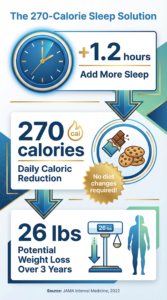
A landmark study published in JAMA Internal Medicine in 2022 demonstrated just how powerful sleep can be. Researchers at the University of Chicago found that young, overweight adults who habitually slept fewer than 6.5 hours a night were able to increase their sleep duration by an average of 1.2 hours per night after a single personalized sleep hygiene counseling session. This increased sleep duration reduced participants’ overall caloric intake by an average of 270 calories per day—without any dietary restrictions or instructions .
To put this in perspective, a reduction of 270 calories per day could translate to roughly 26 pounds of weight loss over three years if the effects were maintained . This is a significant outcome achieved through a single behavioral change.
Key Concepts Readers Must Understand
To fully grasp how sleep affects weight, it is essential to understand three key concepts: hunger hormones, metabolism, and food cravings.
Hunger Hormones: Leptin and Ghrelin
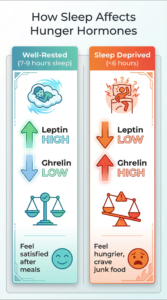
Sleep quality affects two critical hormones that regulate appetite: leptin and ghrelin. Leptin is often called the “satiety hormone” because it signals your body to feel full after a meal. Ghrelin has the opposite effect; it stimulates your appetite and makes you feel hungry .
When you consistently get a good night’s sleep, your body regulates these two hormones and maintains them in proper balance. However, when you are chronically sleep deprived, leptin levels decrease and ghrelin levels increase . The result is that you feel hungrier before a meal and less satisfied afterward, which can lead to junk food cravings and overeating .
Metabolism and Blood Sugar
A lack of sleep can also increase your glucose (blood sugar) levels, raising your risk of Type 2 diabetes and obesity . Additionally, sleep deprivation leaves you feeling tired, which reduces your energy and makes you less inclined to be active or exercise . This compounds the problem, as reduced physical activity further hinders weight loss.
Food Cravings and the Reward System
Sleep deprivation affects not only how much you eat but also what you eat. Research has found a connection between sleep and the chemicals that make up the reward system in the brain. When you are sleep-deprived, you may crave foods that feed into that reward system—typically high-calorie, high-fat, and high-sugar foods .
One theory is that when you are tired, you simply have less energy to devote to healthy eating. You may not feel like taking the time and effort to shop for and prepare nutritious meals, or you may have less willpower to resist unhealthy options .
Step-by-Step: How to Approach Sleep Improvement for Weight Loss
Improving your sleep to support weight loss does not require drastic changes. The University of Chicago study demonstrated that a single, personalized sleep hygiene counseling session was enough to produce measurable results . Here is a structured approach you can follow.
Step 1: Assess Your Current Sleep Duration
Track your sleep for one week using a wearable device, a smartphone app, or simply a journal. Record the time you go to bed, the time you wake up, and how you feel each morning. This baseline will help you identify patterns and set realistic goals.
Step 2: Set a Target Sleep Duration
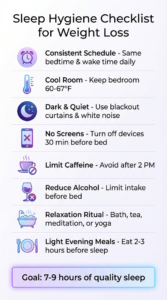
Aim for seven to nine hours of sleep per night . If you are currently sleeping six hours or less, start by adding 30 minutes to your nightly sleep duration and gradually work your way up.
Step 3: Establish a Consistent Sleep Schedule
Go to bed and wake up at the same time every day, even on weekends. This helps regulate your body’s internal clock and improves sleep quality over time .
Step 4: Create a Sleep-Conducive Environment
Your bedroom should be cool, dark, and quiet . Consider using blackout curtains, earplugs, or a white noise machine if necessary. Remove electronic devices (phones, tablets, computers) from the bedroom, as limiting their use before bedtime is a key intervention .
Step 5: Adopt Pre-Sleep Rituals
Practice relaxation rituals to help you mentally unwind before bed. Options include taking a warm bath, drinking herbal tea, meditating, or practicing yoga . Avoid caffeine in the late afternoon and evening, and limit alcohol intake before bed .
Common Pitfalls and How to Avoid Them
Pitfall 1: Inconsistent Sleep Schedules
Many people sleep well during the week but stay up late on weekends, disrupting their circadian rhythm. Avoid this by maintaining a consistent schedule seven days a week.
Pitfall 2: Using Electronic Devices Before Bed
The blue light emitted by screens can interfere with melatonin production, making it harder to fall asleep. Avoid this by turning off devices at least 30 minutes before bedtime .
Pitfall 3: Eating Large Meals or Sugary Foods Before Bed
A higher intake of saturated fat and sugar is associated with lighter, less profound sleep and more frequent nocturnal arousals . Avoid this by eating your last meal at least two to three hours before bed and choosing lighter, balanced options.
Options / Approaches (Compare Tradeoffs)
When it comes to improving sleep for weight loss, there are several approaches to consider. Here is a comparison of the most common options.
Approach
Description
Pros
Cons
Sleep Hygiene Counseling
A single session with a professional to create a personalized sleep plan .
Evidence-based, simple, and effective. Can lead to significant caloric reduction .
Requires access to a professional or structured program.
Self-Guided Sleep Improvement
Using online resources, apps, or books to improve sleep habits independently.
Low cost, flexible, and accessible.
May lack personalization and accountability.
Medication or Supplements
Using sleep aids such as melatonin or prescription medications.
Can provide short-term relief for severe sleep issues.
Does not address root causes. Risk of dependency. Not recommended as a first-line approach.
Cognitive Behavioral Therapy for Insomnia (CBT-I)
A structured program that addresses the thoughts and behaviors that interfere with sleep.
Highly effective for chronic insomnia. No medication required.
Requires multiple sessions and commitment. May be costly.
For most people trying to lose weight, starting with sleep hygiene counseling or a self-guided approach is the most practical and effective option.
Practical Checklist
Use this checklist to establish healthy sleep habits that support your weight loss efforts:
I am getting seven to nine hours of sleep most nights.
I go to bed and wake up at the same time every day, including weekends.
I avoid caffeine in the late afternoon and evening.
I limit alcohol intake before bed.
My bedroom is cool, dark, and quiet.
I have removed electronic devices from my bedroom or turn them off at least 30 minutes before bed.
I practice a relaxation ritual before bed (e.g., warm bath, herbal tea, meditation).
I avoid large meals and sugary foods within two to three hours of bedtime.
I track my sleep duration and quality to monitor progress.
FAQs
1. How quickly will I see weight loss results from improving my sleep?
According to the University of Chicago study, participants saw a measurable reduction in caloric intake within just two weeks of extending their sleep . However, significant weight loss typically requires sustained changes over months.
2. Can I “catch up” on sleep during the weekend?
While extra sleep on weekends can help reduce some of the effects of sleep deprivation, it does not fully compensate for chronic short sleep during the week. Consistency is more important than occasional long sleep sessions .
3. What if I have insomnia or a diagnosed sleep disorder?
If you have chronic insomnia or suspect a sleep disorder such as sleep apnea, consult a healthcare professional or sleep specialist. Cognitive Behavioral Therapy for Insomnia (CBT-I) or other medical interventions may be necessary.
4. Will sleeping more make me less active during the day?
No. In fact, adequate sleep increases your energy levels, making you more likely to engage in physical activity . Sleep deprivation, on the other hand, leaves you feeling fatigued and less motivated to exercise.
5. How does sleep compare to diet and exercise in importance for weight loss?
All three are essential. According to experts, the current obesity epidemic is mostly explained by an increase in caloric intake rather than lack of exercise . Sleep directly influences caloric intake by regulating hunger hormones, making it a critical component of any weight loss strategy.
Conclusion
Sleep is not a passive state; it is an active, restorative process that plays a fundamental role in weight management. The evidence is clear: insufficient sleep disrupts hunger hormones, increases caloric intake, impairs metabolism, and leads to unhealthy food cravings. Conversely, extending your sleep duration—even by just one hour per night—can reduce your caloric intake by hundreds of calories per day without any dietary restrictions.
Key Takeaways:
•Most adults need seven to nine hours of sleep per night to support weight management.
•Sleep deprivation decreases leptin (the satiety hormone) and increases ghrelin (the hunger hormone), leading to overeating.
•A single sleep hygiene counseling session can increase sleep duration by over an hour and reduce caloric intake by an average of 270 calories per day.
•Practical strategies include maintaining a consistent sleep schedule, creating a sleep-conducive environment, and limiting electronic device use before bed.
•Consistent lack of sleep can lead to serious health conditions, including heart disease, diabetes, and cancer.
Next Step:
Your first action is to track your sleep for one week to establish a baseline. Then, choose one or two strategies from the practical checklist above to implement immediately. Even small improvements in sleep duration and quality can have a measurable impact on your weight loss efforts. If you continue to struggle with sleep, consider consulting a healthcare professional or sleep specialist for personalized guidance.