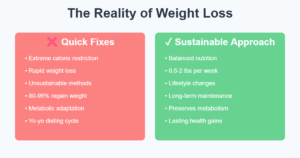
The weight loss industry generates billions annually, yet research consistently shows that approximately 80-95% of people who lose weight through restrictive dieting regain it within five years. This sobering statistic reveals a fundamental truth: temporary measures produce temporary results. Sustainable weight loss isn’t about finding the perfect diet or exercise program—it’s about developing a set of healthy habits that become part of your daily life.
This article explores the evidence-based approach to weight loss that prioritizes long-term health over quick fixes, examining how balanced nutrition, regular physical activity, and mindful eating work together to create lasting change.
Understanding Sustainable Weight Loss
What Makes Weight Loss Sustainable?
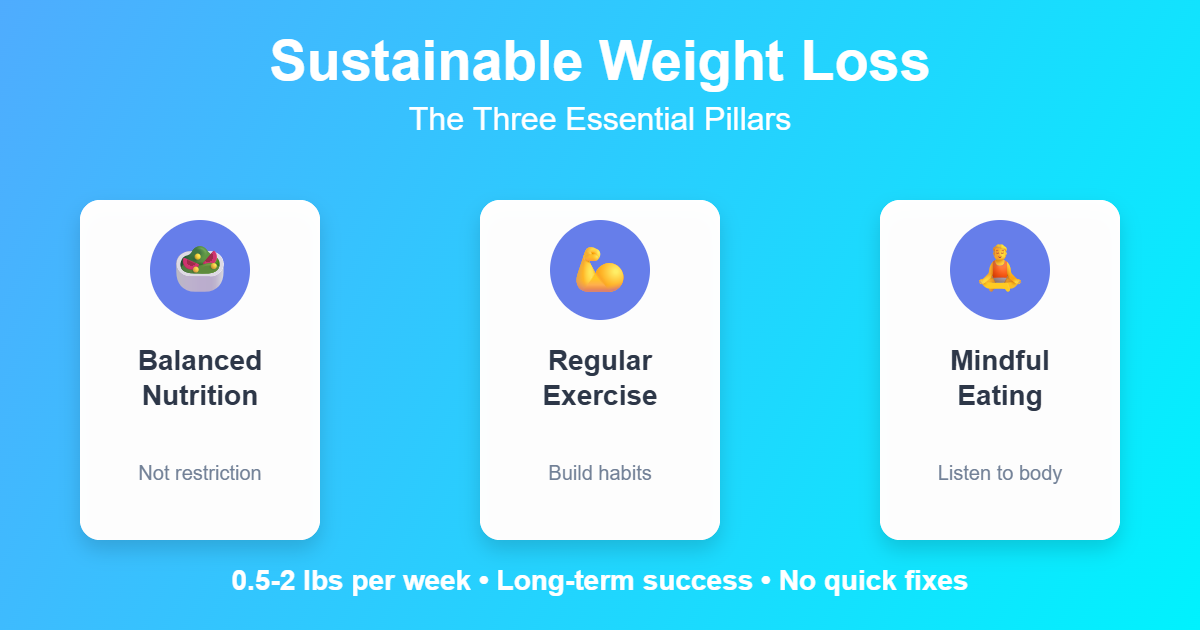
Sustainable weight loss occurs at a gradual pace—typically 0.5 to 2 pounds per week—and is achieved through lifestyle changes you can maintain indefinitely. Unlike crash diets that create unsustainable caloric deficits, sustainable approaches focus on modest calorie reduction combined with increased physical activity and behavioral change.
The key distinction is that sustainable weight loss doesn’t have an end date. You’re not “on a diet” temporarily; you’re adopting healthier patterns that become your new normal. This shift in mindset is critical because it moves you away from the all-or-nothing thinking that often leads to yo-yo dieting.
The Biology of Weight Maintenance
Understanding why weight loss is challenging helps explain why sustainable habits matter. When you lose weight, your body undergoes several adaptations:
- Metabolic adaptation: Your resting metabolic rate decreases, meaning you burn fewer calories at rest
- Hormonal changes: Leptin (the satiety hormone) decreases while ghrelin (the hunger hormone) increases
- Increased appetite: These hormonal shifts can persist for years after weight loss
These biological realities don’t make sustained weight loss impossible, but they do underscore why crash diets fail. Your body interprets rapid weight loss as a threat and responds by making weight regain easier. Gradual weight loss with maintained muscle mass minimizes these adaptations and gives your body time to adjust to its new set point.
Balanced Nutrition: The Foundation of Sustainable Weight Loss
Moving Beyond Restrictive Diets
After working with weight loss for over a decade, I’ve observed that people who successfully maintain weight loss don’t follow rigid meal plans or eliminate entire food groups. Instead, they develop a flexible approach to nutrition that includes all macronutrients—proteins, carbohydrates, and fats—in appropriate proportions.
Restrictive diets create a deprivation mindset that inevitably leads to rebound eating. When you label foods as “forbidden,” you increase their psychological appeal and set yourself up for feelings of guilt when you eventually eat them. A balanced approach recognizes that all foods can fit into a healthy eating pattern.
Key Principles of Balanced Nutrition
Prioritize protein intake: Adequate protein (approximately 0.7-1 gram per pound of ideal body weight) supports several weight loss goals:
- Preserves lean muscle mass during calorie restriction
- Increases satiety more effectively than carbohydrates or fats
- Has a higher thermic effect, meaning your body burns more calories digesting it
- Helps regulate appetite hormones
Include fiber-rich foods: Aim for 25-35 grams of fiber daily from vegetables, fruits, whole grains, and legumes. Fiber promotes fullness, slows digestion, and supports gut health—all factors that contribute to sustainable weight management.
Don’t fear healthy fats: Including moderate amounts of unsaturated fats from sources like olive oil, avocados, nuts, and fatty fish supports hormone production, nutrient absorption, and satiety. Fats make meals more satisfying and help prevent the feeling of restriction.
Focus on nutrient density: Choose foods that provide significant vitamins, minerals, and beneficial compounds relative to their calorie content. This means emphasizing whole foods over highly processed options most of the time, while still allowing flexibility for treats and convenience foods.
Practical Implementation
Rather than counting every calorie obsessively, many successful long-term weight maintainers develop an intuitive sense of appropriate portions. Some practical strategies include:
- Using smaller plates to naturally reduce portion sizes without feeling deprived
- Following the “plate method”: half vegetables, quarter protein, quarter complex carbohydrates
- Preparing most meals at home where you control ingredients and portions
- Planning ahead for situations where healthy options may be limited
- Allowing flexibility for social occasions and special meals without guilt
The goal is to create a pattern of eating that nourishes your body, satisfies your appetite, and fits realistically into your lifestyle.
Regular Exercise: Building an Active Lifestyle
Why Exercise Matters for Weight Loss
While nutrition creates the caloric deficit necessary for weight loss, exercise plays multiple crucial roles:
- Burns additional calories and increases overall energy expenditure
- Preserves and builds lean muscle mass, which maintains metabolic rate
- Improves insulin sensitivity and metabolic health
- Reduces stress and improves mood, making it easier to stick with healthy habits
- Provides non-food rewards that reinforce your commitment to health
Research shows that people who successfully maintain weight loss typically engage in 200-300 minutes of moderate-intensity exercise per week—substantially more than the minimum recommendations for general health. However, reaching this level takes time and should be approached gradually.
Creating a Sustainable Exercise Routine
Start where you are: If you’re currently sedentary, begin with 10-15 minute walks and gradually increase duration and intensity. Consistency matters far more than perfection. It’s better to exercise moderately three times per week for years than intensely six times per week for two months before burning out.
Combine cardiovascular and resistance training:
Cardiovascular exercise (walking, cycling, swimming, jogging) burns calories and improves cardiovascular health. Aim for at least 150 minutes per week of moderate intensity or 75 minutes of vigorous intensity.
Resistance training (weights, resistance bands, bodyweight exercises) preserves and builds muscle mass, which is critical during weight loss. Include resistance training 2-3 times per week, targeting all major muscle groups.
Find activities you genuinely enjoy: The best exercise is the one you’ll actually do consistently. Experiment with different activities—hiking, dancing, sports, group fitness classes, martial arts—until you find what you look forward to rather than dread.
Build movement into daily life: Beyond structured exercise, increasing non-exercise activity thermogenesis (NEAT)—the calories burned through daily activities—significantly impacts total energy expenditure. Take stairs instead of elevators, park farther away, stand while working when possible, and look for opportunities to move throughout the day.
Overcoming Common Exercise Barriers
The most common reason people abandon exercise programs is trying to do too much too soon. Other barriers include:
- Time constraints: Even 10-minute movement breaks throughout the day provide benefits. Quality and consistency matter more than duration.
- Intimidation: You don’t need a gym membership or expensive equipment. Bodyweight exercises and walking are highly effective and free.
- Past injuries or limitations: Work with healthcare providers to identify safe activities. Most people can find some form of movement that’s appropriate for their situation.
- All-or-nothing thinking: Missing a planned workout doesn’t mean the day is ruined. Something is always better than nothing.
Mindful Eating: The Psychological Component
What Is Mindful Eating?
Mindful eating applies principles of mindfulness—present-moment awareness without judgment—to the eating experience. Rather than eating on autopilot or while distracted, mindful eating involves:
- Paying attention to hunger and fullness cues
- Eating slowly and without distraction
- Noticing the colors, smells, textures, and flavors of food
- Recognizing emotional versus physical hunger
- Responding to fullness by stopping when satisfied, not stuffed
This practice addresses one of the core challenges in weight management: many people have lost touch with their body’s natural hunger and satiety signals due to years of dieting, eating for emotional reasons, or eating in response to external cues rather than internal needs.
The Evidence for Mindful Eating
Research demonstrates that mindful eating interventions can reduce binge eating, emotional eating, and eating in response to external cues. While mindful eating alone may not produce dramatic weight loss, it significantly improves the quality of the weight loss journey and increases the likelihood of long-term maintenance.
People who eat mindfully report:
- Greater satisfaction with smaller portions
- Reduced guilt and shame around eating
- Improved ability to stop eating when comfortably full
- Less tendency to use food for emotional regulation
- Better overall relationship with food
Practical Mindful Eating Strategies
Eliminate distractions during meals: Turn off the television, put away your phone, and focus on the eating experience. Studies show that people who eat while distracted consume significantly more calories and feel less satisfied.
Use the hunger-fullness scale: Before eating, rate your hunger on a scale of 1-10 (1 being ravenous, 10 being uncomfortably full). Aim to eat when you’re at a 3-4 (moderately hungry) and stop at a 6-7 (comfortably satisfied). Check in with yourself midway through the meal.
Practice the pause: Halfway through your meal, put down your utensils for a minute. Assess your hunger level and decide whether you want to continue eating or save the rest for later.
Distinguish physical from emotional hunger: Physical hunger develops gradually, can be satisfied with various foods, and goes away when you’re full. Emotional hunger comes on suddenly, craves specific foods (often high-sugar or high-fat), and doesn’t disappear even after you’re physically full. When you recognize emotional hunger, address the underlying emotion rather than eating.
Slow down: It takes approximately 20 minutes for satiety signals to reach your brain. Eating slowly allows these signals to catch up with your consumption, helping prevent overeating. Try putting your fork down between bites or taking a sip of water between every few bites.
Remove judgment: Mindful eating is not about eating “perfectly.” If you overeat or choose less nutritious options, observe what happened without self-criticism. Curiosity and self-compassion are more effective than guilt at creating lasting change.
Integrating All Three Components
Creating Your Personal System
Sustainable weight loss emerges from the integration of balanced nutrition, regular exercise, and mindful eating—but the specific implementation looks different for everyone. Your system should account for:
- Your schedule and time availability
- Food preferences and cultural traditions
- Physical abilities and limitations
- Social and family dynamics
- Personal values and priorities
Start by identifying one small change in each area that feels achievable. For example:
- Nutrition: Add a serving of vegetables to dinner each night
- Exercise: Take a 10-minute walk during lunch break
- Mindful eating: Eat one meal per day without screens
As these habits become automatic, gradually add more changes. This incremental approach prevents overwhelm and allows each new habit to solidify before adding another.
The Role of Self-Monitoring
Research consistently shows that self-monitoring—tracking your behaviors—predicts successful weight loss and maintenance. However, the form of monitoring matters less than the act of paying attention. Some people benefit from detailed food logs and fitness trackers, while others prefer simpler methods like:
- Weekly weigh-ins (understanding that weight fluctuates normally)
- Taking progress photos monthly
- Noting energy levels and how clothes fit
- Keeping a habit tracker for target behaviors
- Journaling about challenges and successes
The key is finding a monitoring approach that keeps you accountable without becoming obsessive or anxiety-provoking.
Dealing with Setbacks
Weight loss is rarely linear. Expect plateaus, temporary weight regains, and periods when maintaining habits feels difficult. These are normal parts of the process, not evidence of failure.
When setbacks occur:
- Return to basics rather than becoming more restrictive
- Identify specific obstacles and problem-solve around them
- Reconnect with your motivation for pursuing weight loss
- Adjust expectations if needed—slower progress is still progress
- Seek support from healthcare providers, registered dietitians, or support groups
Many people who eventually succeed at long-term weight maintenance had multiple previous attempts. Each attempt provides learning opportunities that inform future success.
The Bigger Picture: Health Beyond the Scale
Redefining Success
While the scale provides feedback, it shouldn’t be the only measure of success. Many health improvements occur before significant weight loss or even when weight loss plateaus:
- Improved blood pressure, cholesterol, and blood sugar levels
- Increased strength, endurance, and flexibility
- Better sleep quality
- Reduced chronic pain
- Improved mood and mental health
- Greater energy and vitality
- Enhanced self-efficacy and confidence
These improvements represent meaningful health gains regardless of the number on the scale. Many people find that as they focus on building healthy habits and feeling better, weight loss becomes a side effect rather than the primary goal.
Maintaining Motivation
Long-term motivation comes from intrinsic sources—values and personal meaning—rather than external pressure or appearance-based goals alone. Reflect on questions like:
- What do I want to be able to do that my current fitness level prevents?
- How do I want to feel in my body?
- What health outcomes matter most to me?
- What kind of example do I want to set for others in my life?
- How does taking care of my health align with my broader life values?
Connecting daily habits to these deeper motivations sustains effort when willpower alone would falter.
Conclusion
Sustainable weight loss represents a fundamental shift from the diet mentality that has dominated weight management approaches for decades. Rather than seeking the fastest possible results through extreme restriction, sustainable weight loss embraces gradual change through balanced nutrition, regular physical activity, and mindful eating practices.
The evidence is clear: people who successfully maintain weight loss don’t do so through perpetual dieting. They build a lifestyle that supports their health goals—one that includes flexibility, enjoyment, and self-compassion alongside structure and consistency. They recognize that the journey toward better health is exactly that—a journey, not a destination.
This approach requires patience. In a culture that promises rapid transformations, choosing sustainability over speed is countercultural. But the mathematics of long-term success favor this approach overwhelmingly. Losing just one pound per week adds up to 52 pounds in a year. More importantly, weight lost gradually through lifestyle change is far more likely to stay off than weight lost quickly through unsustainable methods.
Your relationship with food, movement, and your body deserves better than the cycle of restriction and rebound that characterizes so many weight loss attempts. By focusing on building healthy habits rather than achieving perfect adherence to rigid rules, you create the foundation for lasting change—change that enhances not just your weight, but your overall quality of life.