What Is the Whole30 Diet and How Does It Work?
The Whole30 Diet is a 30-day elimination eating program designed to reset your health and relationship with food by removing potentially problematic foods, such as added sugar, grains, dairy, and legumes. For 30 days, the plan emphasizes whole, unprocessed foods to help identify food sensitivities, improve energy, and support better eating habits.
—
What Does “Whole30” Mean?
**Whole30** is a nutritional program that challenges you to eat whole foods for 30 days, eliminating groups commonly believed to cause cravings, inflammation, poor digestion, and other health issues. After the initial 30 days, restricted foods are slowly reintroduced to observe their impact on your body.
—
How Does the Whole30 Diet Work?
1. **Elimination Phase:**
For 30 consecutive days, remove the following from your diet:
– Added sugars (real or artificial)
– Alcohol
– Grains (including wheat, rice, oats, corn, etc.)
– Legumes (beans, peas, lentils, peanuts, soy)
– Dairy products
– Certain additives (carrageenan, MSG, sulfites)
– Baked goods and “junk food” re-creations
2. **Focus on Whole Foods:**
– Vegetables
– Fruits (in moderation)
– Animal proteins (beef, poultry, seafood, eggs)
– Natural fats (avocado, nuts, olives, healthy oils)
3. **Reintroduction Phase:**
– After 30 days, systematically reintroduce eliminated foods one group at a time.
– Observe how each affects your mood, digestion, energy, or cravings.
– Identify foods that may not agree with you and adjust your diet accordingly.
Quick Overview Table: Whole30 Diet Rules
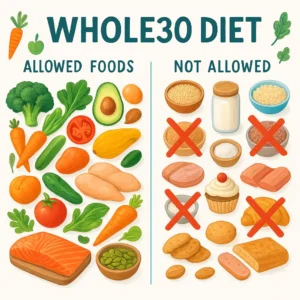
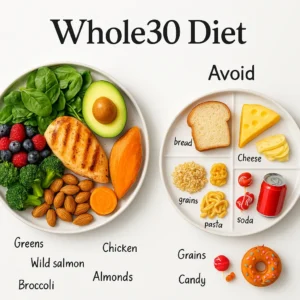
| **Allowed** | **Not Allowed** |
|—————————–|———————————–|
| Vegetables | Added sugars (all types) |
| Fruits | Alcohol |
| Meat, fish, seafood, eggs | Grains (of all kinds) |
| Nuts and seeds (except peanuts) | Legumes (all beans, lentils, soy) |
| Healthy oils (olive, coconut, etc.) | Dairy |
| Herbs, spices, seasonings | Processed foods |
| | Artificial/junk foods |
—
Why Do People Follow the Whole30 Diet?
Many choose the Whole30 diet for reasons such as:
– **Resetting eating habits:** Breaking cycles of unhealthy food choices.
– **Identifying food sensitivities:** Pinpointing ingredients that may cause bloating, fatigue, or digestive distress.
– **Improved energy & sleep:** Some report enhanced concentration and mood.
– **Weight management:** Many experience weight loss as a byproduct.
– **Reducing inflammation:** Eliminating certain food groups may reduce symptoms in people with autoimmune or inflammatory conditions.
—
What Foods Can You Eat on Whole30?
**Permitted Foods:**
– Fresh, unprocessed meats (beef, pork, chicken, turkey, fish, shellfish)
– Eggs
– Vegetables (except corn and peas)
– Fruits (limited quantities)
– Healthy fats (olive oil, avocado, coconut oil, nuts except peanuts)
– Herbs, spices, and vinegar (except malt vinegar)
Example Whole30 Meals
| Meal Type | Menu Example |
|———–|————————————————|
| Breakfast | Scrambled eggs with spinach and avocado |
| Lunch | Grilled chicken salad with mixed vegetables |
| Dinner | Baked salmon, roasted sweet potatoes, broccoli |
—
What Foods Do You Need to Avoid on Whole30?
**Prohibited Foods:**
– All forms of added sugar (including honey, syrup, agave, artificial sweeteners)
– Grains (wheat, oats, barley, rice, corn, quinoa)
– Legumes (soy, beans, lentils, chickpeas, peanuts)
– Dairy (milk, cheese, yogurt, butter)
– Alcohol (all types)
– Food additives (MSG, sulfites, carrageenan)
– Packaged junk food and “Paleoified” treats
—
How Do You Reintroduce Foods after Whole30?
After completing the 30-day elimination, the reintroduction phase involves:
1. Introducing one eliminated food group at a time (e.g., dairy).
2. Monitoring your mood, digestion, skin, sleep, and energy for 2-3 days.
3. Return to Whole30-compliant eating for a few days before testing another group.
4. Continuing this process until all eliminated foods are tested.
**Purpose:** This structured reintroduction helps you identify foods that may trigger adverse reactions.
—
Is the Whole30 Diet Supported by Nutrition Experts?
– Some registered dietitians recognize the Whole30 diet’s role in increasing awareness of processed foods and food sensitivities.
– Critics caution that it can be too restrictive and may lead to an unhealthy relationship with food if misapplied.
– It’s not intended to be followed long-term, but as a short-term reset with a reflective reintroduction phase.
**Related Entities:**
Melissa Hartwig Urban (co-creator), Dallas Hartwig, elimination diets, food intolerance, clean eating.
—
Common Ways People Ask About the Whole30 Diet
– What can you eat on Whole30?
– What foods are avoided on the Whole30 diet?
– How do you do the Whole30 diet?
– Is Whole30 effective for weight loss?
– What happens after 30 days on Whole30?
—
Frequently Asked Questions (FAQ) About the Whole30 Diet
1. **Can I drink coffee on Whole30?**
Yes, black coffee is Whole30-compliant, but you should avoid adding dairy or sweeteners. Nutmilk (without added sugar or carrageenan) is allowed.
2. **Is the Whole30 diet safe for everyone?**
Whole30 is generally safe for most healthy adults, but if you have specific medical conditions or dietary needs (e.g., pregnancy, diabetes), it’s best to consult a healthcare professional before starting.
3. **Will I lose weight on the Whole30 diet?**
Many people do lose weight during Whole30, but weight loss is not its primary goal; the focus is on resetting habits and identifying food sensitivities.
4. **Can I eat out at restaurants while on Whole30?**
Yes, but it can be challenging. Look for simple grilled meats, steamed vegetables, and ask for dishes without sauces, breading, or dairy.
5. **How is the Whole30 diet different from Paleo?**
Whole30 is stricter and designed as a short-term, all-or-nothing reset. Paleo allows some foods like natural sweeteners or certain legumes and is intended as a long-term lifestyle.
6. **What snacks are allowed on Whole30?**
Whole30 encourages minimal snacking, but you can eat fruits, cut vegetables, hard-boiled eggs, or nuts (except peanuts) when needed.
7. **Can I use Whole30 for athletes or busy lifestyles?**
Yes, but pre-planning is essential to ensure adequate calories and macronutrient intake to maintain energy and performance.
—
Key Takeaways: Should You Try the Whole30 Diet?
– **Whole30 is an elimination diet** that lasts 30 days, focusing on whole, unprocessed foods and restriction of added sugars, grains, dairy, and legumes.
– **The goal is to identify food sensitivities, reset dietary habits, and understand your body’s individual responses.**
– **Not intended as a permanent diet,** but as a tool for greater awareness and lasting healthy eating patterns.
—
Related Topics
– **Elimination Diets**: How they help identify food intolerances.
– **Paleo Diet**: Similarities and differences with Whole30.
– **Gut Health**: The role of food in supporting digestion.
– **Sugar Addiction**: Breaking the cycle through strict eliminations.
—
> **Definition Box:**
> **Whole30**: A 30-day, restrictive eating plan that eliminates sugar, grains, dairy, and legumes to help individuals identify food sensitivities and reset unhealthy eating habits.
—
> **References**:
> – [Whole30 Official Website](https://whole30.com/)
> – Hartwig, M., & Hartwig, D. (2012). *It Starts With Food.*
> – Academy of Nutrition and Dietetics: Elimination Diets
“`