After a decade of working with individuals struggling to lose weight, I’ve observed a consistent pattern: most people underestimate how much they eat by 30-50%. This isn’t a character flaw or lack of willpower—it’s a predictable consequence of living in an environment with supersized portions, oversized plates, and constant food availability. The good news? Portion control is a learnable skill that becomes automatic with practice.
While calorie quality matters enormously, calorie quantity ultimately determines whether you lose, maintain, or gain weight. You can eat exclusively nutritious foods and still gain weight if portions exceed your needs. Conversely, mastering portion control allows you to enjoy a wide variety of foods while consistently progressing toward your goals. This article provides evidence-based strategies for managing serving sizes without feeling deprived or constantly counting calories.
Why Portion Control Is Non-Negotiable for Weight Loss
The Calorie Equation Reality
Weight loss requires a caloric deficit—consuming fewer calories than you expend. While food quality influences hunger, satiety, and metabolic health, the fundamental equation remains unchanged. A caloric surplus from healthy foods still results in weight gain, while appropriate portions of less-than-ideal foods can fit within a weight loss plan.
The challenge is that our internal portion estimators are remarkably inaccurate. Research consistently shows that people underestimate their intake, particularly with calorie-dense foods like oils, nuts, cheese, and grains. A “small handful” of almonds might be 200 calories or 400 calories depending on hand size and interpretation. This margin of error easily cancels out a modest caloric deficit.
Portion Distortion in Modern Food Culture
Portion sizes have expanded dramatically over the past 40 years. A standard restaurant meal now often contains 2-3 servings’ worth of calories. A medium popcorn at the movies is larger than what was once an extra-large. Bagels, muffins, pasta servings, and beverage sizes have all grown substantially.
This portion inflation has recalibrated our expectations. What looks “normal” today would have seemed excessive a generation ago. Without conscious awareness and intentional strategies, we naturally adapt to these enlarged portions, consuming far more than our bodies require.
The Psychology of the Clean Plate
Most of us were raised with “clean your plate” messaging, creating a powerful psychological drive to finish what’s served regardless of actual hunger. We use external cues (empty plate, finished package) rather than internal cues (satisfied hunger) to determine when to stop eating. This disconnect between fullness signals and completion signals drives overconsumption.
Visual Cues: The Fastest Path to Accurate Portions
Visual estimation is faster and more sustainable than weighing and measuring every meal. Once calibrated, these visual references provide remarkably accurate portion control.
The Hand Method
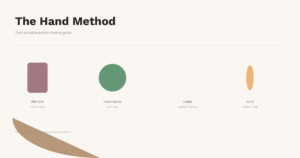
Your hand travels with you everywhere and scales proportionally to your body size, making it an ideal measuring tool.
- Protein (palm): One palm-sized portion = 3-4 ounces cooked protein
- Vegetables (fist): One fist = approximately 1 cup; aim for 1-2 fists per meal
- Carbohydrates (cupped hand): One handful = 1/2 to 3/4 cup grains or potatoes
- Fats (thumb): One thumb = approximately 1 tablespoon oils or nut butter
The Plate Method
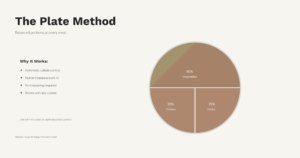
Divide a standard 9-inch dinner plate:
- Half: Non-starchy vegetables
- Quarter: Lean protein
- Quarter: Complex carbohydrates
- Small addition: Healthy fat
This approach automatically controls portions while ensuring nutrient balance.
Everyday Object Comparisons
- 3 oz protein = deck of cards
- 1 oz cheese = four dice
- 1/2 cup grains = tennis ball
- 2 tablespoons nut butter = golf ball
Portion Control Tools That Actually Work
Kitchen Essentials
Digital food scale: Use for 2-4 weeks to calibrate your visual estimates, particularly with calorie-dense foods. Weigh nuts, oils, grains, and proteins until you can accurately eyeball portions. This educational phase dramatically improves long-term accuracy.
Measuring cups and spoons: Essential for liquids and easy-to-measure items. Keep them visible and accessible—if they’re buried in a drawer, you won’t use them consistently.
Portion control containers: Color-coded container systems take the guesswork out of meal prep. Each container represents one portion of a specific macronutrient category. While not necessary, they simplify batch cooking and lunch preparation.
Strategic Dishware Choices
The size and color of your plates and bowls significantly influences consumption without conscious awareness.
Smaller plates create automatic portion control:
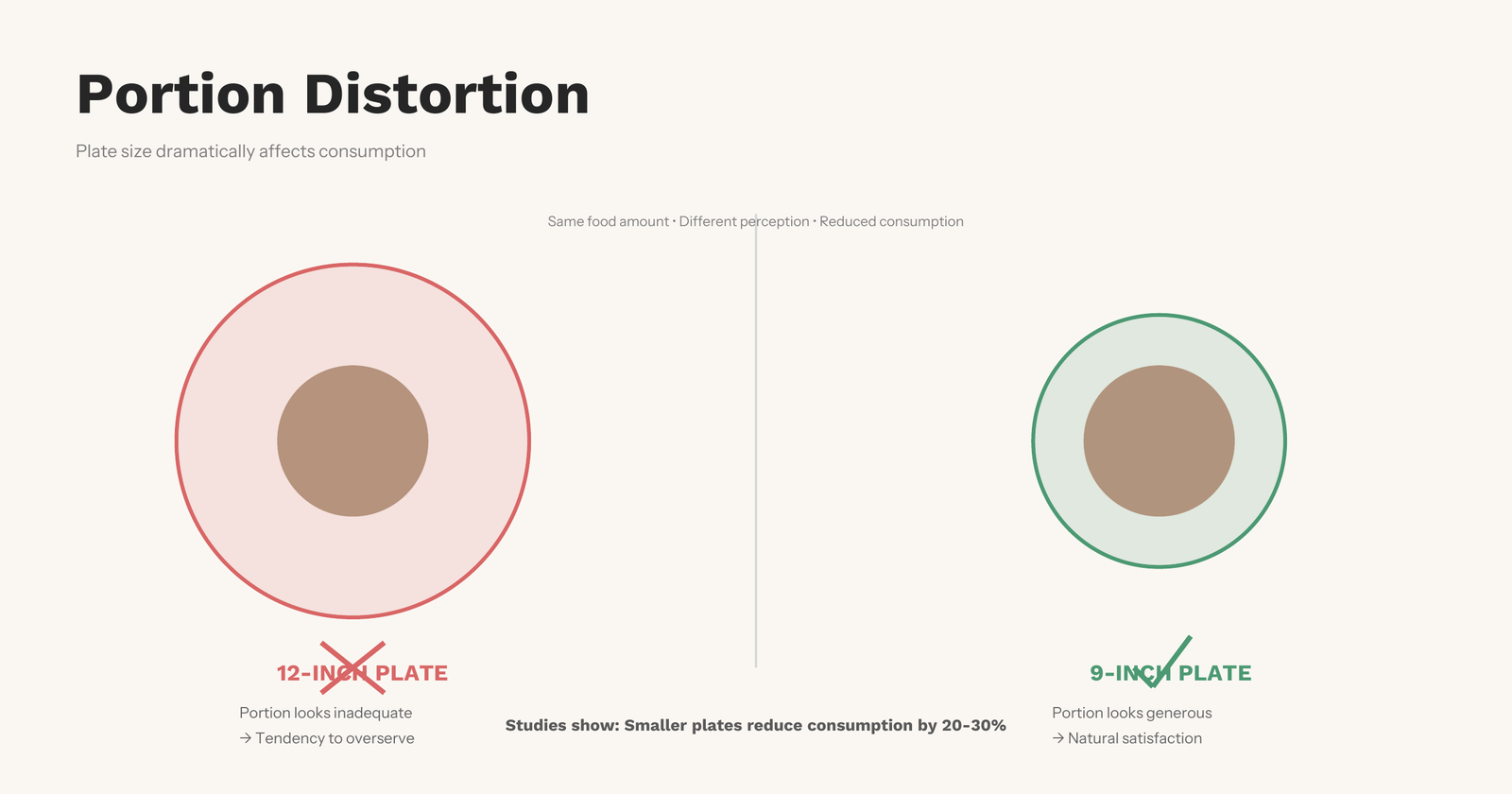
- Use 9-inch plates instead of 12-inch plates for main meals
- A moderate portion appears more substantial on a smaller plate, increasing psychological satisfaction
- Research shows people serve themselves 20-30% less on smaller plates
Color contrast matters:
- Foods appear more visually prominent against contrasting plate colors
- Higher contrast = increased awareness of portion size
- White plates work well for colorful meals; darker plates for lighter foods
Tall, narrow glasses:
- Create the illusion of more volume than short, wide glasses
- Particularly important for caloric beverages
- Can reduce liquid calorie consumption by 25-30%
Pre-Portioning Strategies
Package division upon purchase: When you buy bulk items, immediately divide them into single servings using small containers or bags. This one-time investment prevents repeated portion decisions when you’re hungry and less rational.
Plate your food in the kitchen: Avoid family-style serving at the table where large serving dishes encourage multiple helpings. Plate appropriate portions in the kitchen and sit down to eat. This creates a natural stopping point and reduces mindless refilling.
Single-serving principle: Never eat directly from packages. This applies to everything from chips to ice cream to nuts. Always portion food onto a plate or into a bowl, then put the package away before eating.
Mindful Eating: The Missing Component
Portion control tools work best when paired with mindful eating practices that reconnect you with your body’s hunger and fullness signals.
The 20-Minute Rule
It takes approximately 20 minutes for satiety signals to reach your brain. Eating quickly overrides these signals, leading to overconsumption.
Practical strategies: Put your utensil down between bites, chew thoroughly, take a brief pause halfway through your meal, and minimize distractions during eating.
The Hunger-Fullness Scale
Rate your hunger on a 1-10 scale. Ideal practice: Start eating at 4-5 (moderately hungry), stop at 6-7 (satisfied). This prevents both excessive hunger and uncomfortable fullness.
Environmental Awareness
Your eating environment profoundly influences consumption. Turn off screens during meals, keep tempting foods out of sight, and display fruits and vegetables prominently. The most visible food is the most consumed food.
Restaurant and Social Eating Strategies
Restaurants present unique challenges, with entrées often containing 1,000-2,000 calories—far exceeding most people’s needs for a single meal.
Proactive Restaurant Tactics
- Immediate boxing: Ask for a to-go container when your meal arrives and set aside half before eating
- Appetizer as entrée: Order appetizer portions as main dishes
- Strategic modifications: Request sauces on the side, double vegetables instead of starches, skip the bread basket
- Share strategically: Split an entrée and add side salads
Social Event Navigation
Eat a protein-rich snack before events to avoid arriving ravenous. Survey the entire buffet before serving yourself, then fill your plate once with reasonable portions—no seconds.
Tracking Without Obsessing
Some individuals benefit from periodic tracking to recalibrate portion awareness. Use strategic two-week tracking periods every few months to catch “portion creep.” Focus on identifying which foods you consistently underestimate—often grains, oils, nuts, and condiments rather than proteins and vegetables.
Creating Your Sustainable System
Portion control becomes automatic when it’s systematized rather than relying on constant decision-making.
Week one: Calibration Weigh and measure everything for 7 days. This educational intensive calibrates your visual estimation skills, particularly for problem foods.
Week two: Visual practice Estimate portions visually, then verify with measurements. Notice your accuracy patterns. Most people are accurate with some foods and consistently off with others.
Week three: Tool integration Implement your chosen tools (smaller plates, pre-portioning, hand method) without measuring. Trust your calibrated visual skills.
Ongoing: Periodic check-ins Measure portions of commonly eaten foods every 2-3 months. Portion creep is normal and easily corrected with brief awareness periods.
Conclusion
Portion control is the skill that separates short-term dieting from long-term weight management. Unlike restrictive elimination diets, portion awareness allows dietary flexibility while maintaining the caloric deficit necessary for weight loss.
The strategies outlined here—visual cues, appropriate tools, mindful eating practices, and environmental modifications—work synergistically. Start by choosing 2-3 approaches that resonate with your lifestyle and master those first. As they become automatic, layer in additional strategies.
Perfection isn’t the goal. You’re building skills that will serve you for decades. Some meals will involve larger portions—celebrations, miscalculations, or special occasions. This is normal. What matters is your baseline pattern, not individual meals.
The transformation from portion confusion to portion mastery typically takes 6-8 weeks of conscious practice. After this calibration period, portion control becomes largely automatic. You’ll intuitively recognize appropriate portions, naturally stop at satisfaction rather than fullness, and maintain your weight loss without constant vigilance.
Start with one strategy today. Swap your dinner plates for smaller ones, or pre-portion your snacks for the week. Small, consistent actions compound into substantial results.