

Introduction
In our fast-paced, high-stress world, it is not uncommon to seek comfort in food. While eating is a fundamental biological necessity, it can sometimes become entangled with our emotional state, leading to a pattern known as emotional eating. This article provides a comprehensive exploration of emotional eating, delving into its common triggers, the science behind it, and evidence-based strategies to overcome it. With a professional yet empathetic approach, we will navigate the complexities of this issue, offering practical guidance for those seeking to cultivate a healthier relationship with food.
What is Emotional Eating?
Emotional eating is the practice of using food to soothe, suppress, or cope with emotions, rather than to satisfy physical hunger . It is a learned behavior that can create a powerful, albeit temporary, sense of relief. When faced with challenging emotions such as stress, sadness, or boredom, the brain may crave the release of dopamine, a neurotransmitter associated with pleasure and reward, which can be triggered by consuming highly palatable foods, particularly those high in sugar, fat, and salt .
This creates a cycle where the initial emotional distress is momentarily alleviated by food, but is often followed by feelings of guilt, shame, and a sense of being out of control. This, in turn, can exacerbate the initial negative emotions, perpetuating a difficult and often frustrating cycle.
The Difference Between Emotional and Physical Hunger
Distinguishing between emotional and physical hunger is a crucial first step in breaking the cycle of emotional eating. The following table highlights the key differences:
|
Feature
|
Emotional Hunger
|
Physical Hunger
|
|
Onset
|
Sudden and urgent
|
Gradual and patient
|
|
Cravings
|
Specific, often for comfort foods
|
Open to various food options
|
|
Sensation
|
Felt as a craving in the head
|
Felt as a growling in the stomach
|
|
Eating Pattern
|
Mindless and automatic
|
Mindful and deliberate
|
|
Satiety
|
Often leads to overeating without satisfaction
|
Stops when full
|
|
Post-Eating Feeling
|
Guilt, shame, or powerlessness
|
Satisfaction and contentment
|
Common Triggers for Emotional Eating
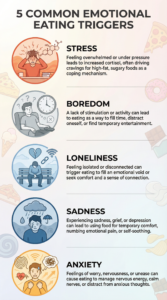
Emotional eating is not a sign of weakness, but rather a coping mechanism that has been reinforced over time. Identifying the specific triggers that lead to emotional eating is essential for developing effective strategies to manage it. Research indicates that emotional eating is particularly prevalent in response to negative emotions and challenging life circumstances .
Stress and Work Pressures. The body releases cortisol, the stress hormone, which can increase appetite and cravings for unhealthy foods . Whether it is a demanding work deadline, financial concerns, or relationship conflicts, stress can trigger an immediate desire to seek comfort in food. This is because eating activates the brain’s reward system, providing temporary relief from the stress response.
Boredom and Lack of Stimulation. Food can be used as a way to fill a void or provide a source of stimulation when one is feeling under-stimulated or disengaged. Boredom-related eating often occurs when individuals have unstructured time or feel disconnected from meaningful activities. The act of eating provides both a sensory experience and a temporary distraction from the monotony.
Loneliness and Social Disconnection. In the absence of social connection, food can serve as a temporary source of comfort and companionship. Individuals who lack strong social bonds may turn to food as a substitute for human interaction, using eating as a way to soothe the emotional pain of isolation.
Sadness and Depression. Comfort foods can provide a fleeting sense of pleasure and distraction from feelings of sadness or hopelessness. The dopamine release associated with eating palatable foods can temporarily elevate mood, creating a powerful reinforcement cycle that encourages repeated emotional eating.
Anxiety and Uncertainty. The act of eating can provide a temporary distraction from anxious thoughts and feelings. The ritualistic nature of eating—preparing food, consuming it, and the sensory experience—can serve as a grounding mechanism that temporarily alleviates anxiety symptoms.
Strategies for Overcoming Emotional Eating

Overcoming emotional eating requires a multi-faceted approach that addresses both the emotional triggers and the eating behaviors themselves. The following strategies, supported by research, can help you regain control:
1. Cultivate Self-Awareness Through a Food and Mood Journal
Keeping a detailed journal of what you eat, when you eat, how much you consume, and how you are feeling can help you identify the patterns and triggers that lead to emotional eating . This practice promotes mindfulness and allows you to make more conscious choices about how you nourish your body. Over time, patterns often emerge that reveal the connection between specific emotions and eating behaviors. For example, you might notice that you reach for sweets when you feel stressed, or that you snack mindlessly when bored. Once these patterns are identified, you can develop targeted strategies to address them.
2. Develop Healthy Coping Mechanisms
Instead of turning to food, find alternative ways to manage your emotions. Research supports a variety of evidence-based coping strategies:
Physical Activity. Exercise is a powerful mood booster and stress reducer . A 30-minute walk, a yoga session, or any form of movement can help shift your emotional state and reduce the urge to eat emotionally. Physical activity also provides a healthy outlet for stress and anxiety, while simultaneously improving your overall health and well-being.
Relaxation and Mindfulness Techniques. Meditation, deep breathing, and progressive muscle relaxation can help calm the nervous system and reduce stress . These practices create a pause between the emotional trigger and the eating response, allowing you to make a more conscious choice about how to respond.
Social Connection. Social support is a crucial buffer against stress and negative emotions . Reaching out to friends, family, or a support group can provide emotional validation and reduce feelings of isolation. Sometimes, simply talking through your feelings with someone you trust can be enough to prevent emotional eating.
Engaging in Meaningful Activities. Hobbies, creative pursuits, and activities that bring you joy can provide a sense of purpose and fulfillment. Whether it is reading, painting, playing music, or spending time in nature, these activities offer healthier ways to manage emotions and fill your time.
3. Nourish Your Body with a Balanced Diet
Depriving yourself of certain foods can often lead to increased cravings and a greater likelihood of emotional eating . Instead, focus on a balanced diet that includes a variety of nutrient-dense foods. This approach reduces the psychological deprivation that often triggers intense cravings. Eating satisfying amounts of healthier foods, enjoying occasional treats in moderation, and maintaining dietary variety all contribute to reduced food cravings and better emotional regulation. Additionally, stable blood sugar levels support more stable moods and energy levels throughout the day.
4. Prioritize Sleep and Rest
Lack of sleep can disrupt the hormones that regulate appetite and mood, leading to increased cravings for unhealthy foods and heightened emotional reactivity . Aim for 7-9 hours of quality sleep per night to support both your physical and emotional well-being. When you are well-rested, you have greater emotional resilience and are better equipped to handle stress without turning to food for comfort.
When to Seek Professional Help
While the strategies outlined above can be highly effective, there are times when professional support is needed. If you find that emotional eating is causing significant distress or interfering with your daily life, consider seeking help from a mental health professional or a registered dietitian who specializes in eating disorders. They can provide you with the tools and support you need to develop a healthier relationship with food and address any underlying emotional issues . Therapy can help you understand the root causes of your emotional eating and develop sustainable coping strategies tailored to your specific needs.
Conclusion
Emotional eating is a complex issue with deep-seated emotional roots. By understanding the triggers, developing healthy coping mechanisms, and nourishing your body with a balanced diet, you can break free from the cycle of emotional eating and cultivate a more mindful and fulfilling relationship with food. Remember that this is a journey, not a destination, and that every step you take towards greater self-awareness and self-compassion is a step in the right direction. With patience, persistence, and the right support, you can overcome emotional eating and achieve lasting change.
References