Transitioning to a plant-based diet involves rethinking many aspects of nutrition, and iron is often a primary concern. While it is entirely possible to get enough iron from plant sources, it requires a more strategic approach than simply eating iron-rich foods. The key lies in understanding the type of iron in plants and how the body absorbs it.
This article provides a thorough, evidence-based guide for individuals moving to a plant-based diet. We will explore the nuances of plant-based iron, why it demands special attention, and practical steps to ensure you meet your body’s needs. You will learn not just what to eat, but how to eat it for optimal iron intake.
What Plant-Based Iron Is (and What It Isn’t)
Dietary iron comes in two forms: heme and non-heme. Heme iron is found exclusively in animal products like meat, poultry, and fish. Non-heme iron is found in plant-based foods such as legumes, whole grains, nuts, seeds, and vegetables. This distinction is the single most important factor for those on a plant-based diet.
According to a 2025 review in Current Nutrition Reports, the body absorbs heme iron much more efficiently, with a bioavailability rate of 25–30%. Non-heme iron, by contrast, has a significantly lower bioavailability of just 2–10% . This means that even if a plant-based meal contains the same amount of iron as a meat-based meal, your body will absorb less of it.
This is not a reason to believe a plant-based diet is inherently deficient. Research, including a study in the UK Biobank cohort, has found that the prevalence of iron deficiency anemia did not differ between vegans and regular meat-eaters . The key takeaway is that maintaining adequate iron levels on a plant-based diet is not about the amount of iron consumed alone, but about understanding and optimizing its absorption.
Why It Matters / When It’s Useful
Iron is a critical mineral. Its primary role is to be a core component of hemoglobin, the protein in red blood cells responsible for transporting oxygen from your lungs to the rest of your body. According to Stanford Medicine, when you don’t have enough iron, your body can’t produce enough hemoglobin, leading to iron deficiency anemia . Symptoms can include fatigue, weakness, shortness of breath, and dizziness.
Understanding how to manage iron intake is useful for anyone adopting a vegetarian or vegan diet, especially for individuals with increased iron needs, such as women of childbearing age and athletes. The Institute of Medicine (IOM) recommends a higher daily iron intake for those on plant-based diets to compensate for lower absorption: 32 mg for women of fertile age (compared to 18 mg for omnivores) and 14 mg for men (compared to 8 mg for omnivores) .
Key Concepts Readers Must Understand
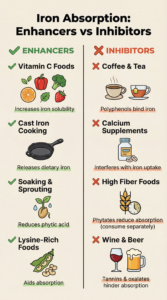
To successfully manage iron on a plant-based diet, you must grasp three key concepts: bioavailability, enhancers, and inhibitors.
•Bioavailability: As mentioned, this refers to the proportion of a nutrient that is absorbed and utilized by the body. The low bioavailability of non-heme iron is the central challenge.
•Enhancers: These are compounds that increase the absorption of non-heme iron when consumed in the same meal. The most potent and well-researched enhancer is Vitamin C. According to a study in JAMA Network Open, Vitamin C creates a more acidic environment in the stomach and prevents the oxidation of iron into a less absorbable form .
•Inhibitors: These are compounds that interfere with and reduce the absorption of non-heme iron. The most common inhibitors in a plant-based diet are phytates (found in whole grains, legumes, nuts, and seeds) and tannins (found in tea and coffee).
Step-by-Step: How to Approach Plant-Based Iron
Ensuring sufficient iron intake is a matter of consistent, mindful eating habits. Follow these steps to build an iron-rich, plant-based diet.
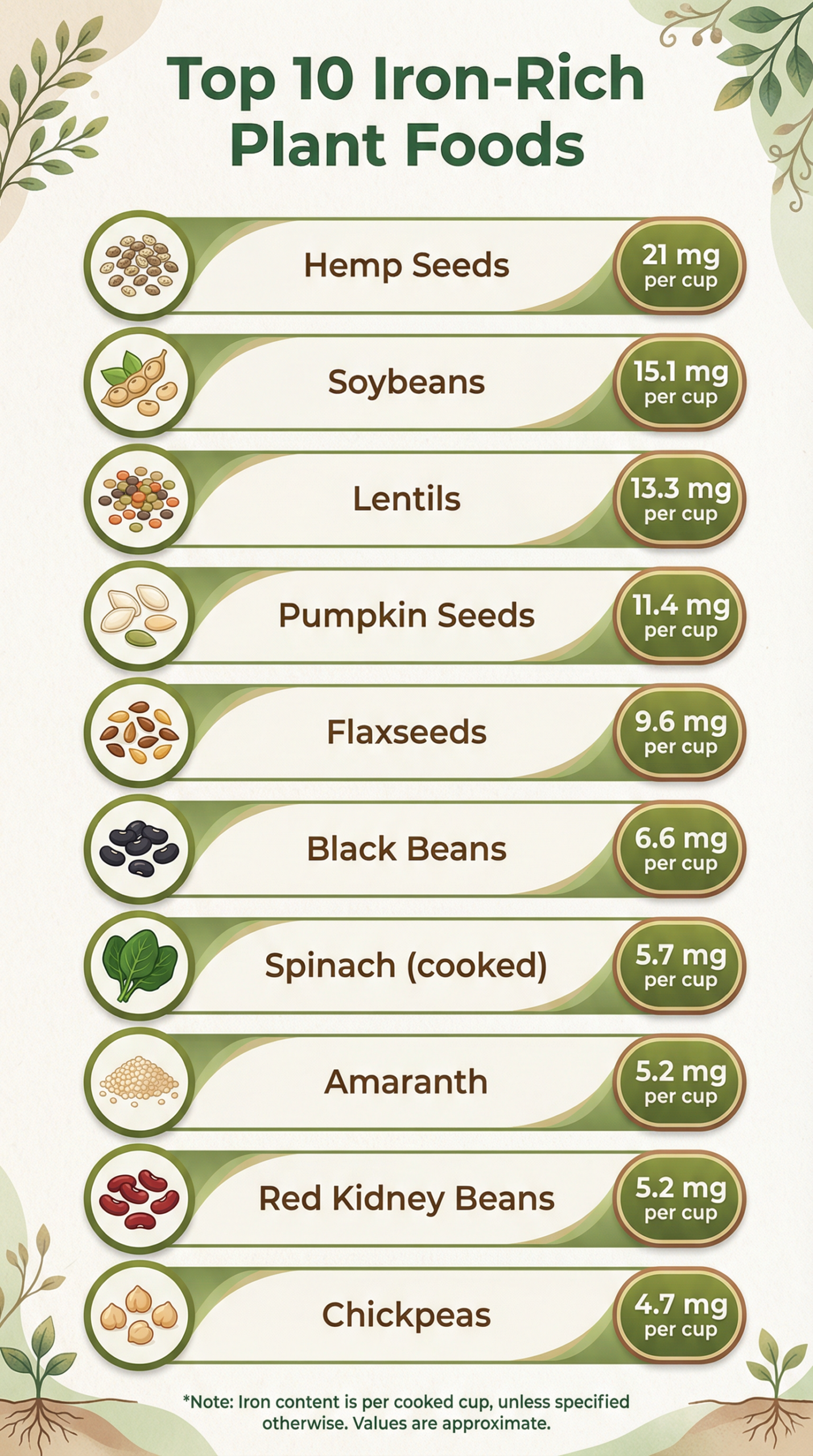
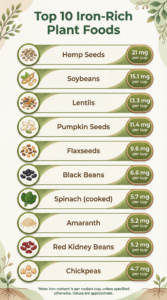
1.Prioritize Iron-Rich Plant Foods: Make a conscious effort to include high-iron foods in your daily meals. According to data from Healthline, some of the best sources are legumes, seeds, and certain vegetables .
|
Food Category
|
Examples (Iron per cooked cup)
|
|
Legumes
|
Soybeans (15.1 mg), Lentils (13.3 mg), Black Beans (6.6 mg)
|
|
Seeds
|
Hemp Seeds (21 mg), Pumpkin Seeds (11.4 mg), Flaxseeds (9.6 mg)
|
|
Vegetables
|
Spinach (5.7 mg), Swiss Chard (3.9 mg), Beet Greens (2.7 mg)
|
|
Grains
|
Amaranth (5.2 mg), Quinoa (2.8 mg), Oats (2.1 mg)
|
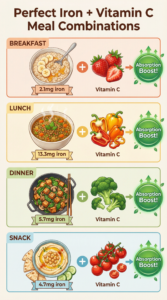
1.Pair with Vitamin C: This is the most effective strategy for boosting absorption. At every meal that contains an iron-rich food, include a source of Vitamin C. For example:
•Add bell peppers or tomatoes to a lentil curry.
•Squeeze lemon juice over a spinach salad.
•Have a side of broccoli with your tofu scramble.
•Eat an orange or strawberries for dessert after a bean-based meal.
2.Minimize Inhibitors with Meals: Be strategic about when you consume foods and drinks that block iron absorption.
•Avoid drinking coffee or tea with your meals. Wait at least an hour before or after eating.
•While phytates are present in healthy foods like grains and beans, their inhibitory effect can be reduced. Soaking, sprouting, or fermenting these foods before cooking can lower phytate levels and improve iron absorption .
Common Pitfalls and How to Avoid Them
•Eating Iron and Vitamin C Separately: Having an orange for breakfast and a lentil soup for dinner will not enhance absorption. The two must be consumed together in the same meal.
•Relying on High-Iron Foods Alone: Eating large amounts of spinach without a source of Vitamin C will result in minimal iron absorption due to its non-heme form.
•Ignoring Inhibitors: Drinking tea or coffee with your iron-fortified breakfast cereal can significantly negate the benefits.
Options / Approaches (Compare Tradeoffs)
There are a few practical approaches you can take to meet your iron needs:
•The Food-First Approach: This involves diligently planning every meal to include iron-rich foods paired with Vitamin C enhancers. This is the most natural and holistic method, providing a wide range of other nutrients. The tradeoff is that it requires consistent planning and knowledge.
•The Fortified Foods Approach: Many foods, like breakfast cereals and plant-based milks, are fortified with iron. This can be an easy way to boost intake, but it’s important to check labels and still consume them with Vitamin C. The tradeoff is a potential reliance on processed foods.
•The Cast-Iron-Cooking Approach: Cooking food, especially acidic foods like tomato sauce, in a cast-iron skillet can increase the iron content of the meal. Stanford Medicine notes this technique transmits iron to the food as it heats . This is a simple, passive way to add extra iron, but the amount can be variable.
Practical Checklist
Use this checklist to evaluate and improve your daily iron intake:
FAQs
1. Do I need an iron supplement on a plant-based diet?
Not necessarily. According to a 2025 review, well-planned plant-based diets can be nutritionally adequate, and many vegans meet their iron needs through food alone . Supplementation should only be considered if you have a diagnosed deficiency and it is recommended by a healthcare professional.
2. Is spinach a good source of iron?
Spinach is high in iron (5.7 mg per cooked cup), but it also contains oxalates, which can inhibit absorption. To get the most benefit, it is crucial to pair spinach with a strong source of Vitamin C, like lemon juice or bell peppers.
3. Does cooking destroy iron in food?
No, iron is a mineral and is stable during cooking. In fact, cooking can sometimes make iron more available by breaking down plant cell walls.
4. What about calcium? Does it block iron absorption?
Yes, calcium is also an inhibitor of both heme and non-heme iron. For this reason, it is best to avoid taking calcium supplements or consuming large amounts of dairy or fortified plant milks with your most iron-rich meals.
Conclusion
Successfully managing iron on a plant-based diet is less about deficiency and more about diligence. The evidence shows that while non-heme iron from plants is less bioavailable, a well-planned diet can provide more than enough to meet the body’s needs. The key is not just what you eat, but how you combine your foods.
•Plant-based iron (non-heme) is absorbed less efficiently than animal-based iron (heme).
•To compensate, those on plant-based diets need to consume more total iron.
•The most effective strategy is to pair iron-rich plant foods with a source of Vitamin C in the same meal.
•Avoid inhibitors like coffee and tea with meals, as they block iron absorption.
•A well-planned, strategic approach can provide adequate iron without the need for supplements.
Begin by auditing your next three meals using the practical checklist above. Identify where you can add a source of Vitamin C to your iron-rich foods or shift your coffee/tea consumption to be between meals. Small, consistent changes are the most effective way to build a truly iron-clad, plant-based diet.
References