Introduction
In the landscape of weight management, snacking often gets a bad reputation, viewed as a dietary pitfall that can derail even the most disciplined efforts. However, with over a decade of experience in nutritional science, I can assert that this perspective is not only outdated but counterproductive. When approached with intention and knowledge, snacking is not the enemy of weight loss; it is a powerful tool for achieving and sustaining it. For the 75% of Americans who snack daily, the choice is not whether to snack, but how to snack smartly .
This comprehensive guide is designed to reframe your understanding of snacking. We will move beyond the simplistic narrative of deprivation and explore how to integrate healthy, satisfying snacks into your daily routine to support your weight loss goals. This article will provide a variety of evidence-based, nutrient-dense snack ideas that are low in calories but high in flavor and satiety. We will also demonstrate the simple preparation of these delicious options, empowering you to make choices that nourish your body, manage hunger, and keep you on the path to success.
The Science of Satiety: Why Smart Snacking Works
To master the art of healthy snacking, it is essential to understand the science of satiety—the feeling of fullness and satisfaction that tells your brain to stop eating. The most effective weight loss snacks are not just low in calories; they are high in the specific macronutrients that promote this feeling of fullness, preventing overeating at subsequent meals.
The Power Trio: Protein, Fiber, and Healthy Fats
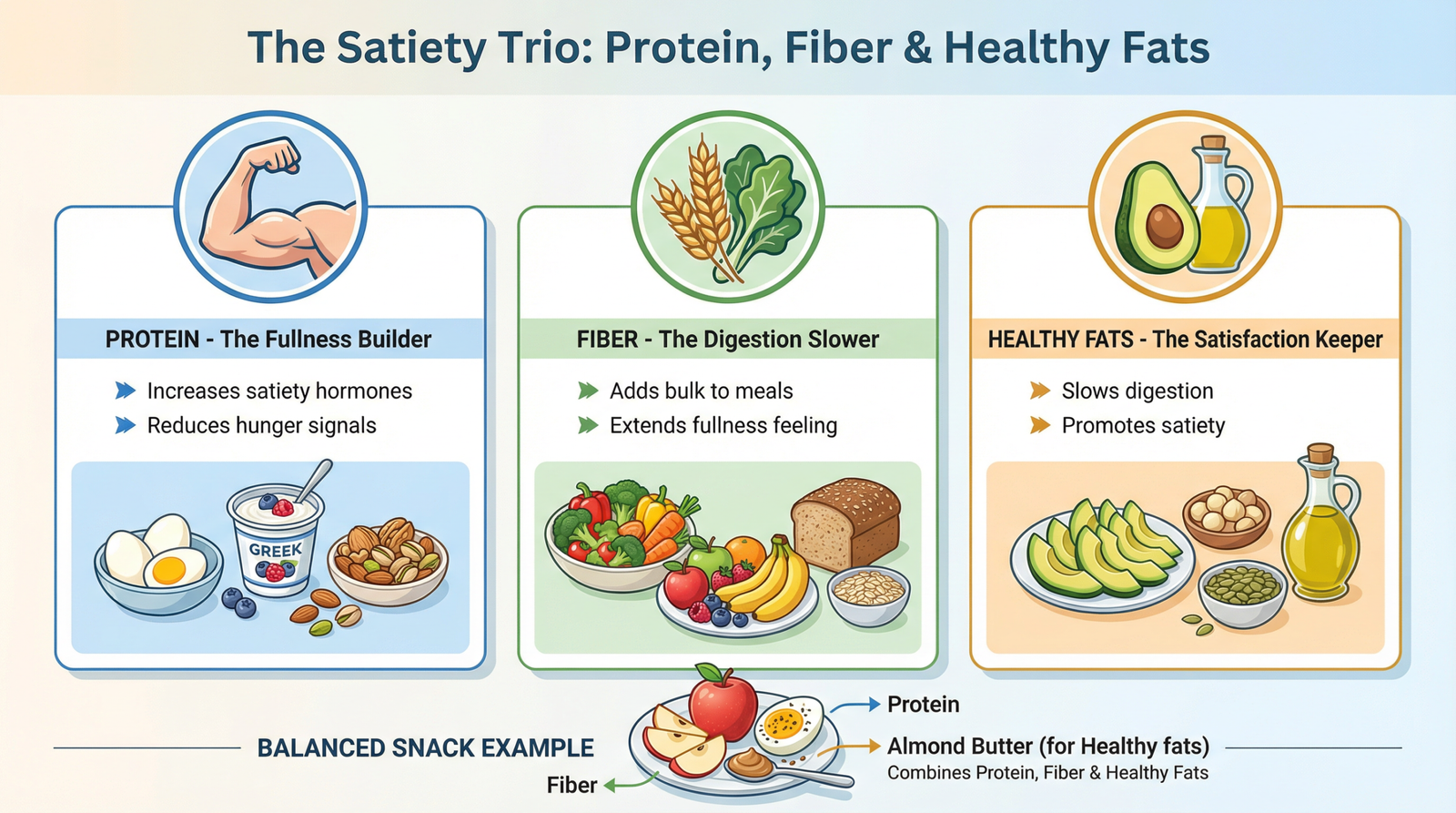
The most satiating snacks deliver a powerful combination of protein, fiber, and healthy fats. This trio works synergistically to slow down digestion, stabilize blood sugar levels, and regulate appetite-controlling hormones.
•Protein: This macronutrient is a satiety superstar. Research has consistently shown that protein increases the feeling of fullness to a greater extent than either carbohydrates or fats . It works by influencing several hormones that regulate appetite, such as increasing the levels of the satiety hormones GLP-1, PYY, and CCK, while reducing levels of the hunger hormone ghrelin .
•Fiber: Found in fruits, vegetables, whole grains, and legumes, dietary fiber adds bulk to your meals and slows down the rate at which food leaves your stomach. This not only keeps you feeling full for longer but also promotes a healthy digestive system. Certain fibers can also stimulate the release of appetite-reducing hormones in the gut .
•Healthy Fats: Monounsaturated and polyunsaturated fats, found in foods like nuts, seeds, and avocados, also play a role in satiety. They are digested slowly, contributing to a prolonged feeling of fullness.
By choosing snacks that are rich in these three components, you can effectively manage hunger between meals, reduce overall calorie intake, and avoid the energy crashes that often lead to cravings for high-sugar, high-fat foods.
Building Your Healthy Snack Arsenal: Ideas and Preparation
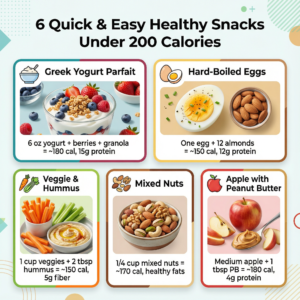
The key to successful snacking is preparation. Having healthy, appealing options readily available makes it easy to make a good choice when hunger strikes. Below are a variety of snack ideas, categorized by their primary nutritional benefits, complete with simple preparation instructions.
Protein-Packed Powerhouses
These snacks are ideal for keeping hunger at bay and supporting muscle maintenance during weight loss.
•Greek Yogurt Parfait: A 6-ounce serving of plain, low-fat Greek yogurt provides a substantial amount of protein.
•Preparation: Layer 6 ounces of plain Greek yogurt with 1/2 cup of mixed berries (fresh or frozen) and a tablespoon of high-fiber granola. This combination offers protein, fiber, and antioxidants for a satisfying and nutrient-dense snack under 200 calories.
•Hard-Boiled Eggs: A single large hard-boiled egg contains about 6 grams of high-quality protein and is incredibly convenient.
•Preparation: Boil a batch of eggs at the beginning of the week and store them in the refrigerator. For a quick snack, simply peel and eat. You can add a sprinkle of black pepper or paprika for extra flavor.
•Cottage Cheese with Fruit: Low-fat cottage cheese is another protein champion, with about 14 grams of protein per half-cup serving.
•Preparation: Top 1/2 cup of low-fat cottage cheese with 1/2 cup of pineapple, mango, or melon chunks. The sweetness of the fruit balances the savory cheese, creating a delicious and filling snack.
Fiber-Rich and Refreshing
These snacks are high in volume and water content, making them physically filling while being low in calories.
•Vegetable Sticks with Hummus: This classic combination is both crunchy and creamy.
•Preparation: Slice carrots, celery, bell peppers, and cucumbers into sticks. Pair 1 cup of mixed vegetable sticks with 2 tablespoons of hummus. This provides a satisfying crunch, plant-based protein, and fiber for under 150 calories.
•Apple Slices with Peanut Butter: The fiber in the apple and the protein and healthy fats in the peanut butter make for a classic, satiating snack.
•Preparation: Slice one medium apple and serve with 1 tablespoon of natural peanut butter. Be mindful of the portion size for the peanut butter, as it is calorie-dense.
•Air-Popped Popcorn: When not laden with butter and salt, popcorn is a whole grain and a good source of fiber.
•Preparation: Use an air popper to make 3 cups of popcorn. For flavor, spritz with a small amount of olive oil and toss with 2 tablespoons of nutritional yeast or a sprinkle of Parmesan cheese. This large-volume snack comes in at around 150 calories.
Perfectly Balanced Combinations
These snacks offer a well-rounded mix of protein, fiber, and healthy fats for ultimate satisfaction.
•Mixed Nuts or Trail Mix: Nuts are a nutritional powerhouse, but portion control is key.
•Preparation: Create your own single-serving trail mix packs. Combine 1/4 cup of mixed, unsalted nuts (like almonds, walnuts, and pistachios) with a tablespoon of dried fruit and a teaspoon of dark chocolate chips. This pre-portioning helps you reap the benefits without overdoing the calories.
•Turkey or Roast Beef Roll-Ups: A simple, low-carb, high-protein option.
•Preparation: Take two slices of lean turkey or roast beef and lay them flat. Spread a thin layer of cream cheese or hummus on each slice. Place a pickle spear or a few slices of bell pepper at one end and roll up. This snack is both savory and satisfying.
•Edamame: These young soybeans are packed with plant-based protein and fiber.
•Preparation: A 1/2 cup serving of shelled edamame, steamed or boiled, is a simple and nutritious snack. You can buy them fresh or frozen. A light sprinkle of sea salt is all they need.
The Art of Mindful Snacking
What you eat is only half the battle; how you eat is just as important. Mindful snacking involves paying full attention to the experience of eating, which can increase satisfaction and prevent overconsumption.
•Plate Your Snacks: Instead of eating directly from the bag or container, put your portion on a plate or in a bowl. This visual cue helps you recognize the serving size.
•Eliminate Distractions: Step away from your computer, turn off the TV, and put down your phone. When you focus on your food, you are more likely to notice when you are full.
•Savor Each Bite: Pay attention to the flavors, textures, and aromas of your snack. Chew slowly and deliberately. This practice not only enhances the enjoyment of your food but also gives your brain time to register satiety signals.
Conclusion: Snacking as a Strategy for Success
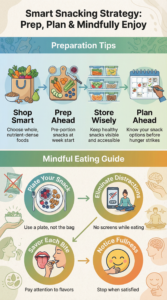
Snacking is not a dietary transgression but a strategic opportunity to fuel your body, manage hunger, and support your weight loss journey. By shifting your focus from restrictive, low-calorie-only options to nutrient-dense, satisfying foods, you can transform snacking from a potential pitfall into a cornerstone of your success. The key lies in planning, preparation, and mindfulness.
Embrace the power of protein, fiber, and healthy fats. Prepare your snacks in advance to make healthy choices effortless. And finally, practice mindful eating to fully savor and appreciate the nourishment you are providing your body. By adopting these principles, you will find that smart snacking is not only compatible with weight loss but is an essential and enjoyable part of a healthy, sustainable lifestyle.
References