Visualizing the power of meal timing, this infographic shows how your body's circadian rhythm influences metabolism. Eating in sync with your internal clock—such as having a larger breakfast and finishing dinner earlier—can significantly reduce obesity risk, while late-night eating can slow calorie burn and promote fat storage.
The Midnight Kitchen Raid: A Professional’s Guide to Overcoming Late-Night Snacking
The allure of the refrigerator light in a dark kitchen is a familiar scene for many. That late-night snack, often consumed mindlessly in front of a screen, can feel like a harmless indulgence or a necessary comfort after a long day. However, a growing body of scientific evidence reveals that what and when we eat in the evening hours can have profound effects on our health, extending far beyond simple calorie addition. This habit is often not a matter of weak willpower but a complex interplay of biology, psychology, and daily routines.
This article provides a comprehensive, evidence-based exploration of the challenge of late-night snacking. Drawing on over a decade of knowledge in nutritional science and behavioral health, we will dissect the reasons behind these powerful cravings, from hormonal fluctuations to the influence of our internal body clocks. We will then examine the health consequences and, most importantly, offer a suite of practical, actionable strategies to help you regain control, improve your sleep, and foster a healthier relationship with food after dark.
The Science of Late-Night Cravings: Understanding the Biological Drivers
To effectively manage late-night eating, we must first understand the powerful physiological forces at play. These cravings are not random; they are often orchestrated by a complex symphony of hormones and neural pathways that are deeply intertwined with our natural sleep-wake cycles.
The Role of Circadian Rhythms
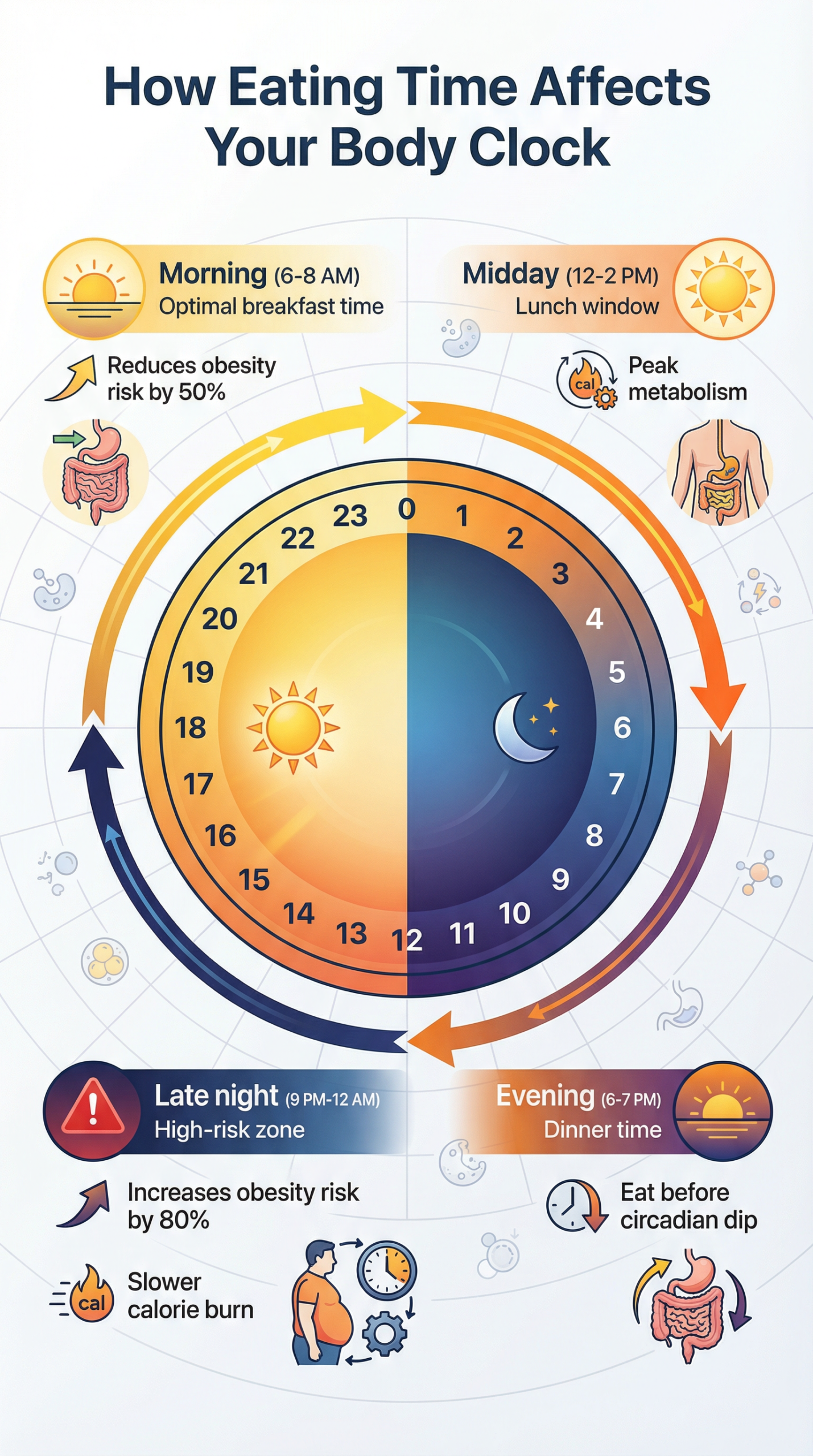
Visualizing the power of meal timing, this infographic shows how your body’s circadian rhythm influences metabolism. Eating in sync with your internal clock—such as having a larger breakfast and finishing dinner earlier—can significantly reduce obesity risk, while late-night eating can slow calorie burn and promote fat storage.
Our bodies operate on a 24-hour internal clock known as the circadian rhythm, which governs everything from our sleep patterns to our metabolic processes. Research shows that there is an intrinsic circadian peak in appetite during the evening, a biological holdover that may have once encouraged our ancestors to consume larger meals before a long, foodless night . When we eat late at night, we are essentially acting against this finely tuned clock. This misalignment can disrupt not only our sleep but also our metabolic health, affecting glucose levels and potentially leading to insulin resistance over time .
Hormonal Influences: Ghrelin, Leptin, and Cortisol
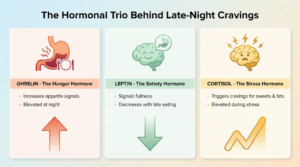
An infographic illustrating the three key hormones that drive late-night snacking. **Ghrelin**, the hunger hormone, is elevated at night; **Leptin**, the satiety hormone, decreases with late eating; and **Cortisol**, the stress hormone, triggers cravings for unhealthy foods. Understanding this hormonal interplay is the first step to managing nighttime appetite.
Several key hormones act as the primary regulators of our appetite. A landmark study from Harvard Medical School demonstrated that eating later in the day has a significant impact on two of these: ghrelin, the “hunger hormone,” and leptin, the “satiety hormone.” The study found that late eating decreased levels of leptin over a 24-hour period, meaning the signal to feel full was dampened. This creates a physiological drive to eat more .
Furthermore, stress plays a critical role. The stress hormone cortisol, when elevated, is known to trigger cravings for foods high in fat, sugar, and salt . For many, the evening is a time when the day’s stressors culminate, leading to a cortisol-driven urge to seek out comfort in the form of unhealthy snacks.
The Impact of Sleep Deprivation
The relationship between sleep and late-night eating is a vicious cycle. Skimping on sleep can significantly alter brain activity in regions responsible for appetitive evaluation, making high-calorie junk foods more appealing . Sleep deprivation also amplifies the body’s endocannabinoid system, a chemical signal that enhances the pleasure derived from eating, particularly from sweet and fatty foods . This means that after a poor night’s sleep, you are not only more likely to crave unhealthy foods but also to derive more satisfaction from eating them, reinforcing the behavior.
The Health Consequences of Nighttime Eating
While the occasional late-night snack is unlikely to cause significant harm, a consistent pattern of evening overeating can lead to a range of negative health outcomes that go beyond simple weight gain.
Research has shown that individuals who eat later burn calories at a slower rate. The same meal consumed at 10 PM versus 6 PM can have a different metabolic effect. Furthermore, studies on adipose (fat) tissue have revealed that late eating promotes gene expression that favors adipogenesis (the creation of fat cells) and decreases lipolysis (the breakdown of fat) . In essence, eating late primes your body to store fat more efficiently.
This metabolic disruption is linked to a host of serious health risks. Over time, a habit of late-night eating is associated with a higher overall calorie intake, poorer diet quality, and an increased risk of developing obesity, type 2 diabetes, and cardiovascular issues like hypertension .
Reclaiming Your Nights: Evidence-Based Strategies
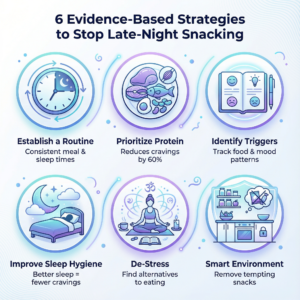
This infographic outlines six proven strategies to help you stop late-night snacking and build healthier evening habits. From establishing a consistent routine and prioritizing protein to improving sleep hygiene and managing stress, these practical tips provide a clear roadmap for curbing nighttime cravings and improving your overall health.
Overcoming the urge to snack at night requires a multi-faceted approach that addresses the underlying biological, psychological, and environmental triggers. The following strategies are grounded in scientific research and clinical practice.
Behavioral and Cognitive Approaches
•Identify Your Triggers: The first step is awareness. Keep a food and mood journal for a week to identify patterns. Are you eating out of boredom, stress, habit, or true hunger? Recognizing these triggers is the first step toward breaking the cycle .
•Cognitive Behavioral Therapy (CBT): CBT is a highly effective form of therapy for addressing problematic eating behaviors. It helps you challenge and reframe the negative thoughts and feelings that lead to late-night snacking and develop healthier coping mechanisms .
•Establish a Routine: Structure is key. Having consistent meal and sleep times helps regulate your circadian rhythm, which can naturally decrease hunger signals at night. This simple act of creating a predictable schedule can powerfully influence your body’s expectations for food and sleep .
Dietary Adjustments for Nighttime Control
•Prioritize Protein: Including a source of protein in every meal is one of the most effective strategies for appetite control. Research indicates that consuming adequate protein throughout the day can reduce cravings by up to 60% and cut the desire to eat at night in half .
•Don’t Skip Meals: Ensure you are eating enough during the day. Restricting calories too heavily can backfire, leading to intense cravings and overeating at night. Focus on balanced, regular meals to keep hunger and blood sugar stable.
•Plan for Success: Meal planning removes the guesswork and reduces the likelihood of impulsive, unhealthy choices. If you know a healthy and satisfying dinner is planned, you’re less likely to graze on snacks. If you do need an evening snack, plan for a healthy one, such as a small bowl of Greek yogurt with berries or a handful of almonds.
Lifestyle and Environmental Changes
•Practice Smart Sleep Hygiene: Create a relaxing bedtime routine that signals to your body that it’s time to wind down. This could include dimming the lights, turning off screens an hour before bed, and ensuring your bedroom is cool, dark, and quiet.
•De-Stress and Distract: If you’re eating due to stress or boredom, find alternative activities. Engage in relaxation techniques like deep breathing, meditation, or a hot bath. Distract yourself with a good book, a podcast, or a conversation with a family member. The craving often passes if you can redirect your attention for 15-20 minutes.
•Create a Supportive Environment: Make your environment work for you, not against you. Keep tempting, unhealthy snacks out of the house. If they aren’t there, you can’t eat them. Stock your kitchen with healthy alternatives so that if you do feel genuine hunger, you have a nutritious option readily available.
When Professional Help is Needed: Night Eating Syndrome
For some individuals, late-night eating is more than just a bad habit; it can be a component of a recognized eating disorder known as Night Eating Syndrome (NES). NES is characterized by a delayed pattern of food intake, with at least 25% of daily calories consumed after the evening meal, and may involve waking up during the night to eat. It is often accompanied by a lack of appetite in the morning, insomnia, and feelings of guilt or shame about the eating behavior .
If your late-night eating feels compulsive, is causing significant distress, and is impacting your daily functioning, it is crucial to seek professional help. Treatment for NES often involves a combination of the strategies mentioned above, but within a more structured therapeutic framework. This can include:
•Antidepressant Medications: Certain medications, particularly selective serotonin reuptake inhibitors (SSRIs), have been shown to be effective in regulating mood and reducing the symptoms of NES .
•Light Therapy: Exposure to bright light in the morning can help to reset a delayed circadian rhythm, which is often a feature of NES .
•Structured Behavioral Programs: Working with a therapist or a registered dietitian can provide the personalized support and accountability needed to implement lasting change.
Conclusion: A Call for Mindful Evenings
Overcoming the challenge of late-night snacking is not about deprivation or rigid rules. It is about understanding the complex web of biological and psychological factors that drive these behaviors and implementing intelligent, evidence-based strategies to counteract them. By regulating your internal clock through consistent sleep and meal schedules, managing stress effectively, and making conscious dietary choices that promote satiety, you can break free from the cycle of nighttime cravings.
Reclaiming your evenings from mindless eating is a powerful act of self-care. It leads not only to better metabolic health and weight management but also to more restful sleep and improved well-being. Start by implementing one or two of the strategies outlined in this article. Be patient and compassionate with yourself, recognizing that changing long-standing habits takes time. By taking a mindful and informed approach, you can close the kitchen for the night and open the door to a healthier, more energized life.