The Whole30 diet is a 30-day elimination program designed to reset your health, habits, and relationship with food. It has gained significant popularity since its inception in 2009, with millions of participants reporting transformative results. This article provides a thorough, evidence-based overview of the Whole30 program, its principles, potential benefits, and practical tips for successful implementation.
What the Whole30 Diet Is (and What It Isn’t)
The Whole30 is a structured 30-day elimination diet that temporarily removes specific food groups that could be having a negative impact on your health. The program is not a traditional weight-loss diet, although many participants do experience weight loss as a side effect. Instead, the primary goal is to identify food sensitivities, reduce inflammation, and establish a new baseline for what it feels like to be healthy and energized.
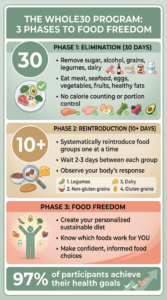
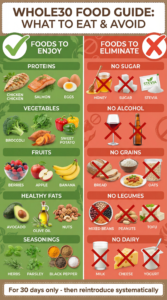
It is not a permanent lifestyle change, but rather a short-term reset. The program is divided into two main phases: a 30-day elimination period followed by a 10-day (or longer) reintroduction phase. During the elimination phase, participants consume whole, unprocessed foods, including meat, seafood, eggs, vegetables, fruits, and natural fats. There is no calorie counting or portion control; the focus is on eating to satiety.
Why It Matters / When It’s Useful
The Whole30 program can be particularly useful for individuals experiencing a range of health issues that may be linked to diet. According to the official Whole30 website, the program is designed to address symptoms such as:
•Gastrointestinal issues (bloating, gas, constipation, diarrhea)
•Skin conditions (eczema, psoriasis, acne)
•Headaches and migraines
•Seasonal allergies
•Brain fog and fatigue
•Anxiety
•Joint pain and swelling
By eliminating potentially problematic foods, the body has an opportunity to heal and reset. The reintroduction phase is a critical component of the program, as it allows individuals to systematically reintroduce food groups and observe their body’s response. This process helps identify specific food sensitivities and intolerances, empowering individuals to make informed dietary choices long-term.
Key Concepts Readers Must Understand
The Elimination Diet Framework
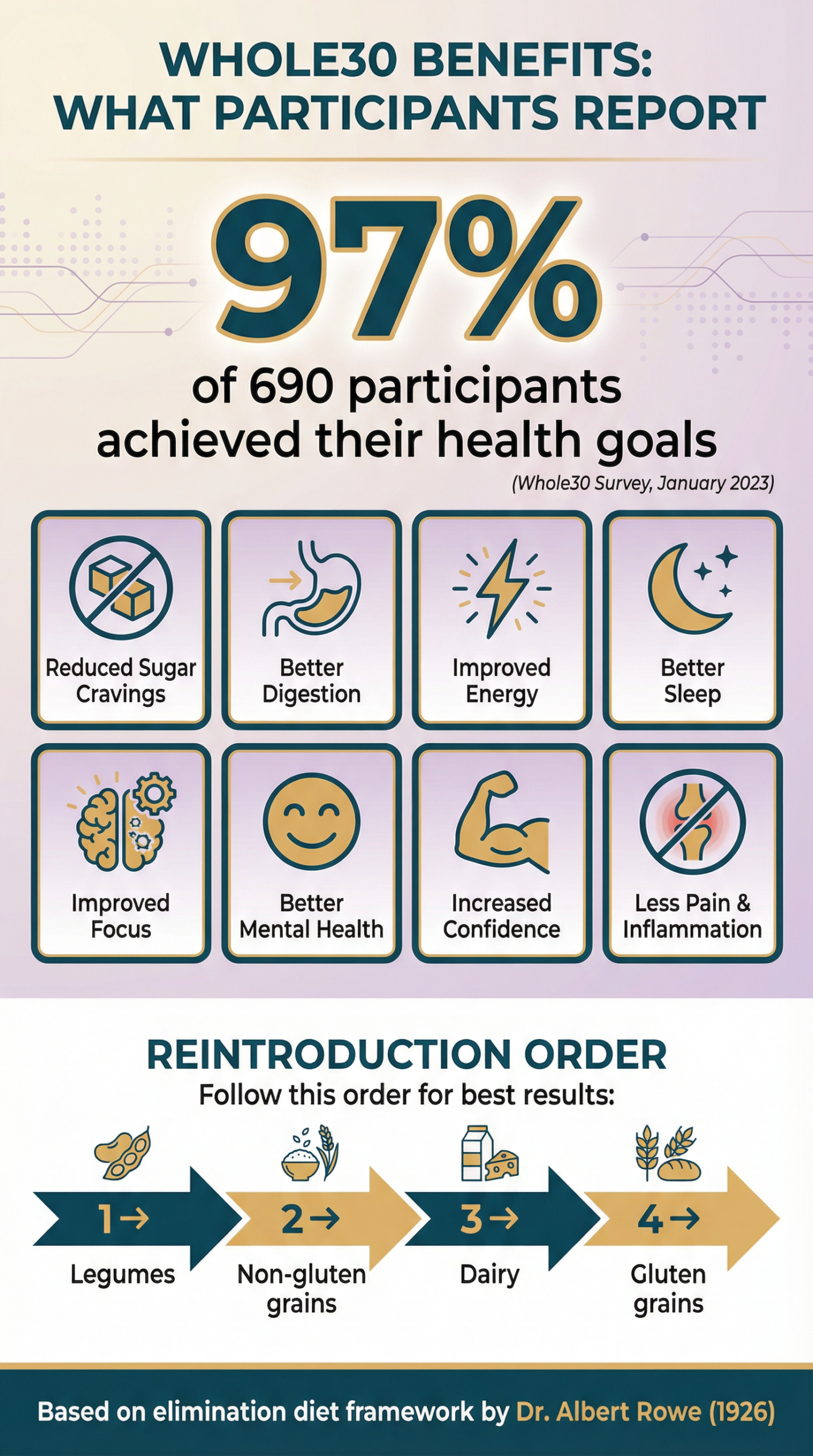
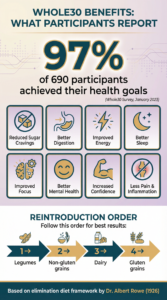
The Whole30 program is based on the elimination diet framework, a concept first introduced by Dr. Albert Rowe in 1926. This approach is considered the gold standard for identifying food sensitivities. By removing common trigger foods, the body’s inflammatory response can calm down, and the gut has a chance to heal. The subsequent reintroduction of these foods helps pinpoint which ones are causing adverse reactions.
The Three Phases of Whole30
1.Elimination (30 days): This is the strictest phase of the program, where all potentially problematic foods are completely eliminated. This includes added sugar, alcohol, grains, legumes, and dairy.
2.Reintroduction (10+ days): After the 30-day elimination, food groups are systematically reintroduced one at a time. This allows individuals to assess their body’s reaction to each food group and identify any sensitivities.
3.Food Freedom: This is the long-term goal of the program. Armed with the knowledge gained during the elimination and reintroduction phases, individuals can create a sustainable, personalized diet that supports their health and well-being.
The Importance of 100% Compliance
For the Whole30 program to be effective, 100% compliance during the 30-day elimination phase is crucial. Even a small amount of an off-plan food can trigger an inflammatory response and interfere with the body’s ability to heal. This strict adherence is necessary to obtain a clear picture of how the body functions without the influence of these potentially problematic foods.
Step-by-Step: How to Approach/Implement/Evaluate the Whole30
Step 1: Planning and Preparation (Days -30 to 0)
Thorough preparation is key to a successful Whole30 experience. This includes:
•Choosing a start date: Select a 30-day period where you can fully commit to the program.
•Cleaning out your pantry: Remove all non-compliant foods to avoid temptation.
•Meal planning and grocery shopping: Plan your meals for the first week and stock up on compliant ingredients.
•Building a support system: Inform friends and family about your commitment and seek their support.
Step 2: The Elimination Phase (Days 1-30)
This is the core of the program. During this time, you will exclusively eat compliant foods. It is common to experience a range of physical and emotional changes during this phase. The Whole30 timeline outlines what to expect:
•Days 1-7 (Adaptation): Your body is adjusting to the new way of eating. You may experience some withdrawal symptoms, such as headaches and fatigue.
•Days 8-14 (Adoption): Your energy levels may start to improve, and you may notice positive changes in your digestion and sleep.
•Days 10-11 (The Hardest Days): It is common to feel a dip in motivation during this time. Sticking to your plan is crucial.
•Days 15-21 (Smooth Sailing): Many participants report feeling their best during this phase, with increased energy, mental clarity, and improved mood.
•Days 22-30 (Home Stretch): You are nearing the end of the elimination phase. It is important to stay focused and finish strong.
Step 3: The Reintroduction Phase (Days 31-46+)
After completing the 30-day elimination, you will begin to reintroduce the eliminated food groups one at a time. The recommended order of reintroduction is:
1.Added sugar (optional)
2.Legumes
3.Non-gluten grains
4.Dairy
5.Gluten-containing grains
6.Alcohol (optional)
It is important to allow 2-3 days between each reintroduction to accurately assess your body’s response.
Step 4: Food Freedom
This is the ultimate goal of the Whole30 program. Using the insights gained from the elimination and reintroduction phases, you can create a personalized diet that works for you. This may mean continuing to avoid certain foods, or enjoying them in moderation.
Common Pitfalls and How to Avoid Them
•Lack of preparation: Failing to plan meals and snacks can lead to non-compliant choices. Avoid this by dedicating time to meal prep each week.
•Social situations: Eating out and social gatherings can be challenging. Avoid this by reviewing menus in advance, bringing your own food, or communicating your dietary needs to your host.
•Giving in to cravings: Cravings are common, especially in the first week. Avoid this by having compliant snacks on hand and reminding yourself of your goals.
Options / Approaches (Compare Tradeoffs)
|
Approach
|
Description
|
Pros
|
Cons
|
|
Original Whole30
|
The standard program, as described in this article.
|
Comprehensive, effective for identifying food sensitivities.
|
Restrictive, can be challenging to follow.
|
|
Plant-Based Whole30
|
A version of the program designed for vegans and vegetarians.
|
Allows for a plant-based approach to the elimination diet.
|
Requires careful planning to ensure adequate protein intake.
|
|
Modified Whole30
|
A less restrictive version of the program, which may allow for some non-compliant foods in moderation.
|
More flexible, may be easier to sustain long-term.
|
May not be as effective for identifying food sensitivities.
|
Practical Checklist (Actionable Bullets)
•Read the official Whole30 program rules thoroughly.
•Clean out your pantry and refrigerator of all non-compliant foods.
•Create a meal plan for the first week and go grocery shopping.
•Prepare some compliant meals and snacks in advance.
•Find a support system, whether it’s a friend, family member, or online community.
•Keep a journal to track your food intake, symptoms, and progress.
•Be patient with yourself and trust the process.
FAQs (3–6 Questions, Concise Answers)
1. Is the Whole30 a weight-loss diet?
While many people lose weight on the Whole30, it is not its primary purpose. The main goal is to identify food sensitivities and improve your overall health.
2. Can I exercise on the Whole30?
Yes, exercise is encouraged. However, you may need to adjust the intensity of your workouts, especially during the first week as your body adapts.
3. What if I accidentally eat something that is not compliant?
The official recommendation is to start over from Day 1. This is because even a small amount of a non-compliant food can interfere with the program’s effectiveness.
Conclusion
The Whole30 diet is a powerful tool for resetting your health and relationship with food. By temporarily eliminating potentially problematic foods, you can identify food sensitivities, reduce inflammation, and discover what it truly means to feel your best. While the program is challenging, the potential benefits are significant. A 2023 survey of 690 Whole30 participants found that 97% achieved most or all of their program goals. The most commonly reported benefits include reduced sugar cravings, better digestion, improved energy and sleep, better focus, and improved mental health.
Key Takeaways:
•The Whole30 is a 30-day elimination diet designed to identify food sensitivities and reset your health.
•The program involves a 30-day elimination phase followed by a 10+ day reintroduction phase.
•100% compliance during the elimination phase is crucial for success.
•The ultimate goal of the program is “Food Freedom,” a sustainable, personalized diet that supports your long-term health and well-being.
Next Step:
If you are considering the Whole30 program, the first step is to visit the official Whole30 website and read the program rules in their entirety. This will provide you with a comprehensive understanding of the program and help you decide if it is the right fit for you.
References