
Introduction
In a world saturated with diet trends, the Whole30 program has maintained its prominence as a structured, 30-day dietary reset. Unlike traditional diets focused solely on weight loss, Whole30 is designed as a short-term elimination program to help individuals identify food sensitivities, reset their health, and change their relationship with food. While weight loss is a common outcome, the program’s primary goal is to help you understand how different foods affect your body, leading to long-term, sustainable health improvements. This article provides a comprehensive, evidence-based overview of the Whole30 program, its principles, and practical guidance for a successful 30-day journey.
The Core Principles of the Whole30 Program
The Whole30 program is based on the framework of an elimination diet, a method that has been used by healthcare professionals for decades to identify food sensitivities . This approach was first proposed by Dr. Albert Rowe in 1926 and remains the gold standard for identifying foods that may be causing adverse reactions. The program consists of two main phases: a 30-day elimination phase and a subsequent reintroduction phase. The core principle is to remove food groups that are commonly problematic for many people, allowing the body to heal and reset.
Unlike restrictive diets that focus solely on calorie reduction, Whole30 emphasizes the quality and composition of food. The program recognizes that certain foods can trigger inflammation, digestive issues, skin problems, mood disturbances, and other unwanted symptoms in susceptible individuals. By eliminating these foods completely for 30 days, the body has an opportunity to heal, inflammation can decrease, and the immune system can normalize.
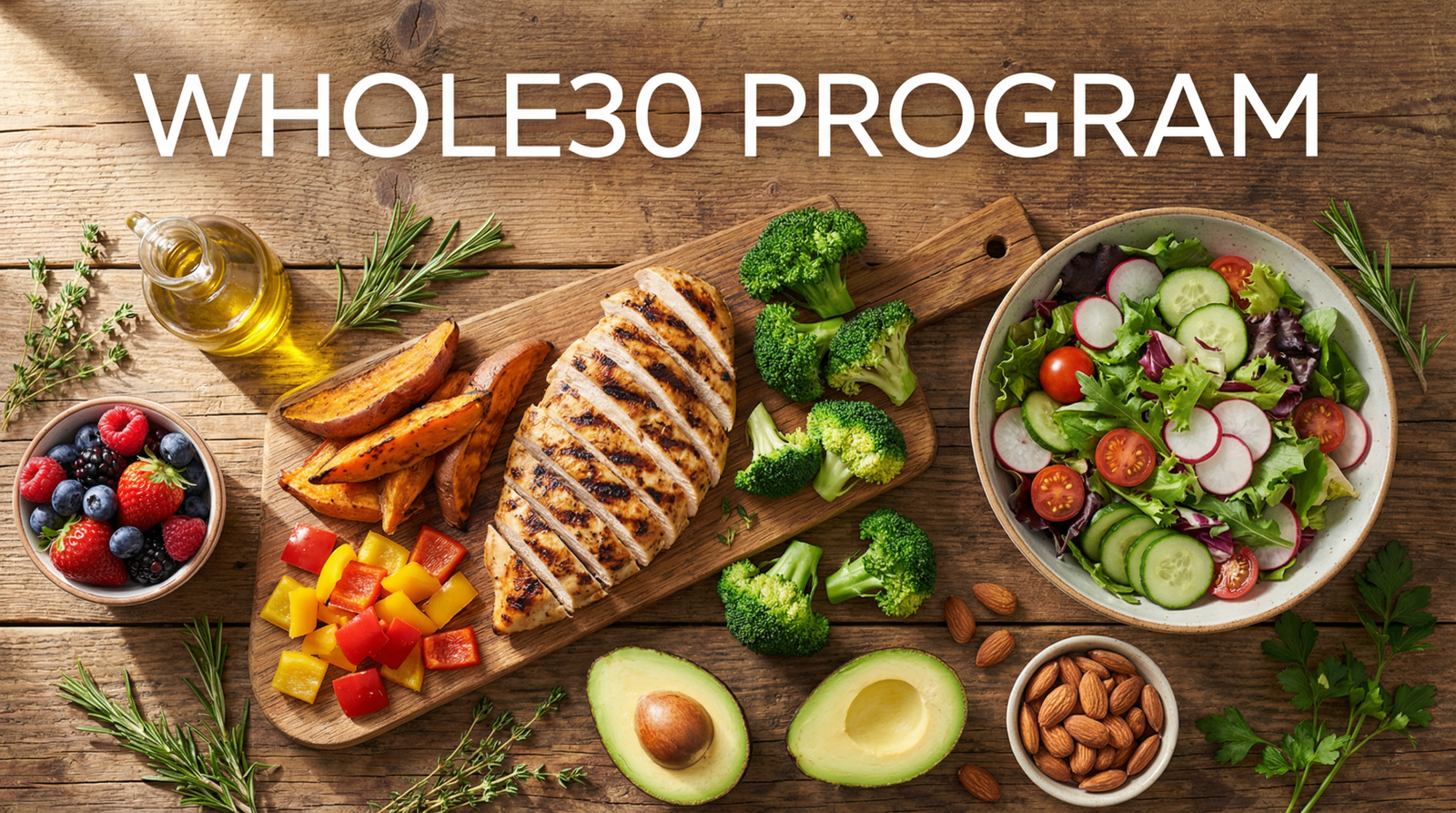
During the 30-day elimination phase, participants consume whole, unprocessed foods, including meat, seafood, and eggs; a wide variety of vegetables and fruits; natural, healthy fats from sources like avocados, nuts, and seeds; and fresh herbs, spices, and seasonings. There is no calorie counting, portion control, or tracking of macros. The emphasis is on eating real, whole foods to satiety, which means eating until satisfied and stopping when full. This approach helps participants develop a healthier relationship with food and learn to listen to their body’s hunger and fullness cues.
The Elimination Phase: What to Avoid
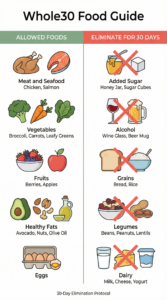
For 30 days, the following food groups are completely eliminated:
|
Food Group to Eliminate
|
Examples
|
|
Added Sugar (real or artificial)
|
Maple syrup, honey, agave, coconut sugar, stevia, Splenda
|
|
Alcohol
|
Wine, beer, cider, liquor
|
|
Grains
|
Wheat, rice, corn, oats, quinoa, pseudo-grains
|
|
Legumes
|
Beans, lentils, chickpeas, peanuts, soy in all forms
|
|
Dairy
|
Milk, cheese, yogurt, sour cream, kefir
|
|
Certain Additives
|
Carrageenan, MSG, sulfites
|
|
Recreated Baked Goods or Junk Foods
|
Even with compliant ingredients (e.g., paleo pancakes)
|
Source: The Whole30 Program Rules
This strict elimination is crucial for the program’s effectiveness. It allows the body to enter a state where systemic inflammation can decrease, the gut can heal, and the immune system can calm down. This provides a clean slate, making it easier to identify which foods may be causing issues during the reintroduction phase.
The Reintroduction Phase: Discovering Your Food Freedom
After the 30-day elimination, the reintroduction phase begins. This is arguably the most important part of the program, as it is where you learn how your body responds to the eliminated food groups. The reintroduction process is systematic, with each food group brought back one at a time, followed by a return to the elimination diet for a few days to observe any reactions.
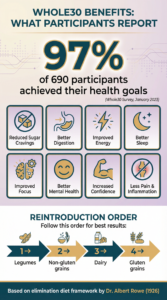
The typical reintroduction order is:
1.Legumes
2.Non-Gluten Grains
3.Dairy
4.Gluten-Containing Grains
By carefully observing physical and psychological responses during this phase, individuals can identify which foods may be contributing to issues like bloating, skin problems, fatigue, or mood swings. This knowledge empowers them to create a personalized, sustainable eating plan—what Whole30 calls “Food Freedom.”
Whole30 and Weight Loss: What to Expect
While Whole30 is not a weight loss diet, many participants experience weight loss as a natural side effect. By eliminating processed foods, added sugars, and alcohol, and focusing on nutrient-dense whole foods, individuals often naturally reduce their calorie intake. The emphasis on protein and healthy fats also promotes satiety, which can help prevent overeating.
However, the program strictly prohibits weighing or measuring yourself for the entire 30 days. This rule is designed to shift the focus away from the scale and toward the non-scale victories (NSVs) that reflect true health improvements, such as:
•Increased energy levels
•Improved sleep quality
•Better mood and mental clarity
•Reduced cravings
•Clearer skin
•Improved athletic performance
A 2023 survey of 690 Whole30 participants found that 97% achieved most or all of their program goals, with many reporting significant improvements in these non-scale areas .
Practical Tips for a Successful Whole30
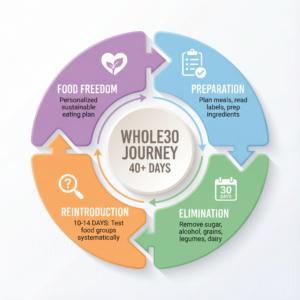
Embarking on a Whole30 journey requires commitment and preparation. Success depends not just on following the rules, but on developing a mindset shift and building practical systems to support your commitment.
Plan and Prepare: Meal planning is essential for Whole30 success. Spend time before you start planning your meals, creating a comprehensive grocery list, and prepping ingredients. Many successful participants dedicate a few hours on the weekend to batch-cook proteins, chop vegetables, and prepare compliant sauces and dressings. This preparation saves you time and stress during the 30 days, making it much easier to stay compliant when tired or busy.
Read Labels Carefully: Become a diligent label reader. Added sugars, soy, and other non-compliant ingredients are often hidden in packaged foods, even those that seem healthy. Check everything from salad dressings to canned vegetables to ground meat, as manufacturers often add sugar and other additives you would not expect.
Find Your Community: Connect with other Whole30 participants online or in person. The support of a community can be incredibly motivating, especially during challenging moments. Online forums, social media groups, and local meetups provide accountability, recipe ideas, and emotional support from people who understand the journey.
Focus on What You Can Eat: Instead of dwelling on the foods you cannot have, focus on the abundance of delicious, compliant foods you can enjoy. Whole30 is not about deprivation; it is about discovering new foods and flavors. Try new vegetables, experiment with different proteins, and explore new recipes.
Be Prepared for Challenges: The first week can be challenging as your body adjusts. Be prepared for cravings and potential withdrawal symptoms, particularly from sugar and caffeine. Having compliant snacks and meals ready can help you navigate these challenges. Many participants find that the first 10 days are the hardest, but symptoms typically improve significantly by day 14.
Whole30 Recipe Ideas
Eating on Whole30 can be both simple and delicious. Here are a few ideas:
Breakfast: Sweet Potato and Sausage Hash
•Ingredients: 1 sweet potato (diced), 1/2 lb compliant sausage, 1/2 onion (chopped), 1 bell pepper (chopped), 2 eggs.
•Instructions: Sauté the sausage, onion, and pepper. Add the sweet potato and cook until tender. Top with two fried eggs.
Lunch: Chicken Salad Lettuce Wraps
•Ingredients: 1 can of chicken, 1/4 cup compliant mayonnaise, 1/4 cup chopped celery, salt, and pepper.
•Instructions: Mix all ingredients and serve in large lettuce leaves.
Dinner: Sheet Pan Lemon Herb Salmon and Veggies
•Ingredients: 1 salmon fillet, 1 head of broccoli (cut into florets), 1 pint of cherry tomatoes, 1 lemon, olive oil, and fresh herbs (dill, parsley).
•Instructions: Toss the vegetables with olive oil and herbs. Place on a sheet pan with the salmon. Squeeze lemon juice over everything and bake at 400°F (200°C) for 15-20 minutes.
Understanding the Reintroduction Phase
The reintroduction phase is where the true value of Whole30 becomes apparent. After 30 days of elimination, your body is in a clean state, making it much easier to identify which foods may be problematic. During reintroduction, you systematically add back one food group every 3-5 days, carefully observing how your body responds. This might include changes in digestion, energy levels, skin clarity, mood, sleep quality, or any other symptoms you experienced before starting Whole30.
The key to successful reintroduction is patience and careful observation. Some people find they can tolerate certain foods without issue, while others discover they have significant sensitivities. This personalized information is invaluable for creating your long-term eating plan. The reintroduction process typically lasts 10-14 days, though some people extend it longer to thoroughly test each food group.
Conclusion
The Whole30 program is more than just a diet; it is a powerful 30-day self-experiment that can fundamentally change your relationship with food and your health. By eliminating potentially problematic foods and focusing on whole, nutrient-dense options, Whole30 provides a unique opportunity to reset your body, identify food sensitivities, and build a foundation for long-term health. While weight loss is a common benefit, the true value of the program lies in the knowledge and empowerment it provides, leading to a personalized and sustainable approach to eating that supports your unique body and health goals.
The 2023 survey showing that 97% of participants achieved most or all of their program goals demonstrates the effectiveness of this structured approach. Whether your goal is to lose weight, improve digestive health, clear your skin, boost energy, or simply understand your body better, Whole30 offers a proven framework for achieving meaningful, lasting results. The investment of 30 days can lead to years of improved health and a fundamentally transformed relationship with food.
References