
Menopause marks a significant transition in a woman’s life, typically occurring between ages 45 and 55. For many women, this period brings an unwelcome surprise: weight gain that resists their usual diet and exercise routines.
The frustration is real and widespread. Women who have maintained stable weights for years often find themselves gaining pounds despite no changes in their habits. The weight tends to accumulate around the midsection, creating both physical discomfort and health concerns.
This article explores why weight loss becomes more difficult during menopause, the specific hormonal and metabolic changes at play, and evidence-based strategies that can help. Understanding these factors is the first step toward developing an effective approach to weight management during this life stage.
What Makes Menopause Weight Gain Different
Menopause weight gain isn’t simply about eating too much or exercising too little. It’s a complex interplay of hormonal shifts, metabolic changes, and age-related factors that work together to make weight management more challenging.
The transition involves three phases: perimenopause (the years leading up to menopause), menopause itself (marked by 12 consecutive months without a period), and postmenopause. Weight changes can begin during perimenopause and continue afterward.
This isn’t just cosmetic. Menopausal weight gain, particularly abdominal fat accumulation, increases risks for cardiovascular disease, type 2 diabetes, and other health conditions.
Why Hormonal Changes Impact Weight
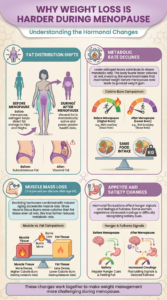
The primary driver of menopausal weight changes is declining estrogen levels. Estrogen plays multiple roles in weight regulation, and its reduction creates a cascade of effects.
Fat Distribution Shifts
Before menopause, estrogen helps direct fat storage to hips and thighs. As estrogen drops, fat increasingly accumulates in the abdomen. This visceral fat is metabolically active and poses greater health risks than subcutaneous fat stored elsewhere.
Metabolic Rate Declines
Lower estrogen levels contribute to a slower metabolic rate. The body burns fewer calories at rest, meaning the same food intake that maintained weight before menopause now leads to gradual weight gain.
Note: The exact percentage of metabolic decline varies among individuals and isn’t specified in available research, but the effect is clinically significant enough to impact weight management.
Muscle Mass Loss
Declining hormones, combined with natural aging, accelerate muscle loss. Since muscle tissue burns more calories than fat tissue even at rest, this loss further reduces metabolic rate. Women can lose 3-8% of muscle mass per decade after age 30, with acceleration after menopause.
Appetite and Satiety Changes
Hormonal fluctuations can affect hunger signals and feelings of fullness. Some women experience increased cravings or difficulty recognizing satiety cues, leading to higher calorie intake without conscious awareness.
Additional Factors That Complicate Weight Loss
Beyond hormones, several other factors make weight management harder during menopause.
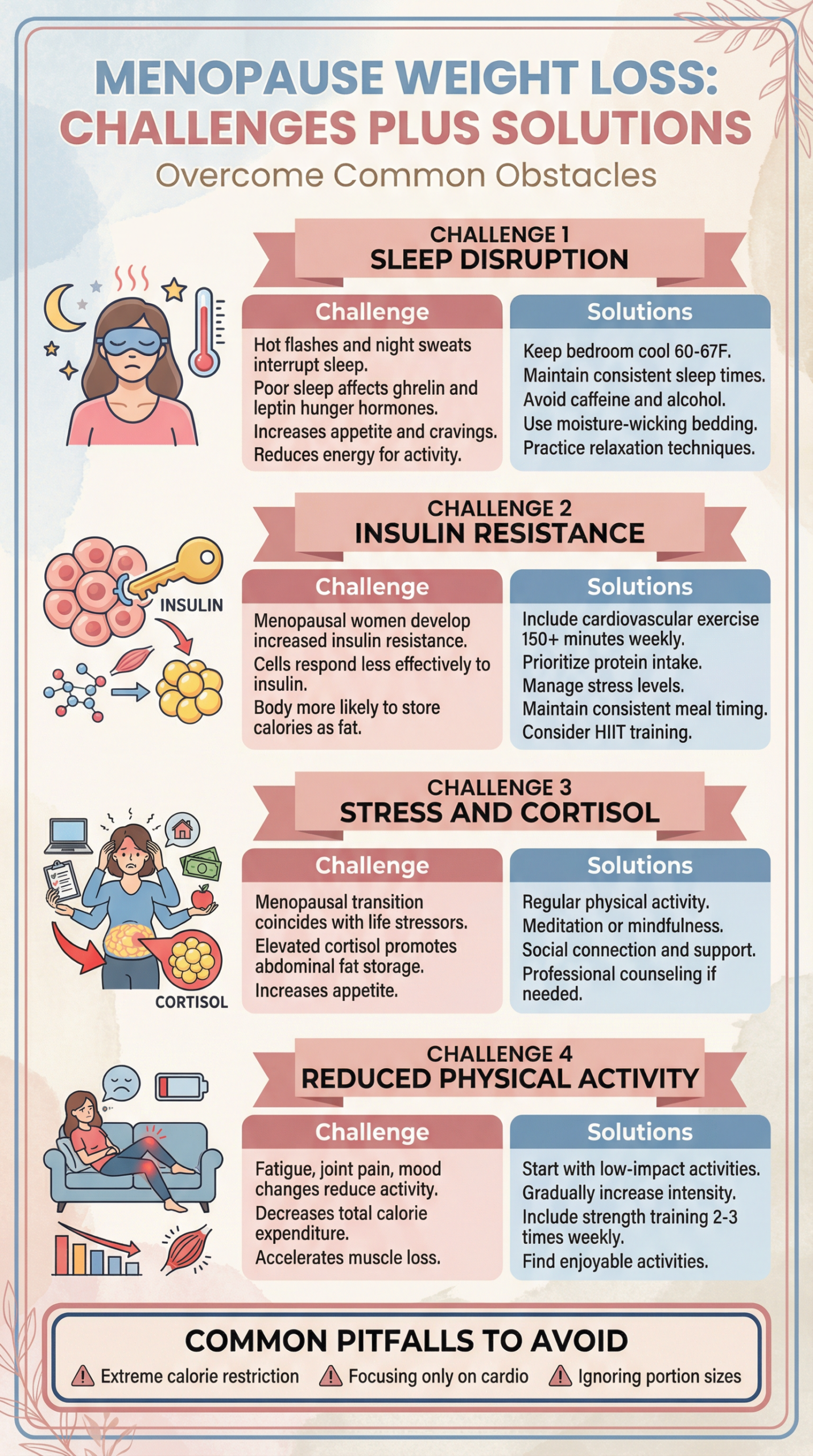
Sleep Disruption
Hot flashes and night sweats frequently interrupt sleep during menopause. Poor sleep quality affects hormones that regulate hunger (ghrelin and leptin), often increasing appetite and cravings for high-calorie foods. Sleep deprivation also reduces energy for physical activity.
Insulin Resistance
Menopausal women often develop increased insulin resistance, meaning cells respond less effectively to insulin. This makes the body more likely to store calories as fat rather than using them for energy.
Stress and Cortisol
The menopausal transition can coincide with other life stressors: aging parents, career pressures, children leaving home. Elevated cortisol levels from chronic stress promote abdominal fat storage and can increase appetite.
Reduced Physical Activity
Many women become less active during menopause due to fatigue, joint pain, mood changes, or time constraints. This reduction in both structured exercise and daily movement (non-exercise activity thermogenesis) decreases total calorie expenditure.
Step-by-Step: Effective Strategies for Weight Management
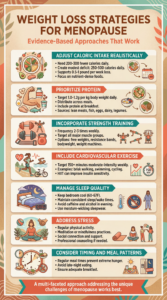
Successfully managing weight during menopause requires a multi-faceted approach that addresses the unique challenges of this life stage.
1. Adjust Caloric Intake Realistically
With a slower metabolism, women typically need 200-300 fewer calories daily during and after menopause to maintain their previous weight. Creating a modest calorie deficit (250-500 calories daily) supports gradual, sustainable weight loss of about 0.5-1 pound per week.
Focus on nutrient-dense foods: vegetables, fruits, lean proteins, whole grains, and healthy fats. These provide essential nutrients without excessive calories.
2. Prioritize Protein
Adequate protein intake helps preserve muscle mass and increases satiety. Aim for 1.0-1.2 grams of protein per kilogram of body weight daily, distributed across meals.
Good sources include lean meats, fish, eggs, dairy, legumes, and plant-based proteins. Including protein at breakfast can reduce cravings throughout the day.
3. Incorporate Strength Training
Resistance exercise is crucial for maintaining and building muscle mass. This helps counteract age-related muscle loss and supports a healthy metabolic rate.
Aim for strength training at least 2-3 times weekly, targeting all major muscle groups. Exercises can include free weights, resistance bands, bodyweight exercises, or weight machines.
4. Include Cardiovascular Exercise
Aerobic activity burns calories and supports cardiovascular health. Aim for at least 150 minutes of moderate-intensity activity weekly, such as brisk walking, swimming, or cycling.
High-intensity interval training (HIIT) can be particularly effective for improving insulin sensitivity and burning calories, but should be introduced gradually.
5. Manage Sleep Quality
Prioritize sleep hygiene to minimize disruption:
- Keep the bedroom cool (60-67°F helps manage hot flashes)
- Maintain consistent sleep and wake times
- Avoid caffeine and alcohol in the evening
- Consider moisture-wicking sleepwear and bedding
- Practice relaxation techniques before bed
If sleep problems persist despite these measures, consult a healthcare provider about treatment options.
6. Address Stress
Implement stress-reduction practices that work for your lifestyle:
- Regular physical activity (which also helps with weight management)
- Meditation or mindfulness practices
- Social connection and support
- Adequate leisure time
- Professional counseling if needed
7. Consider Timing and Meal Patterns
Some women benefit from eating patterns that provide structure:
- Regular meal times that prevent extreme hunger
- Avoiding late-night eating when metabolism is slowest
- Ensuring adequate breakfast to reduce afternoon and evening cravings
Common Pitfalls and How to Avoid Them
Pitfall: Extreme Calorie Restriction
Drastically cutting calories can backfire by further slowing metabolism and causing muscle loss. It’s also difficult to sustain, often leading to rebound weight gain.
Solution: Create a modest, sustainable deficit of 250-500 calories daily rather than extreme restriction.
Pitfall: Focusing Only on Cardio
While cardiovascular exercise burns calories, it doesn’t address muscle loss. Cardio alone won’t optimize metabolism or body composition.
Solution: Combine both strength training and cardiovascular exercise for comprehensive benefits.
Pitfall: Ignoring Portion Sizes
Even healthy foods contribute to weight gain if consumed in excess. Nuts, avocados, olive oil, and whole grains are nutritious but calorie-dense.
Solution: Practice portion awareness, especially with calorie-dense foods. Use measuring tools initially to calibrate portion sizes.
Pitfall: Expecting Rapid Results
Metabolic changes during menopause mean weight loss occurs more slowly than it might have earlier in life. Unrealistic expectations lead to discouragement.
Solution: Aim for gradual, sustainable loss of 0.5-1 pound weekly. Focus on non-scale victories like improved energy, better sleep, and increased strength.
When Medical Support May Help
Some women benefit from additional medical interventions alongside lifestyle changes.
Hormone Replacement Therapy (HRT)
For appropriate candidates, HRT can help manage menopausal symptoms including weight gain. It may improve insulin sensitivity and help maintain muscle mass. However, HRT isn’t suitable for everyone and requires individual medical evaluation.
Metabolic Testing
If weight loss remains extremely difficult despite consistent efforts, testing for thyroid function, insulin resistance, or other metabolic issues may identify treatable underlying conditions.
Registered Dietitian Support
Working with a nutrition professional who specializes in menopause can provide personalized guidance and accountability.
Practical Implementation Checklist
Use this checklist to build a comprehensive weight management approach:
- Track current eating patterns for 3-5 days to establish baseline intake
- Calculate appropriate calorie target (consider consulting a dietitian or using evidence-based calculators)
- Plan protein-rich meals and snacks totaling 1.0-1.2g per kg body weight
- Schedule 2-3 strength training sessions weekly
- Add 150+ minutes of moderate cardiovascular activity weekly
- Implement at least 3 sleep hygiene practices
- Identify 2-3 stress-management techniques to practice regularly
- Measure portions of calorie-dense foods for accuracy
- Track progress through multiple measures (weight, measurements, how clothes fit, energy levels)
- Schedule regular check-ins with healthcare provider to monitor overall health
Frequently Asked Questions
How long does menopausal weight gain continue?
Weight gain risk is highest during perimenopause and the first few years of postmenopause. With appropriate interventions, women can stabilize and even reverse weight gain. The key is adapting lifestyle habits to match the body’s changed metabolic needs.
Can I lose weight during menopause without hormone therapy?
Yes. While hormone therapy helps some women, lifestyle modifications—particularly strength training, protein intake, and calorie management—are effective for many women without additional medical intervention.
Why does belly fat specifically increase during menopause?
Declining estrogen shifts fat storage from peripheral areas (hips, thighs) to the abdomen. This visceral fat accumulation is hormonally driven and can occur even without overall weight gain.
How much weight gain is typical during menopause?
Women gain an average of 5-10 pounds during the menopausal transition, though individual variation is significant. Some women experience minimal changes while others gain considerably more.
Will these strategies work for everyone?
Individual responses vary based on genetics, medical history, medication use, and lifestyle factors. If standard approaches aren’t working after 3-4 months of consistent effort, consult a healthcare provider to investigate other contributing factors.
Is weight loss during menopause slower than before?
Generally yes, due to metabolic slowdown and muscle loss. Expecting 0.5-1 pound weekly loss is more realistic than the 1-2 pounds weekly that might have been achievable earlier in life.
Conclusion
Weight management during menopause presents genuine challenges rooted in hormonal changes, metabolic shifts, and aging-related factors. The strategies that worked in earlier decades often need adjustment.
Key takeaways:
- Declining estrogen affects metabolism, fat distribution, muscle mass, and appetite regulation
- A multi-faceted approach addressing nutrition, strength training, cardiovascular exercise, sleep, and stress yields better results than any single intervention
- Protein intake and strength training are particularly important for preserving muscle mass and metabolic rate
- Realistic expectations matter—gradual weight loss of 0.5-1 pound weekly is sustainable and healthy
- Medical support can provide additional help when lifestyle changes alone aren’t sufficient
Your next step: Choose one area from the practical checklist to implement this week. Start with strength training if you’re not currently doing it, or focus on protein intake at each meal. Build sustainable habits progressively rather than attempting everything simultaneously.
Weight management during menopause requires patience and consistency, but the right strategies can produce meaningful results while supporting overall health and wellbeing.