In the ever-evolving landscape of nutrition, few dietary strategies have maintained the staying power and scientific backing of the high-protein diet. Once the domain of bodybuilders and elite athletes, a protein-centric approach to eating has now firmly entered the mainstream, championed for its profound effects on weight management, body composition, and overall metabolic health. But beyond the hype, what does the science say? A high-protein diet is not merely about eating more steak; it is a strategic nutritional approach that leverages the unique metabolic properties of this essential macronutrient to optimize how our bodies function, feel, and look.
This article provides a comprehensive, evidence-based exploration of the high-protein diet. We will delve into the scientific mechanisms that make it a powerful tool for weight loss, examine its indispensable role in building and preserving muscle, and discuss its broader benefits for long-term health. Finally, we will provide practical, actionable tips for incorporating this powerful dietary principle into your lifestyle.
What Defines a High-Protein Diet?
A high-protein diet is one in which protein constitutes a greater proportion of total daily calories than typical dietary guidelines recommend. While the Recommended Dietary Allowance (RDA) for protein is a modest 0.8 grams per kilogram (g/kg) of body weight, a high-protein diet generally involves intakes significantly above this baseline.
There is no single, universally accepted definition, but a high-protein diet is typically characterized by one of the following:
•Percentage of Calories: Protein makes up 20-30% or more of total daily caloric intake.
•Grams per Kilogram: Intake ranges from 1.2 to 1.6 g/kg for weight loss and general health, and up to 1.6 to 2.2 g/kg for active individuals focused on muscle building .
For a 150-pound (68 kg) person, this translates to approximately 82 to 150 grams of protein per day, a substantial increase from the RDA of 54 grams.
The Science of Satiety and Weight Loss
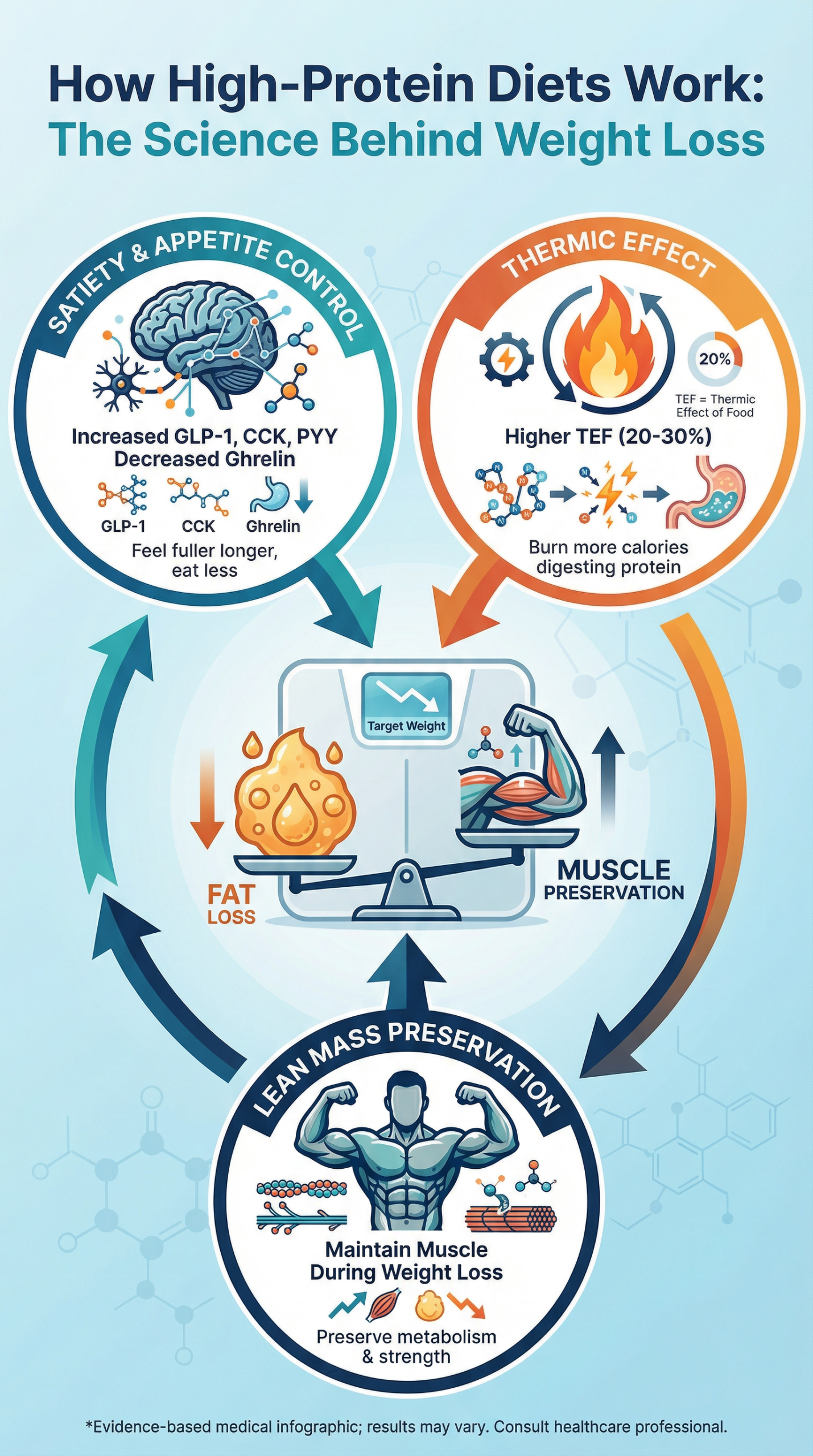
The remarkable effectiveness of high-protein diets for weight loss is not coincidental; it is rooted in a trifecta of powerful physiological mechanisms.
1. Enhanced Satiety and Appetite Control
Protein is, gram for gram, the most satiating macronutrient. This feeling of fullness is driven by a complex interplay of gut hormones. A high-protein meal triggers the release of anorexigenic (appetite-reducing) hormones like glucagon-like peptide-1 (GLP-1), cholecystokinin (CCK), and peptide tyrosine-tyrosine (PYY). Simultaneously, it suppresses the production of ghrelin, the primary hormone that stimulates hunger . This hormonal shift sends powerful satiety signals to the brain, leading to a natural reduction in overall calorie intake.
2. The Thermic Effect of Food (TEF)
Your body expends energy to digest, absorb, and metabolize the food you eat. This is known as the thermic effect of food (TEF). Protein has a significantly higher TEF (20-30%) compared to carbohydrates (5-10%) and fats (0-3%). This means that for every 100 calories of protein you consume, your body uses 20-30 of those calories just to process it. This metabolic advantage contributes to a higher total daily energy expenditure, making it easier to create the calorie deficit required for weight loss.
3. Preservation of Lean Muscle Mass
During weight loss, the body tends to lose not just fat but also metabolically active muscle tissue. This loss of muscle can slow down your resting metabolic rate, making long-term weight maintenance a challenge. High-protein diets are exceptionally effective at preserving lean body mass during a caloric deficit . By providing the necessary amino acids for muscle repair, protein helps ensure that the weight you lose is primarily from fat, not muscle, thereby supporting a healthier body composition and a more robust metabolism.
The Anabolic Advantage: Protein’s Role in Muscle Building
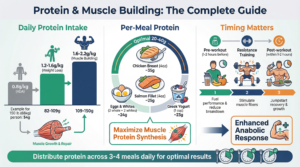
For those looking to build strength and improve body composition, protein is the undisputed king of macronutrients. Muscle tissue is in a constant state of flux, undergoing both muscle protein breakdown (MPB) and muscle protein synthesis (MPS). For muscle growth (hypertrophy) to occur, the rate of MPS must exceed the rate of MPB.
Resistance training is the primary stimulus for MPS, but this process cannot occur without an adequate supply of amino acids from dietary protein. Research has identified several key factors for maximizing the anabolic response:
•Total Daily Intake: As mentioned, active individuals should aim for 1.6-2.2 g/kg of protein per day to maximize muscle growth .
•Per-Meal Dose: Studies suggest that muscle protein synthesis is maximized with an intake of 20-40 grams of high-quality protein in a single meal . Consuming more than this in one sitting does not appear to provide any additional muscle-building benefit.
•The “Anabolic Window”: Consuming protein shortly after a workout (within 1-2 hours) can enhance the MPS response, as muscle cells are particularly receptive to nutrients during this time .
•Protein Distribution: Spreading protein intake evenly across 3-4 meals throughout the day appears to be more effective for stimulating MPS than consuming the majority of protein in one large meal.
Beyond Aesthetics: Overall Health Benefits and Safety
The advantages of a high-protein diet extend far beyond the scale and the gym. A growing body of evidence supports its role in promoting overall health.
•Cardiometabolic Health: Contrary to outdated concerns, recent meta-analyses of prospective cohort studies have found that high-protein diets do not negatively impact cardiovascular outcomes in healthy individuals. In fact, they are often associated with improvements in blood pressure, lipid profiles, and glucose metabolism .
•Bone Health: Adequate protein intake is crucial for bone health, working synergistically with calcium to maintain bone density and strength.
•Safety Profile: For healthy individuals, long-term studies of up to 12 months have shown that high-protein diets do not have adverse effects on kidney or bone health . However, individuals with pre-existing kidney disease should consult with a healthcare provider before significantly increasing their protein intake.
A Practical Guide to a High-Protein Lifestyle
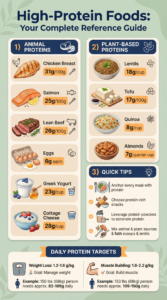
Adopting a high-protein diet is straightforward with a bit of planning. The focus should be on incorporating high-quality, whole-food protein sources into every meal.
|
Protein Source
|
Category
|
Serving Size
|
Protein (g)
|
|
Chicken Breast
|
Poultry
|
100g (3.5 oz)
|
~31g
|
|
Salmon
|
Fish
|
100g (3.5 oz)
|
~25g
|
|
Lean Beef
|
Red Meat
|
100g (3.5 oz)
|
~26g
|
|
Eggs
|
Dairy & Eggs
|
1 large egg
|
~6g
|
|
Greek Yogurt
|
Dairy & Eggs
|
1 cup (227g)
|
~23g
|
|
Cottage Cheese
|
Dairy & Eggs
|
1 cup (226g)
|
~28g
|
|
Lentils
|
Legumes
|
1 cup, cooked
|
~18g
|
|
Tofu
|
Plant-Based
|
100g (3.5 oz)
|
~17g
|
|
Quinoa
|
Grains
|
1 cup, cooked
|
~8g
|
|
Almonds
|
Nuts & Seeds
|
1/4 cup
|
~7g
|
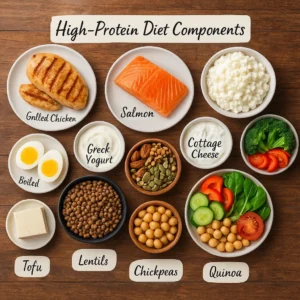
Tips for Success:
1.Anchor Every Meal with Protein: Build your breakfast, lunch, and dinner around a primary protein source.
2.Choose Smart Snacks: Opt for protein-rich snacks like Greek yogurt, a handful of nuts, hard-boiled eggs, or a quality protein bar to stay full between meals.
3.Leverage Protein Powders: Whey, casein, or plant-based protein powders can be a convenient and effective way to meet your daily protein goals, especially post-workout.
4.Don’t Forget Plants: Incorporate a variety of plant-based proteins like lentils, beans, tofu, and quinoa to ensure a broad spectrum of nutrients and fiber.
Conclusion: A Foundation for a Stronger, Healthier You
A high-protein diet is a powerful, evidence-based strategy for anyone looking to improve their health, optimize their body composition, and enhance their physical performance. By promoting satiety, boosting metabolism, and providing the essential building blocks for muscle, it offers a multi-faceted approach to achieving and maintaining a healthy weight. Furthermore, its benefits for metabolic health and its strong safety profile make it a sustainable and effective long-term dietary approach.
By focusing on high-quality protein sources and distributing them thoughtfully throughout the day, you can harness the power of this essential macronutrient to build a stronger, leaner, and more resilient body from the inside out.
References