Your complete daily guide to high-protein eating for weight loss: Calculate your protein needs, distribute intake across meals, and optimize your macronutrient ratio based on clinical research.
The Role of a High-Protein Diet in Weight Management
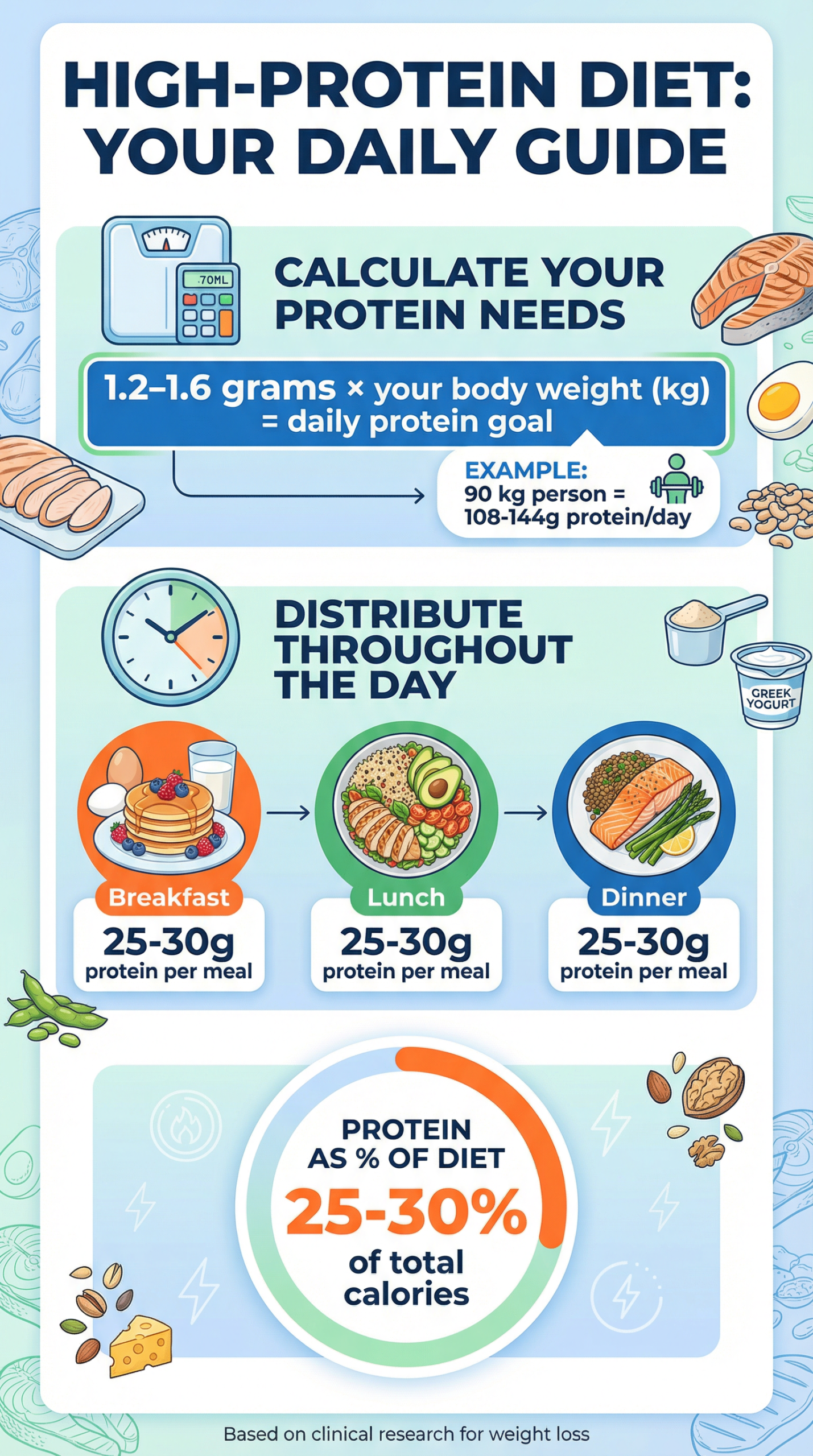
Your complete daily guide to high-protein eating for weight loss: Calculate your protein needs, distribute intake across meals, and optimize your macronutrient ratio based on clinical research.
A high-protein diet is a nutritional strategy that emphasizes increased protein consumption for the purpose of weight loss and improved body composition. This approach has gained significant attention for its evidence-based effects on appetite, metabolism, and the preservation of lean muscle mass during caloric restriction. Understanding the mechanisms behind this diet is key to implementing it effectively and safely.
This article will provide a thorough overview of using a high-protein diet for weight management. We will explore what a high-protein diet is, the scientific principles that make it effective, and the key concepts readers must understand to leverage it. Furthermore, we will offer a step-by-step guide to implementation, discuss common pitfalls, and provide a practical checklist for getting started.
What a High-Protein Diet Is (and What It Isn’t)
A high-protein diet is characterized by a macronutrient distribution where protein constitutes a higher proportion of total energy intake than typical dietary recommendations. Specifically, research supports an intake of 1.2 to 1.6 grams of protein per kilogram of body weight per day. This often translates to 25–30% of total daily calories coming from protein, a significant increase from the standard 15% .
It is not, however, a diet that advocates for unlimited protein consumption or the complete exclusion of other macronutrients. A well-structured high-protein diet maintains a balance of carbohydrates and fats to ensure adequate nutrient intake. According to a 2005 study published in the American Journal of Clinical Nutrition, increasing protein from 15% to 30% of energy while keeping carbohydrate intake constant at 50% produced significant weight loss . The diet’s focus is on optimizing protein’s unique metabolic advantages, not on extreme restriction.
Why It Matters for Weight Loss
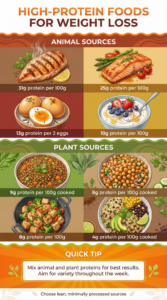
Complete guide to high-protein foods for weight loss: Compare animal and plant-based protein sources with exact protein content per serving. Mix both types for optimal nutrition and sustained weight management.
The effectiveness of a high-protein diet for weight management is supported by its multifaceted impact on the body. Clinical trials have demonstrated that consuming more protein than the recommended dietary allowance not only reduces body weight but also enhances body composition by decreasing fat mass while preserving fat-free mass (FFM) . This is crucial, as FFM (primarily muscle) is a major determinant of resting energy expenditure.
Fairly long-term clinical trials of 6–12 months have reported that a high-protein diet provides sustained weight-loss effects and can help prevent weight regain after initial weight loss . According to a comprehensive 2015 review, these diets lead to greater weight loss, fat mass loss, and preservation of lean mass compared with lower-protein diets, particularly in the shorter term .
Key Concepts Readers Must Understand
To successfully implement a high-protein diet, it is essential to grasp the core scientific principles that drive its efficacy. These mechanisms involve appetite regulation, metabolic advantages, and hormonal responses.
Appetite Control and Satiety
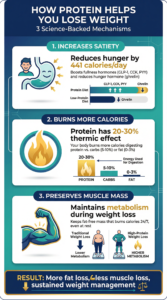
One of the most significant benefits of a high-protein diet is its powerful effect on satiety—the feeling of fullness and satisfaction after a meal. Protein generally increases satiety to a greater extent than equivalent amounts of carbohydrates or fat . This increased satiety can lead to a spontaneous reduction in overall calorie consumption. A landmark 2005 study found that when subjects on an ad libitum (unrestricted) high-protein diet increased their protein intake to 30% of total calories, their spontaneous energy intake decreased by an average of 441 calories per day .
This effect is driven by hormonal changes. A high-protein diet increases the levels of anorexigenic (appetite-reducing) hormones such as glucagon-like peptide-1 (GLP-1), cholecystokinin (CCK), and peptide tyrosine-tyrosine (PYY), while decreasing levels of the orexigenic (appetite-stimulating) hormone ghrelin .
Metabolic Benefits
A high-protein diet boosts metabolism through two primary mechanisms: the thermic effect of food (TEF) and the preservation of lean muscle mass.
1.Thermic Effect of Food (TEF): The body expends energy to digest, absorb, and process nutrients. This is known as diet-induced thermogenesis (DIT) or TEF. Protein has a markedly higher thermic effect (20–30%) compared to carbohydrates (5–10%) and fats (0–3%) . This means that a greater portion of the calories from protein is burned off during digestion.
2.Preservation of Lean Body Mass: During weight loss, a reduction in both fat and muscle mass is common. However, a higher protein intake helps preserve fat-free mass . Since muscle tissue is more metabolically active than fat tissue, maintaining it helps keep resting energy expenditure elevated, which is crucial for both weight loss and long-term weight maintenance.
Step-by-Step: How to Approach a High-Protein Diet
Implementing a high-protein diet requires a structured approach focused on quantity, quality, and timing.
1.Determine Your Protein Needs: Calculate your daily protein target. The evidence-based recommendation for weight loss is between 1.2 and 1.6 grams of protein per kilogram of body weight. For example, a 90 kg (198 lb) individual would aim for 108–144 grams of protein per day.
2.Distribute Protein Intake Evenly: Instead of consuming the majority of your protein in one meal, space it out throughout the day. Research suggests aiming for at least 25–30 grams of protein per meal. A 2010 study in overweight and obese men found that consuming three higher-protein meals per day provided better appetite control than six smaller meals .
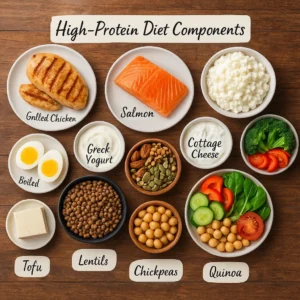
3.Choose High-Quality Protein Sources: Focus on nutrient-rich, lean protein sources. These include:
•Lean meats (skinless poultry, lean cuts of beef and pork)
4.Balance Your Macronutrients: Ensure your diet remains well-rounded. A high-protein diet should not be a “no-carb” or “no-fat” diet. Include plenty of fiber-rich vegetables, whole grains, and healthy fats to support overall health and prevent nutrient deficiencies .
Common Pitfalls and How to Avoid Them
•Pitfall: Focusing only on protein and neglecting other nutrients.
•Avoidance: Ensure your meals are balanced with fruits, vegetables, and whole grains to get adequate fiber, vitamins, and minerals. A lack of fiber can lead to constipation .
•Pitfall: Choosing poor-quality protein sources.
•Avoidance: Limit intake of processed meats and high-fat red meats, which have been linked to adverse health outcomes. Prioritize lean and plant-based proteins .
•Pitfall: Not spacing protein intake throughout the day.
•Avoidance: Plan meals to include a substantial protein source at breakfast, lunch, and dinner. This helps manage hunger and supports muscle protein synthesis continuously .
•Pitfall: Over-relying on protein supplements.
•Avoidance: While protein shakes and bars can be convenient, they should supplement, not replace, whole food protein sources. Whole foods provide a broader range of nutrients .
Options and Approaches
Complete guide to high-protein foods for weight loss: Compare animal and plant-based protein sources with exact protein content per serving. Mix both types for optimal nutrition and sustained weight management.
There is no single “best” high-protein diet; the key is adherence and finding an approach that fits an individual’s lifestyle. The primary variable is the source of protein.
Protein Source Focus
Advantages
Considerations
Animal-Based
Provides all essential amino acids (complete protein). Sources like whey may offer a slight satiety advantage due to rapid absorption .
Can be higher in saturated fat if fatty cuts of meat and full-fat dairy are chosen. Limiting processed meats is recommended .
Plant-Based
High in fiber, vitamins, and minerals. Associated with improved heart health and digestive function .
Requires combining different plant sources (e.g., rice and beans) to ensure all essential amino acids are consumed. Attention to vitamin B12, vitamin D, and iron intake is necessary .
Mixed-Source
Offers a balanced amino acid profile and a wide range of nutrients. May be the most sustainable and varied approach.
Requires mindful planning to ensure a good balance of lean animal and nutrient-dense plant proteins.
Practical Checklist
Calculate your daily protein goal (1.2–1.6 g/kg of body weight).
Plan three main meals, each containing at least 25–30 grams of protein.
Stock your kitchen with a variety of lean protein sources (e.g., chicken breast, fish, eggs, Greek yogurt, lentils, tofu).
Incorporate a serving of vegetables and a source of healthy fat with each meal.
Prioritize whole foods over processed protein products and supplements.
Monitor your feelings of fullness and adjust your portion sizes accordingly.
Stay hydrated, as the body uses more water to metabolize protein.
FAQs
1. Is a high-protein diet safe for everyone? According to a 2020 clinical review, high-protein diets have not been reported to have adverse effects on bone density or renal function in healthy adults . However, individuals with pre-existing kidney conditions should consult a healthcare provider before significantly increasing their protein intake.
2. Will a high-protein diet cause weight gain? While protein contains calories, its strong effect on satiety often leads to a spontaneous reduction in overall calorie intake, promoting weight loss . However, if total calorie intake consistently exceeds expenditure, weight gain can occur regardless of the macronutrient composition.
3. How long should I follow a high-protein diet? Studies lasting 6–12 months have shown sustained benefits for weight loss and prevention of weight regain . The key to long-term success is adherence, so the diet must be sustainable for the individual .
4. Do I need to eat less carbohydrates on a high-protein diet? Not necessarily. The Weigle et al. (2005) study demonstrated significant weight loss by increasing protein to 30% while keeping carbohydrates constant at 50% of total calories . The focus is on increasing the protein ratio, which can be achieved by reducing fat, carbohydrates, or both.
Conclusion
A high-protein diet is an evidence-based and effective strategy for weight loss and management. Its success is rooted in its ability to enhance satiety, increase metabolism through a higher thermic effect, and preserve metabolically active lean muscle mass during caloric restriction. By promoting a spontaneous reduction in calorie intake and optimizing body composition, it offers a powerful tool for achieving and maintaining a healthy weight.
Key takeaways from the research include:
•A high-protein diet effectively reduces body weight and fat mass while preserving lean muscle.
•The primary mechanisms are increased satiety, a higher thermic effect of food, and favorable hormonal changes.
•Successful implementation involves consuming 1.2–1.6 g of protein per kg of body weight daily, distributed evenly across meals.
•Choosing high-quality, lean protein sources and maintaining a balanced diet are crucial for safety and efficacy.
For your next step, begin by tracking your current food intake for a few days to establish a baseline. Then, use the practical checklist provided to gradually increase your protein intake toward your calculated goal while focusing on whole food sources.