The science is clear: A high-protein breakfast (15-30g) delivers three powerful benefits—enhanced satiety, stable energy, and muscle support—that set you up for healthier choices all day long.
Fuel Your Day: A Practical Guide to High-Protein Breakfasts
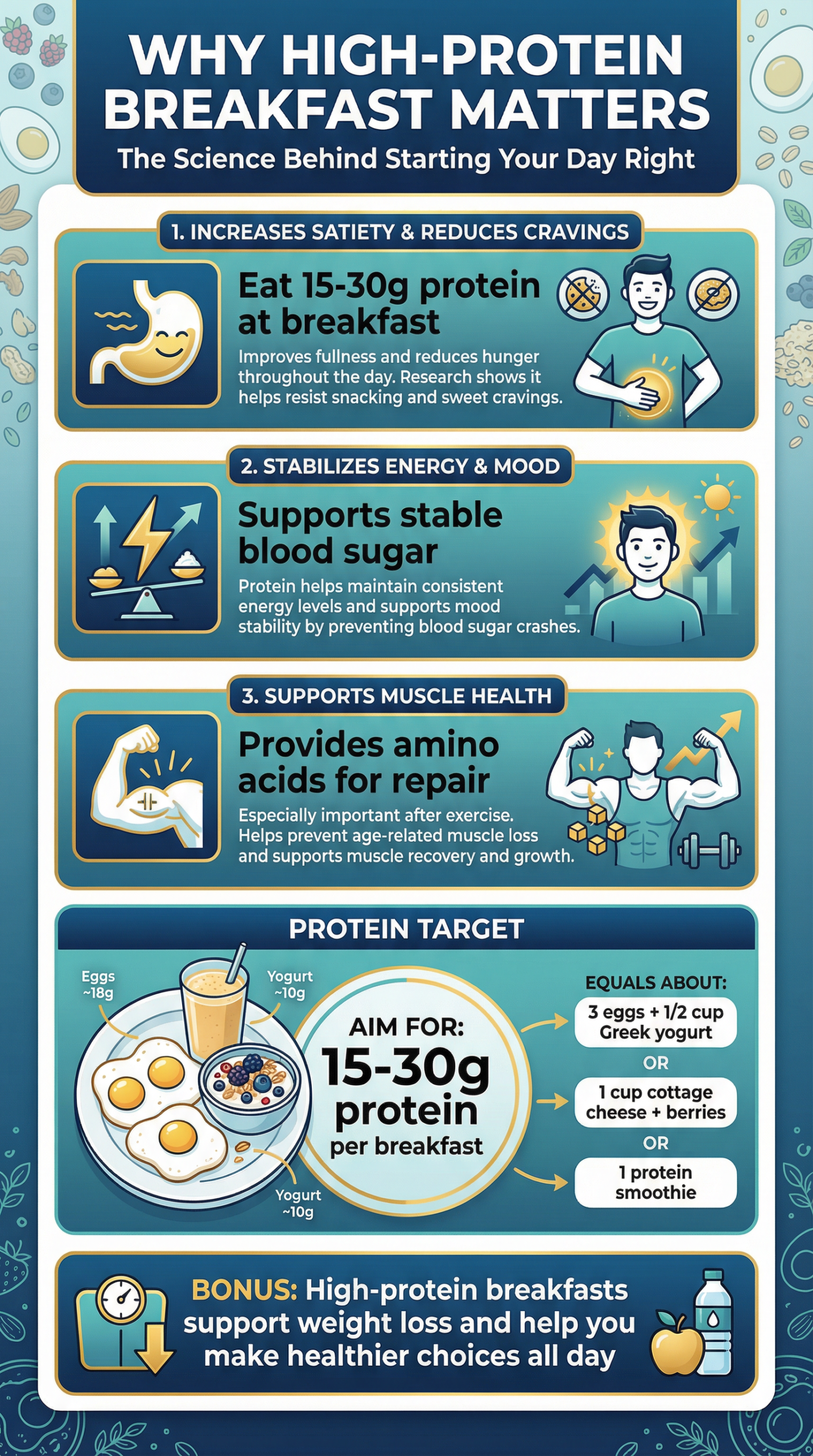
The science is clear: A high-protein breakfast (15-30g) delivers three powerful benefits—enhanced satiety, stable energy, and muscle support—that set you up for healthier choices all day long.
A high-protein breakfast is a strategic approach to morning nutrition that emphasizes protein-rich foods to promote satiety, stabilize energy levels, and support overall health goals. This method moves beyond the quick, carbohydrate-heavy options that often dominate the breakfast table, focusing instead on building a satisfying and nutritionally robust first meal of the day. By doing so, it sets a foundation for better dietary choices and sustained energy until lunch.
This article provides a comprehensive guide to incorporating a high-protein breakfast into your routine. We will explore what constitutes a high-protein breakfast, why it is a beneficial practice, and the key concepts needed for successful implementation. You will find a variety of easy and delicious recipes, practical tips for adding protein to your morning meals, and a clear, actionable checklist to help you get started.
What a High-Protein Breakfast Is (and What It Isn’t)
A high-protein breakfast is a meal that contains a significant amount of protein, typically aiming for 15 to 30 grams per serving. According to research cited by Colorado State University, consuming around 30 grams of protein for breakfast can effectively satiate appetite throughout the morning and into the afternoon . This approach focuses on the strategic distribution of daily protein intake, which many people otherwise consume predominantly at dinner.
It is important to understand that a high-protein breakfast is not about eliminating other macronutrients. A well-constructed meal should remain balanced, incorporating healthy sources of carbohydrates and fats. According to The Real Food Dietitians, effective high-protein breakfast recipes also include healthy carb and fiber sources like oats, vegetables, or potatoes, along with beneficial fats from sources like nuts and avocados . The goal is to optimize the protein ratio to leverage its benefits, not to follow an overly restrictive diet.
Why It Matters for Health and Satiety
Starting the day with a protein-rich meal has several evidence-based benefits, primarily related to appetite control, energy stability, and muscle health. A solid body of research has demonstrated that a high-protein breakfast improves feelings of fullness and satiety, which can lead to healthier food choices and reduced cravings for snacks and sweets throughout the day .
Furthermore, protein plays a crucial role in muscle repair and maintenance. As noted by Jessica Cording Nutrition, consuming adequate protein after exercise provides the body with the essential amino acids needed to repair and rebuild muscle tissue . Since many people exercise in the morning, a high-protein breakfast serves as an effective recovery meal. This is particularly important for older adults, as a higher protein intake can help prevent age-related muscle loss .
Key Concepts for a High-Protein Breakfast
To effectively implement a high-protein breakfast strategy, it is essential to understand a few core principles regarding protein sources, quantity, and meal composition.
Aim for a Target Range
The most consistent recommendation from nutrition experts is to aim for 15 to 30 grams of protein in your morning meal . This range is substantial enough to trigger the desired effects on satiety and muscle protein synthesis. For context, a single large egg contains about 6 grams of protein, so achieving this target requires combining several protein-rich foods.
Prioritize High-Quality Protein Sources
The quality of the protein is as important as the quantity. It is advisable to focus on lean and minimally processed sources to avoid excessive saturated fat and sodium.
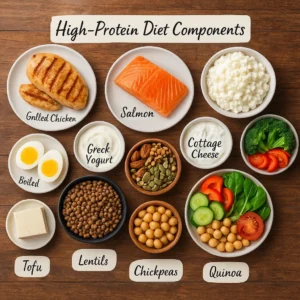
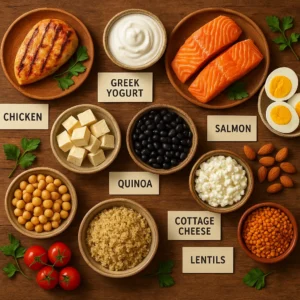
•Animal-Based: Eggs, Greek yogurt, cottage cheese, lean meats (like chicken or turkey sausage), and fish (such as smoked salmon).
•Plant-Based: Tofu, tempeh, lentils, beans, nuts, seeds, and high-quality protein powders.
Ensure a Balanced Meal
A high-protein breakfast should not exist in a nutritional vacuum. To create a truly healthy and satisfying meal, it is crucial to include sources of fiber and healthy fats.
•Fiber: Add vegetables to omelets, include oats or whole-grain toast, and top yogurt or smoothies with berries and chia seeds.
•Healthy Fats: Incorporate avocado, nuts, seeds, or nut butter to enhance satiety and provide essential fatty acids.
Step-by-Step: How to Implement a High-Protein Breakfast
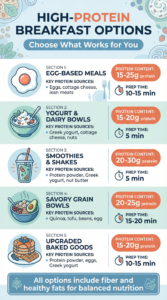
Choose the high-protein breakfast approach that fits your lifestyle: From quick 5-minute yogurt bowls to hearty 20-minute grain bowls, there’s a protein-rich option for every morning routine.
Adopting a high-protein breakfast routine can be straightforward with a structured approach. The following steps provide a clear path to making this change sustainable and enjoyable.
1.Assess Your Current Breakfast: Start by analyzing what you typically eat for breakfast. Identify the current protein content and look for opportunities to make simple swaps or additions.
2.Identify Your Go-To Protein Sources: Based on the list of high-quality proteins, choose a few that you enjoy and can easily incorporate. Having these readily available is key to consistency.
3.Plan Two or Three Simple Recipes: You do not need a dozen complex recipes to start. Select two or three easy options that you can rotate throughout the week, such as a smoothie, a yogurt bowl, or a batch of egg muffins.
4.Incorporate Meal Prep: Many high-protein breakfasts are ideal for meal prepping. Dedicate an hour on the weekend to prepare make-ahead options like breakfast burritos, baked oatmeal cups, or a frittata. This strategy, highlighted by New York Times Cooking, ensures you have a nutritious option ready even on busy mornings .
Common Pitfalls and How to Avoid Them
•Pitfall: Relying solely on protein supplements.
•Avoidance: While protein powders and bars are convenient, they should not replace whole foods. Prioritize getting protein from a variety of food sources that also offer other essential nutrients .
•Pitfall: Forgetting about fiber and healthy fats.
•Avoidance: A breakfast of only protein may not keep you full for long. Always add a source of fiber (vegetables, fruit, whole grains) and healthy fat (avocado, nuts, seeds) to create a balanced meal.
•Pitfall: Choosing high-fat, processed protein sources.
•Avoidance: Limit intake of processed breakfast meats like bacon and fatty sausages. Opt for lean alternatives like chicken sausage, turkey bacon, or plant-based options .
High-Protein Breakfast Options
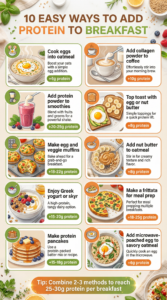
Transform your regular breakfast into a high-protein powerhouse with these 10 simple additions. Each method shows the exact protein boost you’ll get, making it easy to reach your 25-30g target.
There are numerous ways to build a high-protein breakfast, catering to different tastes, dietary needs, and time constraints. The following table compares several popular approaches.
Highly versatile; can be prepared quickly (scrambled) or prepped in batches (egg muffins, frittatas).
Can become repetitive if not varied.
Yogurt & Dairy Bowls
Greek yogurt, skyr, cottage cheese, nuts, seeds, protein powder
Quick and easy to assemble; requires no cooking; easily customizable with different toppings.
Choose plain, unsweetened varieties to avoid added sugar.
Smoothies & Shakes
Protein powder, Greek yogurt, milk, soy milk, nut butter, seeds
Excellent for busy mornings; easy to digest; allows for inclusion of fruits and vegetables.
Can become a high-sugar meal if too much fruit or sweetener is added.
Savory Grain Bowls
Quinoa, oats, tofu, beans, lentils, topped with an egg
Highly nutritious and satisfying; great for using leftovers; provides a good balance of protein and complex carbs.
May require more preparation time if components are not cooked ahead.
Upgraded Baked Goods
Protein powder, eggs, Greek yogurt, nut butter
Allows for healthier, protein-rich versions of favorites like pancakes, waffles, and muffins.
Requires careful recipe selection to ensure adequate protein content and minimal added sugar.
Practical Checklist for Success
Stock your pantry and fridge with at least three go-to protein sources (e.g., eggs, Greek yogurt, protein powder).
Plan your breakfasts for the next three days, aiming for at least 15 grams of protein per meal.
Prep one batch-friendly breakfast item for the week, such as egg muffins or overnight oats.
Ensure each breakfast includes a source of fiber, such as a handful of spinach, a serving of berries, or a tablespoon of chia seeds.
Add a source of healthy fat to each meal, like a quarter of an avocado or a tablespoon of almond butter.
FAQs
1. How can I add protein to my oatmeal? According to Jessica Cording Nutrition, you can cook eggs or egg whites directly into your oatmeal as it simmers . Other easy additions include stirring in a scoop of protein powder, a tablespoon of nut butter, or topping it with Greek yogurt and nuts.
2. Are there good high-protein options that don’t involve eggs? Yes. A yogurt parfait with Greek yogurt, oats, and chia seeds can provide around 20 grams of protein . Other options include a peanut butter banana smoothie with Greek yogurt (~25g protein), a cottage cheese breakfast bowl (~15-20g protein), or a southwest tofu scramble (~25g protein) .
3. Is a high-protein breakfast suitable for weight loss? Yes. Research indicates that a high-protein breakfast can enhance satiety, leading to reduced calorie intake throughout the day and better management of cravings, which supports weight loss efforts .
4. How much time does it take to make a high-protein breakfast? It can take as little as five minutes. A Greek yogurt bowl, a protein smoothie, or a cottage cheese bowl can be assembled very quickly. For more complex recipes like omelets or hashes, meal prepping ingredients in advance can significantly reduce morning cook time.
Conclusion
Incorporating a high-protein breakfast is a powerful and practical strategy for improving satiety, stabilizing energy levels, and supporting long-term health goals. By focusing on a target of 15 to 30 grams of protein from high-quality sources, you can effectively manage hunger and reduce cravings for less nutritious foods later in the day. This approach is not about restriction but about building a balanced, satisfying meal that fuels your body for the hours ahead.
Key takeaways include:
•A high-protein breakfast, containing 15-30 grams of protein, is scientifically supported to increase fullness and reduce daily cravings.
•Success depends on choosing high-quality, lean protein sources and balancing them with fiber and healthy fats.
•A wide variety of options exists, from quick smoothies and yogurt bowls to make-ahead egg muffins and savory hashes.
•Meal prepping is a highly effective strategy for ensuring consistency, even on busy mornings.
As a next step, identify one or two recipes from this guide that appeal to you and commit to trying them this week. By starting small and leveraging meal prep, you can build a sustainable habit that delivers lasting benefits.