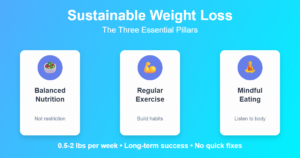
While nutrition often takes center stage in weight loss discussions, physical activity is the engine that drives long-term success. It is not merely a tool for burning calories but a fundamental component of metabolic health, cardiovascular resilience, and mental well-being.
This article explores the significance of incorporating regular movement into your weight management strategy. It moves beyond the simplistic “calories in, calories out” model to examine how exercise impacts the body and mind. By understanding these benefits and learning practical ways to integrate activity into daily life, you can build a routine that supports not just a lower number on the scale, but a healthier, more vibrant life.
What Physical Activity Is (and What It Isn’t)
Physical activity encompasses all movement that uses energy, from structured exercise sessions to daily tasks like gardening or climbing stairs . It is a broad category that includes aerobic activities (cardio), muscle-strengthening exercises, and incidental movement throughout the day.
It is not limited to grueling gym workouts or marathon training. Effective physical activity for weight loss does not require expensive equipment or elite athletic ability. It is simply the practice of keeping the body in motion to support metabolic function and overall health .
Why It Matters: Beyond the Calorie Burn
The significance of physical activity extends far beyond the immediate energy expenditure of a workout.
•Weight Maintenance: Research consistently shows that while diet drives initial weight loss, physical activity is the most critical factor for keeping weight off long-term .
•Metabolic Health: Regular movement improves insulin sensitivity and helps regulate blood sugar levels, which is crucial for preventing type 2 diabetes and managing weight .
•Cardiovascular Health: Exercise strengthens the heart, lowers blood pressure, and improves cholesterol levels, reducing the risk of heart disease often associated with excess weight .
•Mental Resilience: Physical activity is a potent mood enhancer. It releases endorphins that reduce stress, anxiety, and symptoms of depression—factors that often trigger emotional eating .
Key Concepts Readers Must Understand
To effectively use physical activity for weight loss, three core concepts are essential:
•Caloric Deficit vs. Expenditure: Weight loss occurs when you burn more calories than you consume. Exercise increases your total daily energy expenditure, making it easier to create and maintain this deficit without starving yourself .
•Muscle Mass Matters: Strength training builds lean muscle, which is metabolically active tissue. Having more muscle increases your resting metabolic rate, meaning you burn more calories even when you are not exercising .
•NEAT (Non-Exercise Activity Thermogenesis): This refers to the energy burned during daily movements that are not structured exercise—like walking to the car, typing, or fidgeting. Increasing NEAT can have a significant cumulative impact on daily calorie burn .
Step-by-Step: How to Approach Physical Activity
Building an active lifestyle is a gradual process.
1. Start with a Baseline
Assess your current activity level. If you are sedentary, jumping into high-intensity workouts can lead to injury or burnout. Begin by simply tracking your daily steps or active minutes to understand your starting point .
2. Build a Balanced Routine
A well-rounded routine includes different types of activity:
•Aerobic Activity: Aim for at least 150 minutes of moderate-intensity activity (like brisk walking) or 75 minutes of vigorous activity per week .
•Strength Training: Incorporate muscle-strengthening exercises for all major muscle groups at least two days a week .
3. Focus on Consistency Over Intensity
It is better to walk for 30 minutes every day than to run for two hours once a week. Consistency trains your body to utilize energy efficiently and builds the habit of movement .
Common Pitfalls and How to Avoid Them
•Overestimating Calorie Burn: It is easy to overestimate how many calories a workout burns and then “eat back” those calories. Focus on exercise for health benefits rather than just a license to eat more .
•Ignoring Recovery: Rest days are essential for muscle repair and preventing injury. Overtraining can lead to fatigue and decreased activity levels overall .
•Relying Solely on Cardio: While cardio burns calories during the session, neglecting strength training means missing out on the long-term metabolic boost of increased muscle mass .
Options and Approaches: Comparing Tradeoffs
Different types of activity offer unique benefits.
Lower calorie burn per minute compared to high-intensity options.
Strength Training
Building muscle mass
Increases resting metabolism; improves bone density.
Requires knowledge of form; may need equipment; scale weight may not drop initially due to muscle gain.
HIIT (High-Intensity Interval Training)
Short bursts of intense effort
Time-efficient; high calorie burn; “afterburn” effect.
High impact; higher risk of injury; requires recovery time.
Active Hobbies
Enjoyable movement (dancing, gardening)
Fun and sustainable; reduces stress; social.
Intensity varies; may be harder to track metrics.
Practical Checklist
Use this checklist to integrate more movement into your day:
Take the Stairs: Skip the elevator whenever possible to boost heart rate and leg strength .
Park Farther Away: Choose parking spots at the back of the lot to add extra steps to your errands.
Walk and Talk: Take phone calls while walking around your home or office.
Active Commute: If feasible, walk or bike for part of your commute to work.
Scheduled Breaks: Set a timer to stand up and stretch or walk for 5 minutes every hour.
Household Chores: Approach cleaning or gardening with vigor—these count as moderate physical activity .
FAQs
Q: How much exercise do I need to lose weight?
A: Guidelines suggest at least 150 minutes of moderate aerobic activity per week for health, but for significant weight loss or maintenance, you may need up to 300 minutes per week .
Q: Can I lose weight with just diet?
A: Yes, you can lose weight through dietary changes alone, but exercise is crucial for preserving muscle mass, improving health markers, and preventing weight regain .
Q: What is the best time of day to exercise?
A: The best time is whenever you can consistently stick to it. Some people prefer mornings to get it done, while others find evening workouts help relieve stress. Consistency matters more than timing .
Conclusion
Incorporating physical activity into your weight loss routine is a powerful investment in your future health. It accelerates weight loss, protects your heart, boosts your mood, and builds a body that is capable and resilient.
Next Step: Identify one sedentary habit you can replace with movement this week. For example, swap 20 minutes of evening TV time for a walk around the neighborhood. Start small, build momentum, and let the benefits compound over time.