
Weight management is often approached through diet and exercise. However, sleep is a critical, often overlooked, third pillar. The quality and quantity of our sleep profoundly impact the body’s ability to regulate appetite, metabolize energy, and resist unhealthy food cravings. Understanding this intricate relationship is key to optimizing a fundamental biological process that underpins effective weight control.
This article delves into the scientific connection between sleep and weight loss. It explores how sleep deprivation dysregulates hunger hormones, impairs metabolism, and intensifies food cravings. Practical strategies for improving sleep quality and establishing healthy sleep habits are provided, offering a comprehensive guide for supporting weight loss efforts through better sleep.
What Sleep’s Role in Weight Management Is (and What It Isn’t)
Sleep is a crucial regulatory mechanism for physiological processes influencing body weight. Adequate sleep creates an optimal environment for dietary and exercise efforts to succeed .
Conversely, sleep deprivation actively sabotages weight loss. Chronic short sleep (less than seven hours per night) is linked to a 38% increased risk of obesity in adults . Individuals consistently sleeping six or fewer hours tend to have a higher Body Mass Index (BMI) . This indicates that while sleep doesn’t directly shed pounds, its absence significantly impedes maintaining a healthy weight.
Why It Matters / When It’s Useful
Sleep’s impact on weight management extends beyond fatigue, fundamentally altering metabolic processes and hormonal balance. This makes weight loss more challenging and weight gain more likely. This understanding is particularly useful for anyone struggling with weight despite consistent diet and exercise, highlighting a potential missing piece in their strategy.
Sleep deprivation directly reduces fat loss during caloric restriction. One study showed participants on a calorie-restricted diet lost less fat when sleeping 5.5 hours per day compared to 8.5 hours . A lack of sleep is also associated with an average increase in energy intake of 200 to 500 kcal per day . This additional caloric consumption, often from less healthy sources, can quickly negate diet benefits. Furthermore, fatigue from poor sleep reduces the inclination to exercise, further hindering weight management .
Key Concepts Readers Must Understand
Understanding the underlying biological mechanisms—a complex interplay of hormones and neurological pathways—is crucial to grasping the link between sleep and weight.
Hunger Hormones
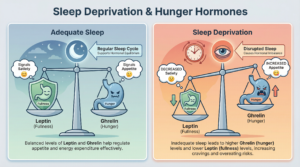
Ghrelin and leptin are primary hormones regulating appetite and satiety:
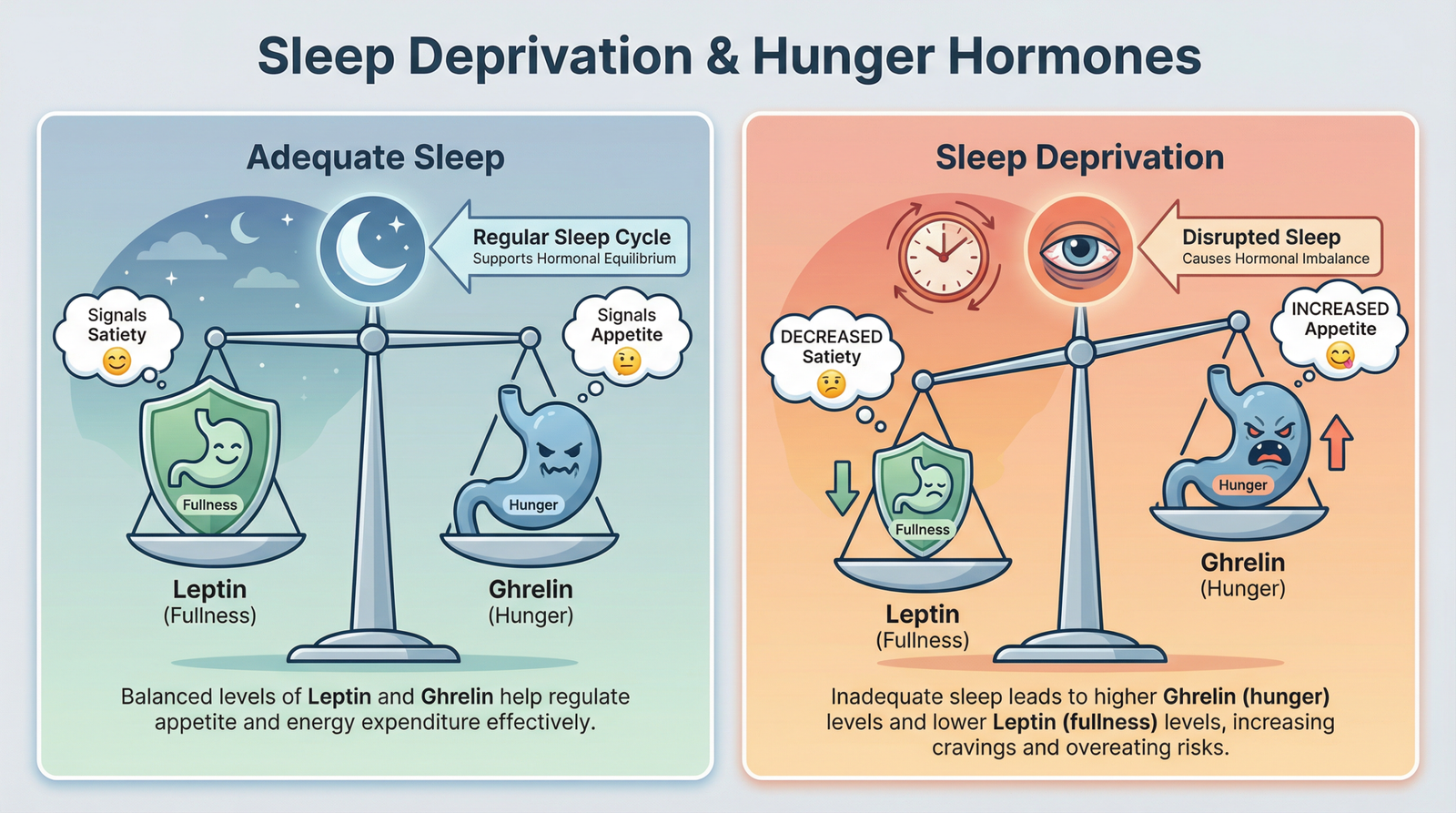
•Ghrelin: The “hunger hormone,” released by the stomach, signals hunger. Sleep deprivation increases ghrelin levels .
•Leptin: The “satiety hormone,” produced by fat cells, signals fullness. Sleep deprivation typically decreases leptin levels .
Chronic sleep deprivation disrupts this balance. Research shows even a single night of four hours of sleep can lead to a 71% increase in the ghrelin-to-leptin ratio, amplifying hunger and reducing satiety . This hormonal imbalance makes individuals hungrier and less satisfied, often leading to overeating and cravings for less healthy foods .
Endocannabinoid System
Sleep restriction also impacts the endocannabinoid system, which regulates appetite and mood. 2-arachidonoylglycerol (2-AG), an endocannabinoid, enhances the hedonic (pleasure-seeking) aspect of eating.
Studies show sleep restriction boosts 2-AG levels by approximately 33% compared to normal sleep. These elevated levels peak later and remain high longer, extending into the evening. During these times, sleep-deprived individuals report increased hunger and a stronger desire to eat, making it harder to resist sweet, salty, and high-fat snacks . The modest energy cost of staying awake (around 17 extra calories per hour) is often far exceeded by the consumption of over 300 extra calories from snacks by sleep-deprived individuals, leading to substantial weight gain .
Metabolism & Insulin
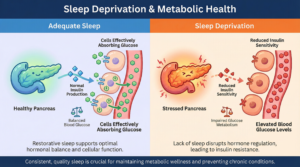
Sleep deprivation profoundly affects metabolic health, particularly glucose regulation and insulin sensitivity. Insulin, from the pancreas, regulates blood glucose. Insufficient sleep makes cells less responsive to insulin (insulin resistance) . This results in higher blood sugar, as glucose remains in the bloodstream. Over time, insulin resistance drives prediabetes and type 2 diabetes .
Poor sleep also alters cortisol patterns. Cortisol, the “stress hormone,” typically peaks in the morning and declines. Sleep deprivation can lead to sustained high levels, promoting visceral fat accumulation . The sympathetic nervous system, more active with sleep deprivation, signals the liver to release more glucose, further elevating blood sugar . This metabolic dysregulation, combined with hormonal imbalances, creates a challenging environment for weight management.
Step-by-Step: How to Approach/Implement/Evaluate Sleep for Weight Management
Integrating healthy sleep practices into a weight management strategy requires a systematic approach: evaluating habits, implementing changes, and understanding obstacles.
Evaluation
Assess your current sleep patterns. Most adults need seven to nine hours of sleep nightly for optimal health and metabolic function . Track duration and quality for a week to identify shortfalls or disturbances.
Implementation
Implement changes to improve sleep quantity and quality:
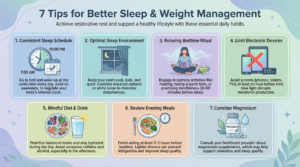
- 1.Establish a Regular Sleep Schedule: Go to bed and wake up at the same time daily, even weekends, to regulate your circadian rhythm .
- Optimize Your Sleep Environment: Ensure your bedroom is cool (15-19°C or 60-67°F), dark, and quiet .
- Create a Relaxing Pre-Sleep Ritual: Engage in calming activities for 30-60 minutes before bed (e.g., reading, warm bath, meditation). Avoid stimulating activities .
- Limit Exposure to Electronic Devices: Keep devices out of the bedroom and avoid screen time for at least an hour before bed; blue light interferes with melatonin .
- Be Mindful of Diet and Drink: Avoid late-afternoon/evening caffeine. Limit alcohol before bed, as it disrupts sleep. Heavy or spicy meals close to bedtime can also interfere .
Common Pitfalls and How to Avoid Them
Several common pitfalls can undermine sleep improvement for weight management:
- “Weekend Recovery Sleep”: This is ineffective. Research shows it’s insufficient to fully restore metabolic balance after chronic sleep deprivation . Consistency every night is key.
- Ignoring Late-Night Cravings: Altered hormonal and endocannabinoid systems cause heightened cravings for unhealthy foods in the late afternoon/evening when sleep-deprived . Recognize this vulnerability to plan healthier options or resist urges.
- Over-reliance on Sleep Aids: Long-term reliance can mask underlying issues. Focus on behavioral and environmental changes first.
Options / Approaches (Compare Tradeoffs)
Different aspects of sleep contribute to health and weight management, with various approaches for challenges.
- Sleep Quantity vs. Quality: Both are important. Sufficient hours (quantity) are crucial for hormonal balance, while continuity and restorative nature (quality) significantly impact metabolic rate and well-being . Addressing disturbances is as important as extending duration.
- Dietary Tweaks to Support Sleep: Adjustments can indirectly support sleep and weight management. For individuals with pre-diabetes or type 2 diabetes, a whole-foods, low-refined-carbohydrate diet (e.g., 75-100 grams per day) can balance blood sugar, improving sleep quality .
- Exercise Timing and Intensity: Regular physical activity benefits both sleep and weight. However, intense exercise too close to bedtime can be disruptive. Short, high-intensity workouts (around 20 minutes) are time-efficient for promoting metabolic health, especially for those with limited energy due to poor sleep .
Practical Checklist
To integrate sleep as a foundational element of your weight management strategy:
Maintain a Consistent Sleep Schedule: Go to bed and wake up at the same time daily, including weekends.
Create an Optimal Sleep Environment: Ensure your bedroom is dark, quiet, and cool (15-19°C or 60-67°F).
Implement a Relaxing Bedtime Routine: Dedicate 20-30 minutes before sleep to unwind.
Limit Screen Time Before Bed: Avoid electronic devices for at least one hour before sleep.
Manage Caffeine and Alcohol Intake: Avoid caffeine late afternoon/evening; limit alcohol before bed.
Review Evening Meals: Opt for lighter, non-spicy meals before bedtime.
Consider Magnesium Supplementation: Consult a healthcare professional about magnesium for muscle relaxation and sleep .
FAQs
Q: Can I catch up on sleep on weekends to reverse the effects of sleep deprivation?
A: “Weekend recovery sleep” is generally insufficient to fully restore metabolic balance or reverse chronic sleep deprivation effects . Consistency in sleep duration and quality throughout the week is more impactful.
Q: Why do I crave unhealthy foods more when I’m tired?
A: Sleep deprivation leads to an imbalance in hunger hormones (increased ghrelin, decreased leptin) and heightened endocannabinoid system activity (elevated 2-AG). These changes increase hunger and amplify the desire for palatable, high-calorie, high-fat foods .
Q: How much sleep do adults typically need for effective weight management?
A: Most adults require seven to nine hours of sleep per night. Consistently achieving this range is crucial for optimal hormonal regulation, metabolic function, and overall weight management .
Q: Does sleep deprivation only affect fat loss, or can it impact muscle mass during dieting?
A: Sleep restriction can impact body composition during dieting. Studies indicate that insufficient sleep during caloric restriction leads to a greater proportion of muscle mass loss and less fat mass loss, compared to adequate sleep .
Conclusion
Sleep is an active, vital process with profound implications for weight management. Its influence extends to the intricate hormonal symphony governing hunger and satiety, the efficiency of our metabolism, and our susceptibility to food cravings. Neglecting sleep can undermine even diligent diet and exercise efforts, creating a physiological environment that promotes weight gain and hinders fat loss.
Key Takeaways:
- Hormonal Imbalance: Sleep deprivation disrupts leptin and ghrelin, increasing hunger and decreasing satiety.
- Metabolic Dysfunction: Insufficient sleep leads to insulin resistance and altered cortisol patterns, promoting fat storage.
- Increased Cravings: The endocannabinoid system is activated, intensifying desires for unhealthy, high-calorie foods.
- Reduced Fat Loss: During caloric restriction, poor sleep can shift weight loss away from fat and towards muscle.
- Consistency is Crucial: “Catch-up” sleep is largely ineffective; consistent, quality sleep is paramount.
Prioritizing sleep is a fundamental requirement for those committed to achieving or maintaining a healthy weight. It empowers the body to function optimally, making dietary choices easier and exercise more effective. The next step is to critically evaluate your current sleep habits and implement the practical strategies outlined in this article. By integrating restorative sleep into your daily routine, you unlock a powerful, often underestimated, ally in your weight management journey.
References