What Are the Main Components of a High-Protein Diet?
A high-protein diet primarily consists of foods rich in protein such as lean meats, dairy products, eggs, legumes, and protein-rich plant foods, often complemented by moderate carbohydrates and healthy fats. The main components are high-quality protein sources, adequate hydration, and a balanced intake of essential nutrients to support muscle growth, metabolism, and overall health.
—
What is a High-Protein Diet? (Definition Box)
A high-protein diet is a nutrition plan where protein constitutes a larger proportion of daily caloric intake—typically 20–35% or more. The focus is on consuming foods dense in protein to aid muscle repair, support metabolism, and promote satiety.
—
What Foods Are Included in a High-Protein Diet?
Animal-Based Protein Sources
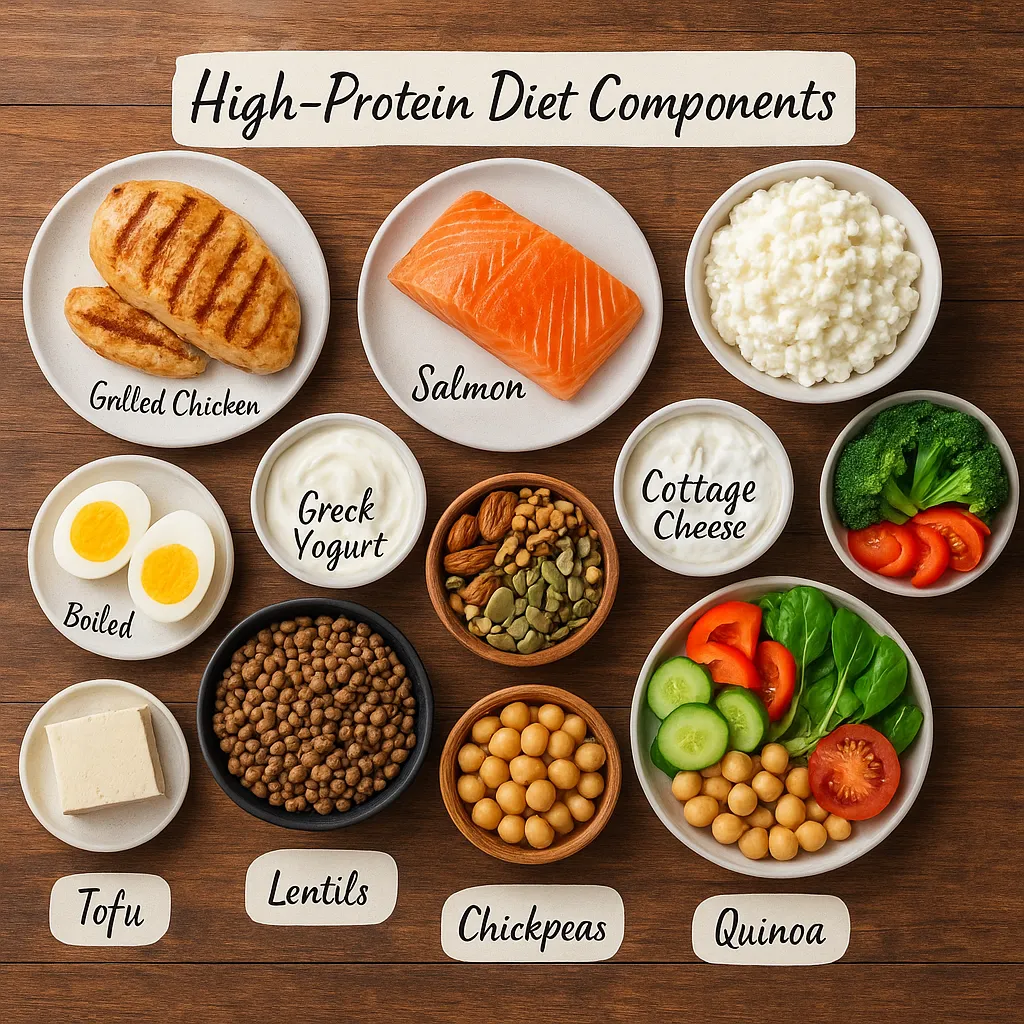
– **Lean meats**: Chicken breast, turkey, lean beef, pork tenderloin
– **Seafood**: Salmon, tuna, shrimp, cod
– **Eggs**: Whole eggs and egg whites
– **Dairy products**: Greek yogurt, cottage cheese, milk, cheese
Plant-Based Protein Sources
– **Legumes**: Lentils, chickpeas, black beans, peas
– **Soy products**: Tofu, tempeh, edamame
– **Nuts and seeds**: Almonds, peanuts, chia seeds, pumpkin seeds
– **Whole grains**: Quinoa, farro, bulgur
—
Why is Protein Important in the Diet?
Protein is essential for building and repairing body tissues, maintaining muscle mass, supporting a healthy immune system, and producing hormones and enzymes. People often choose high-protein diets for weight management, muscle building, and metabolic health.
—
How Does a High-Protein Diet Work?
A high-protein diet works by increasing the intake of protein-rich foods, which leads to greater satiety, improved muscle synthesis, and often reduced calorie intake from fats or carbohydrates. The thermic effect of protein (energy expended during digestion) is also higher compared to fats and carbs, aiding metabolism.
—
What Are the Key Components of a High-Protein Diet?
Main Components List
1. **High-Quality Protein Sources**
– Emphasize lean meats, fish, eggs, dairy, and plant proteins
2. **Adequate Hydration**
– Drink enough fluids to support kidney function and protein metabolism
3. **Balanced Nutrients**
– Incorporate fiber from vegetables, fruits, and whole grains
– Include healthy fats (olive oil, avocados, nuts)
4. **Micronutrient Support**
– Ensure intake of vitamins and minerals (iron, B12, calcium)
5. **Controlled Carbohydrates**
– Opt for complex carbs like quinoa, oats, and brown rice in moderation
6. **Meal Timing and Distribution**
– Spread protein intake evenly across meals for optimal absorption
—
High-Protein Foods Table
| Protein Source | Protein (per 100g) | Additional Nutrients | Category |
|——————|——————–|—————————–|—————|
| Chicken Breast | 31g | B vitamins, niacin | Animal |
| Salmon | 25g | Omega-3, B12 | Animal |
| Greek Yogurt | 10g | Calcium, probiotics | Dairy |
| Eggs | 13g | Vitamin D, selenium | Animal |
| Lentils | 9g | Iron, fiber | Plant |
| Tofu | 8g | Calcium, iron | Plant |
| Almonds | 21g | Vitamin E, magnesium | Plant |
—
Are There Different Types of High-Protein Diets?
Yes, high-protein diets can be customized according to dietary preferences and needs:
– **Omnivore high-protein diets**: Include animal and plant proteins.
– **Vegetarian high-protein diets**: Rely on dairy, eggs, legumes, and plant-based proteins.
– **Vegan high-protein diets**: Focus solely on plant sources like legumes, soy, seitan, and seeds.
—
How Much Protein Should You Eat on a High-Protein Diet?
– **General recommendation**: 1.2 to 2.2 grams per kilogram of body weight per day, depending on activity levels, age, and goals.
– **Athletes or strength trainers**: May require higher intake for muscle repair and growth.
– **Older adults**: Benefit from increased protein to prevent muscle loss.
> *Consult a health professional or registered dietitian for personalized guidance.*
—
What Are the Benefits and Risks of High-Protein Diets?
Potential Benefits
– Increased muscle mass and strength
– Enhanced satiety and support for weight loss
– Improved metabolism and fat burning
– Greater retention of muscle during caloric restriction
Possible Risks
– Kidney stress in individuals with preexisting kidney disease
– Nutrient imbalances if not well-planned
– Reduced fiber intake if carbohydrates are excessively restricted
—
Why Is Hydration Important in a High-Protein Diet?
Protein metabolism produces nitrogen byproducts that the kidneys filter out. Sufficient hydration helps prevent kidney strain and supports overall metabolic health. It’s recommended to drink plenty of water, especially when increasing protein intake.
—
Examples of High-Protein Diet Meal Plans
Sample High-Protein Day
| Meal | Foods Included | Total Protein (approx.) |
|————-|————————————————–|————————|
| Breakfast | Scrambled eggs, Greek yogurt, berries | 28g |
| Snack | Cottage cheese, almonds | 14g |
| Lunch | Grilled chicken salad, beans, quinoa | 35g |
| Snack | Hummus with edamame and vegetables | 10g |
| Dinner | Baked salmon, steamed broccoli, brown rice | 32g |
| **Total** | | **119g** |
—
High-Protein Diet: Variations in Common Questions
How Do I Start a High-Protein Diet?
Begin by calculating your daily protein needs, then include protein-rich foods in every meal. Replace lower-protein foods with higher-protein alternatives and ensure a balanced intake of fats and carbohydrates.
Can You Be Vegetarian or Vegan on a High-Protein Diet?
Yes, vegetarians can meet their protein needs with dairy, eggs, and plant proteins. Vegans can use a combination of legumes, soy products, grains, and seeds for adequate protein.
—
Related Entities and Semantic Context
A high-protein diet intersects with concepts like ketogenic diets (low-carb, high-protein/fat), Mediterranean diets (includes lean proteins), and sports nutrition (protein for muscle recovery). Related micronutrients include iron, calcium, and vitamin B12, which are important for overall health in any high-protein meal plan.
—
FAQ: High-Protein Diet Components
1. **What is considered a high-protein food?**
A food is considered high-protein if it provides at least 10-20 grams of protein per serving, such as chicken breast, Greek yogurt, or lentils.
2. **Do protein shakes count toward my daily protein intake?**
Yes, protein shakes and supplements can help meet your daily protein goals, but whole foods should remain your primary source.
3. **How can I increase protein intake if I’m vegan?**
Focus on lentils, chickpeas, tofu, tempeh, edamame, seitan, nuts, and protein-fortified grains like quinoa.
4. **Can a high-protein diet help with weight loss?**
Yes, high-protein diets can promote satiety, reduce appetite, and help preserve muscle mass during weight loss.
5. **Is it safe to eat a high-protein diet long-term?**
For most healthy individuals, high-protein diets are safe when balanced, but those with kidney issues should consult a healthcare provider first.
6. **How do carbs and fats fit into a high-protein diet?**
Carbs and fats are typically adjusted to accommodate higher protein intake, with emphasis on whole grains and healthy unsaturated fats.
7. **What is the best protein source for muscle building?**
Animal proteins like chicken, fish, and eggs offer complete amino acids, but plant-based combinations (e.g., beans and rice) are also effective for muscle growth.
—
Key Takeaways
– The main components of a high-protein diet are high-quality protein sources (animal or plant-based), balanced nutrients, hydration, and appropriate meal timing.
– Adjust your diet for individual health goals, dietary preferences, and medical conditions.
– Support your high-protein diet with whole foods, adequate fiber, healthy fats, and micronutrients for optimal health.
—
“`