
Supporting Normal Body Functions
The CDC identifies several core functions that depend on adequate water intake :
- Maintaining normal body temperature
- Lubricating and cushioning joints
- Protecting the spinal cord and sensitive tissues
- Eliminating waste through urination, perspiration, and bowel movements
Dehydration impairs these processes. Symptoms of inadequate hydration include unclear thinking, mood changes, constipation, overheating, and increased risk of kidney stones.
Connection to Weight Management
Research published in Frontiers in Nutrition found that increased water intake is associated with decreased body weight in both rodent and human studies. The proposed mechanisms include reduced food intake and increased lipolysis (fat breakdown).
However, Harvard Health urges caution. The theory that drinking water boosts metabolism through thermogenesis (heating water to body temperature) has not been consistently supported by recent studies. Similarly, no compelling human evidence confirms that extra water helps burn fat directly.
The strongest evidence supports a simpler mechanism: replacing caloric beverages with water reduces overall calorie intake. The CDC notes that water has zero calories, making it an effective substitute for sugary drinks.
Key Concepts Readers Must Understand
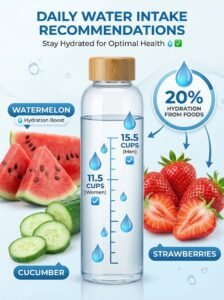
Daily Water Intake Recommendations
According to the Mayo Clinic, general guidelines suggest :
- Women: Approximately 11.5 cups (2.7 liters) of total fluid daily
- Men: Approximately 15.5 cups (3.7 liters) of total fluid daily
These figures include fluids from all sources. Food contributes about 20% of daily water intake, particularly from fruits and vegetables like watermelon, strawberries, and cabbage.
The familiar advice to drink “eight glasses a day” remains a reasonable goal, though individual needs vary based on activity level, climate, health status, and body composition.
Factors That Increase Hydration Needs
The Mayo Clinic identifies conditions requiring additional fluid intake :
- Exercise and physical activity
- Hot or humid weather
- High altitude
- Fever, vomiting, or diarrhea
- Pregnancy or breastfeeding
The Calorie Cost of Sugary Drinks
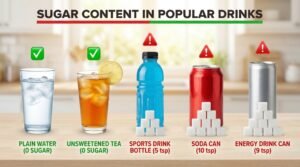
The CDC provides calorie and sugar data for common 12-ounce beverages :
| Beverage | Teaspoons of Sugar | Calories |
|---|---|---|
| Plain Water | 0 | 0 |
| Unsweetened Tea | 0 | 0 |
| Sports Drinks | 5 | 97 |
| Regular Soda | 10 | 155 |
| Energy Drink | 9 | 162 |
| Fruit Juice Drink | 10 | 186 |
A single 12-ounce regular soda contains more than 10 teaspoons of added sugar. Cutting two sodas per day eliminates approximately 2,100 calories per week.
How to Approach Hydration for Weight Management
Step 1: Establish a Baseline
Track your current fluid intake for several days. Note when you feel thirsty, monitor urine color, and identify how many calories come from beverages.
Step 2: Replace Sugary Drinks Gradually
The CDC recommends choosing water over sugary drinks as a primary strategy. Start by substituting one sugary beverage per day with water, unsweetened tea, or sparkling water.
Step 3: Build Consistent Habits
The CDC suggests practical approaches :
- Carry a reusable water bottle
- Freeze water bottles for cold water throughout the day
- Serve water during meals
- Add lime, lemon, or cucumber for flavor
Step 4: Time Water Intake Strategically
Some evidence suggests drinking water before meals may reduce appetite. According to Harvard Health, one study found older subjects who drank a full glass of water before meals ate less than those who did not. Another study showed people on low-calorie diets who drank extra water before meals experienced less appetite and more weight loss over 12 weeks.
However, neither study assessed long-term effects, so results should be interpreted cautiously.
Common Pitfalls and How to Avoid Them
Overestimating water’s direct weight-loss effect. Water supports weight management primarily by replacing caloric beverages—not through dramatic metabolic effects.
Ignoring individual variation. Daily needs differ based on body size, activity, climate, and health. The CDC notes that recommendations vary by age, sex, pregnancy status, and activity level.
Relying on artificially sweetened drinks. The CDC acknowledges that sugar-free beverages may reduce caloric intake short-term, but questions remain about their effectiveness for long-term weight management.
Options and Approaches: Comparing Beverage Choices
| Beverage Category | Pros | Cons |
|---|---|---|
| Plain Water | Zero calories, universally available, no additives | Some find it unappealing |
| Sparkling Water/Seltzer | Zero calories, satisfies carbonation craving | May be more expensive |
| Unsweetened Tea/Coffee | Zero calories, contains antioxidants, moderate caffeine | Caffeine sensitivity varies |
| Low-Fat Milk | Contains calcium, potassium, vitamin D | Contains calories (~100 per cup) |
| 100% Fruit Juice | Contains vitamins | High in natural sugars; limit portions |
| Diet/Sugar-Free Drinks | Low or zero calories | Long-term weight effects uncertain |
The CDC recommends keeping moderate caffeine intake (up to 400 mg daily, roughly 2–3 cups of coffee) as part of a healthy diet for most adults.
Practical Checklist

- Track current daily beverage intake (types and amounts)
- Identify caloric beverages that can be replaced with water
- Keep a reusable water bottle accessible throughout the day
- Drink water with every meal
- Monitor urine color (aim for light yellow)
- Add natural flavor to water if needed (citrus, cucumber, berries)
- Replace at least one sugary drink per day with a zero-calorie option
- Increase water intake during exercise, hot weather, or illness
FAQs
Does drinking water before meals help with weight loss?
Some short-term studies suggest it may reduce appetite, but Harvard Health notes that evidence is limited to small, short-term trials. Long-term effects remain unconfirmed.
How much water should I drink daily?
The Mayo Clinic recommends about 11.5 cups for women and 15.5 cups for men from all fluid sources, including food. Individual needs vary.
Can I drink too much water?
Rarely. The Mayo Clinic notes that excessive water intake can cause hyponatremia (dangerously low sodium), typically in athletes during intense training.
Are diet sodas a good alternative?
They reduce calorie intake short-term, but the CDC notes uncertainty about their effectiveness for long-term weight management.
What are signs of dehydration?
Headaches, dark urine, reduced energy, difficulty thinking clearly, and in extreme cases, confusion or dizziness.
Conclusion
Proper hydration supports weight management—but primarily through indirect mechanisms rather than metabolic acceleration. The most reliable benefit comes from replacing caloric beverages with water, which can meaningfully reduce daily calorie intake without requiring complex interventions.
Key Takeaways
Next Step
This week, track your current beverage intake for three days. Identify one sugary drink you consume regularly and replace it with water or unsweetened tea. This single change, maintained consistently, can reduce weekly calorie intake by hundreds of calories with minimal effort.