How Can I Achieve Sustainable Weight Loss Without Following Restrictive Diets?
The most effective way to achieve sustainable weight loss without restrictive diets is to focus on balanced nutrition, mindful eating, and consistent lifestyle changes. Prioritizing whole foods, increasing physical activity, and building healthy habits leads to gradual, lasting weight loss—without the need for strict rules or deprivation.
—
What Does Sustainable Weight Loss Mean?
**Sustainable weight loss** refers to losing body weight in a way that you can maintain long term, supporting both physical and mental well-being. Unlike rapid or crash diets, sustainable approaches focus on consistency, realistic goals, and positive lifestyle adaptations.
—
How Can I Lose Weight Without Restrictive Dieting?
Many people ask:
– How can I shed weight without a diet?
– Is it possible to lose weight and still enjoy the foods I love?
– What are healthy alternatives to dieting for weight loss?
Let’s break down the science-backed strategies that support lasting change.
—
What Are the Core Principles of Non-Restrictive, Sustainable Weight Loss?
Here are the essential principles to guide your journey:
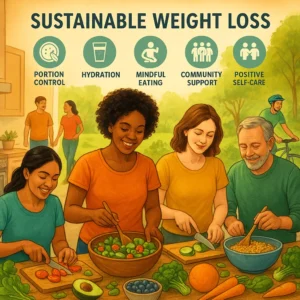
1. **Mindful Eating**
2. **Balanced, Whole-Food Nutrition**
3. **Consistent Physical Activity**
4. **Self-Compassion**
5. **Habit Formation**
—
1. What Is Mindful Eating—And How Does It Help Me Lose Weight?
Mindful eating involves paying full attention to the experience of eating and listening to your body’s hunger and fullness cues. This method supports satiety and prevents overeating.
– Avoid distractions (like TV or phones) during meals
– Eat slowly and savor each bite
– Stop when you feel comfortably full
**Definition Box:**
> _Mindful eating_ is a practice rooted in mindfulness, aiming to promote awareness of inner hunger signals and emotional triggers, reducing overeating and emotional eating.
2. How Do I Eat a Balanced, Unrestricted Diet for Weight Loss?
A balanced diet includes all food groups, allowing flexibility while promoting health.
**Key Components of a Balanced Plate:**
| Food Group | Role in Weight Loss | Example Choices |
|—————–|——————————————–|———————–|
| Vegetables | High in fiber, low in calories | Leafy greens, peppers |
| Lean Proteins | Supports muscle, increases fullness | Chicken, tofu, beans |
| Whole Grains | Slow-digesting, stabilize blood sugar | Brown rice, quinoa |
| Healthy Fats | Enhance satiety, support brain function | Avocado, olive oil |
| Fruits | Provide vitamins, satisfy sweet cravings | Berries, apples |
3. How Important Is Exercise If I’m Not Dieting?
Physical activity boosts calorie burn, supports heart health, and helps regulate mood. You don’t need intense workouts—walking, cycling, and dancing all count.
– Aim for at least 150 minutes of moderate-intensity activity each week (CDC recommendation)
– Include strength, flexibility, and cardio for overall well-being
4. Why Is Self-Compassion Important in Sustainable Weight Loss?
Being kind to yourself reduces stress and emotional eating. Instead of viewing setbacks as failures, see them as learning opportunities. This mindset makes habits stick long term.
5. How Do Healthy Habits Replace Restrictive Dieting?
Focus on habits, not rules:
– Cook at home more often
– Plan grocery shopping
– Keep healthy snacks visible
– Get enough sleep (7–9 hours per night)
Building habits takes time but pays off with consistent progress.
—
What Are Practical Tips to Lose Weight Sustainably?
To make these principles actionable:
Simple Steps to Weight Loss Without Dieting
– Use smaller plates to naturally reduce portions
– Drink water before meals to help control hunger
– Include a source of protein at every meal
– Replace sugary drinks with water or herbal tea
– Eat regular meals—avoid getting overly hungry
– Practice the 80/20 rule: Eat nourishing foods 80% of the time, allow treats 20%
—
Table: Quick Comparison—Restrictive Diet vs Sustainable Approach
| Aspect | Restrictive Diet | Sustainable Approach |
|————————|———————|——————————|
| Food Choices | Limited, rigid | Flexible, inclusive |
| Mental Impact | Stressful, guilt | Positive, empowering |
| Social Considerations | Often avoided | Easily included |
| Long-term Success | Low | High |
| Emotional Relationship | Often negative | Healthier, mindful |
—
What Are Some Related Concepts and Entities?
– **Calorie Awareness:** Understanding calorie intake helps, but counting is not required.
– **Health at Every Size (HAES):** A movement focusing on body respect and well-being.
– **Behavioral Nutrition:** Looks at habits, emotions, and triggers affecting eating.
– **Registered Dietitian:** Expert in nutrition who can guide personalized plans.
– **Set-Point Theory:** Suggests your body has a natural weight it gravitates toward.
—
Question Variations: Ways People Ask This Question
– How can I lose weight without giving up my favorite foods?
– What’s the best way to slim down sustainably?
– Can I lose weight without tracking calories or dieting?
– Are there easy lifestyle changes for weight loss?
– How do I keep weight off without dieting?
—
How Do These Principles Connect to Healthier Living?
By making small, positive changes—without deprivation—you’re more likely to maintain energy, mood, and a positive relationship with food. Nutrition, movement, sleep, and self-care all interact to support not just weight loss, but your overall well-being.
—
Frequently Asked Questions (FAQ)
1. **Can I still eat my favorite treats and lose weight?**
Yes! Incorporating treats in moderation helps prevent feelings of deprivation and binge eating. Focus on balance, not elimination.
2. **How quickly can I expect to see results?**
Healthy, sustainable weight loss is typically 0.5–2 lbs (0.2–0.9 kg) per week. The focus is progress, not speed.
3. **What if I have a setback or overeat?**
Occasional setbacks are normal. Practice self-compassion and resume your healthy habits at the next meal, not the next day or week.
4. **Do I need to track every calorie or macro?**
Not necessarily. Mindful eating, balanced portions, and activity can be effective without strict tracking, though some find occasional self-monitoring helpful.
5. **Will exercise alone help me lose weight?**
Exercise boosts health and supports weight loss, but pairing activity with healthy eating creates the most sustainable results.
6. **Is it okay to eat out or socialize while trying to lose weight?**
Absolutely! Enjoy social meals by planning ahead, choosing nourishing options, and practicing mindful eating.
7. **When should I seek professional help?**
Consult a registered dietitian or healthcare provider if you have underlying health conditions, significant weight changes, or disordered eating concerns.
—
Summary: The Path to Lasting Weight Loss Without Dieting
You can achieve and sustain weight loss without restrictive diets by prioritizing balance, enjoyment, and consistency. Mindful eating, regular activity, and healthy routines—not deprivation—are the evidence-based keys to lasting change and well-being.
—
“`