What Foods Are Allowed and Not Allowed on the Whole30 Diet?
**Direct Answer:**
The Whole30 diet allows whole, unprocessed foods such as vegetables, fruits, protein, healthy fats, and certain nuts and seeds, while it eliminates added sugar, grains, dairy, legumes, and processed foods for 30 days. This strict elimination framework helps participants reset their eating habits and identify foods that may negatively impact their health.
—
What Is the Whole30 Diet?
**Definition:**
The Whole30 Diet is a 30-day elimination protocol designed to help people identify food sensitivities and establish healthier eating habits. It was founded by Melissa and Dallas Hartwig and emphasizes eating only whole, nutrient-dense foods while avoiding commonly problematic ingredients.
—
What Foods Can You Eat on the Whole30 Diet?
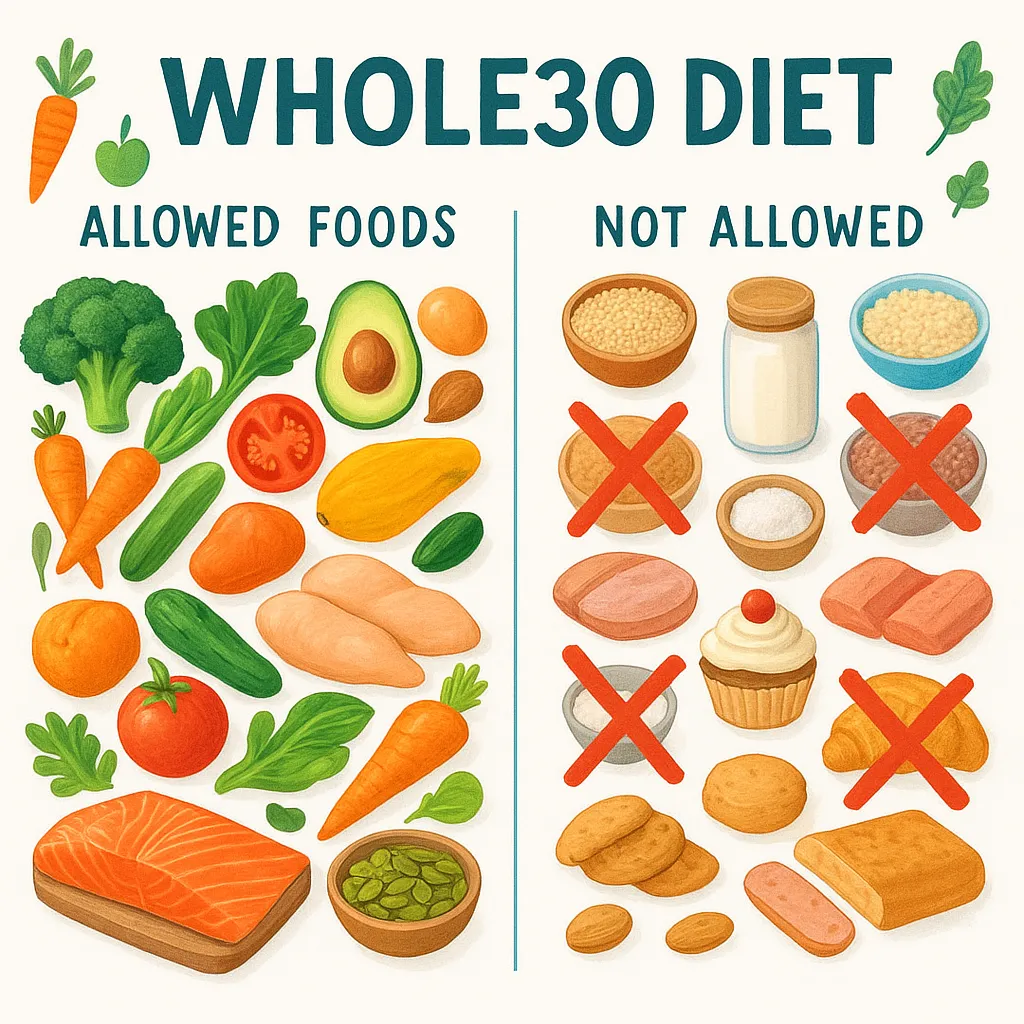
**Allowed foods include:**
– Fresh and frozen vegetables (except some legumes like peas)
– Fresh and frozen fruits
– Meat, poultry, and seafood (unprocessed, with no added sugars or banned additives)
– Eggs
– Healthy fats (olive oil, coconut oil, avocado oil, compliant ghee)
– Nuts and seeds (except peanuts)
– Herbs, spices, and salt
Table: Whole30 Approved Food Groups
| Food Group | Examples | Notes |
|——————|—————————————|——————————————-|
| Vegetables | Broccoli, spinach, carrots, zucchini | All types (except some legumes) |
| Fruits | Apples, berries, bananas, oranges | All are allowed in moderation |
| Protein | Beef, chicken, pork, fish, shellfish | No processed meats with added sugars |
| Eggs | Chicken, duck | All forms allowed |
| Healthy Fats | Avocado, olives, coconut, nuts | No peanuts; check for compliant oils |
| Nuts & Seeds | Almonds, walnuts, sunflower seeds | No peanuts; limited to avoid over-eating |
| Herbs & Spices | Basil, garlic, turmeric, cinnamon | Check that blends contain no added sugar |
—
What Foods Are Not Allowed on Whole30?
**Foods to avoid include:**
– Added sugar (real and artificial, including honey and maple syrup)
– Grains (wheat, rice, oats, corn, quinoa, etc.)
– Legumes (beans, lentils, peanuts, soy)
– Dairy (milk, cheese, yogurt, cream, including cow, goat, sheep)
– Alcohol (all types, even for cooking)
– Processed foods and meat with non-compliant ingredients
– Baked goods and treats (including those made from compliant ingredients)
List: Whole30 Banned Foods
1. **Sugar:** White, brown, raw, cane, honey, maple syrup, agave, stevia, Splenda, Equal, aspartame, etc.
2. **Grains:** Wheat, barley, rye, rice, oats, corn, millet, amaranth, buckwheat, bulgur, etc.
3. **Legumes:** All forms of beans (black, pinto, kidney, garbanzo, navy), lentils, soy (tofu, edamame, soy sauce), peanuts, peanut butter, peas (except green beans and sugar snap peas in small amounts).
4. **Dairy:** All except clarified butter/ghee (if made without dairy proteins).
5. **Processed Additives:** Carrageenan, MSG, sulfites.
6. **Alcohol:** No alcohol, including for cooking purposes.
7. **Pseudo-Baked Goods:** No pancakes, waffles, bread, chips, or reconstructed treats—even if the ingredients are Whole30 compliant.
—
Are Any Foods Allowed in Limited Quantities on Whole30?
Some foods on the Whole30 diet require careful moderation:
– **Nuts & Seeds:** All except peanuts; advised to eat in moderation to avoid over-reliance.
– **Natural Fruit Juices:** Allowed occasionally, primarily as a sweetener in recipes but not as a beverage.
– **Compliant Bacon & Sausage:** Only if ingredients are Whole30 approved (no added sugars, no banned preservatives).
—
Variation: What Can You Eat on Whole30 vs. What Do You Avoid?
**Allowed:**
– Whole, unprocessed foods: Meats, seafood, eggs, vegetables, fruits, healthy fats.
**Not Allowed:**
– Sugar, grains, legumes, dairy, alcohol, processed foods, and baked goods.
—
Can You Have Snacks or Desserts on Whole30?
Snacking is not prohibited, but the Whole30 encourages eating full meals and minimizing snacks to break food habits. Desserts and treats (even made with compliant ingredients like “banana pancakes”) are not allowed, as the diet aims to reset your relationship with food, not just swap ingredients.
—
Example Whole30 Meals
Whole30 Breakfast
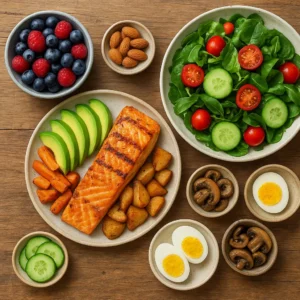
– Scrambled eggs, sautéed spinach, roasted sweet potatoes
Whole30 Lunch
– Grilled chicken salad with mixed greens, avocado, tomato, olive oil, and lemon
Whole30 Dinner
– Pan-seared salmon, steamed broccoli, and roasted carrots
—
Related Concepts: Paleo vs. Whole30
While the Whole30 and Paleo diets share similarities—emphasizing whole foods and eliminating grains, dairy, and legumes—Whole30 is stricter:
– **Whole30:** 30-day commitment, no “cheats” or recreations (like Paleo pancakes), more restrictive in terms of compliance.
– **Paleo:** Generally more flexible, long-term, and allows for occasional natural sweeteners and recreations.
—
Common Additive Check: Are Processed Meats OK?
Only if they do not contain added sugars, sulfites, carrageenan, or other banned ingredients. Always check ingredient labels—even “uncured” or “natural” products may have additives that aren’t Whole30 compliant.
—
Related Entities and Context
– **Whole30 Book:** Official resources by Melissa and Dallas Hartwig provide guidance and recipes.
– **Label Reading:** Essential skill to ensure hidden sugars or additives aren’t consumed.
– **Meal Planning:** Helps ensure compliance and minimizes the risk of accidental slip-ups.
– **Reintroduction Phase:** After the 30 days, foods are systematically reintroduced to observe effects.
—
FAQ: Whole30 Diet Foods
1. Can you eat potatoes on Whole30?
**Answer:** Yes, all varieties of potatoes (including white, red, and sweet potatoes) are allowed.
2. Are all nuts allowed on Whole30?
**Answer:** Most nuts and seeds are allowed, except peanuts and peanut butter.
3. Can I have ghee or clarified butter on Whole30?
**Answer:** Yes, clarified butter or ghee is allowed, provided all milk proteins are removed.
4. Are condiments like ketchup and mustard allowed?
**Answer:** Only if they are made with Whole30-compliant ingredients and do not contain added sugar or banned additives.
5. Can I drink coffee or tea on Whole30?
**Answer:** Yes, plain coffee and tea are allowed; no dairy, sweeteners, or non-compliant creamers.
6. Can I eat out at restaurants on Whole30?
**Answer:** Yes, but you must ask about ingredients, cooking oils, and preparation methods to avoid non-compliant foods.
7. Are there any Whole30-approved snack options?
**Answer:** Compliant snacks include fresh fruits, veggies, hard-boiled eggs, and nuts (no peanuts); however, the program encourages eating full meals over frequent snacking.
—
Summary Table: Whole30 At a Glance
| Allowed | Not Allowed |
|—————————-|———————————|
| Vegetables | Grains |
| Fruits | Legumes |
| Unprocessed meats & eggs | Dairy |
| Healthy oils (olive, coconut, avocado, clarified butter) | Added Sugar |
| Nuts & seeds (except peanuts) | Alcohol |
| Herbs & spices | Processed foods & additives |
| Seafood | Baked goods & treats |
—
Key Takeaways
– The Whole30 diet focuses on resetting eating habits by eliminating sugar, grains, dairy, legumes, alcohol, and processed foods for 30 days.
– It emphasizes awareness of food ingredients, meal planning, and mindful eating.
– Compliance requires strict label reading and sometimes meal preparation at home.
– The reintroduction phase is critical to pinpoint which foods affect your health and wellness.
By understanding what is allowed and not allowed on Whole30, you can approach this dietary reset with clarity and confidence, making the 30-day process more effective and easier to follow.
“`