What Are the Main Components of a High-Protein Diet?
A high-protein diet focuses on increasing daily protein intake by including protein-rich foods such as lean meats, dairy, legumes, and plant-based protein sources at each meal. The main components are animal and plant proteins, along with supportive foods like healthy fats, fiber-rich carbohydrates, and essential micronutrients to ensure a balanced nutritional profile.
—
What Does “High-Protein Diet” Mean?
A high-protein diet is a nutritional pattern where a larger percentage of your daily calories come from protein, typically between 20-35% of total energy intake. This is higher than the Recommended Dietary Allowance (RDA) of 10-15%.
**Definition Box**
> **High-Protein Diet**: A dietary approach that emphasizes increased consumption of high-protein foods to support muscle maintenance, satiety, weight management, and overall health.
—
What Foods Are Included in a High-Protein Diet?
When building a high-protein diet, it’s important to understand both the food categories and their nutritional roles.
Core Components of a High-Protein Diet
1. **Lean Animal Proteins**
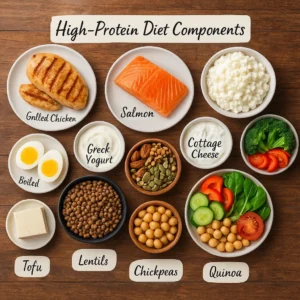
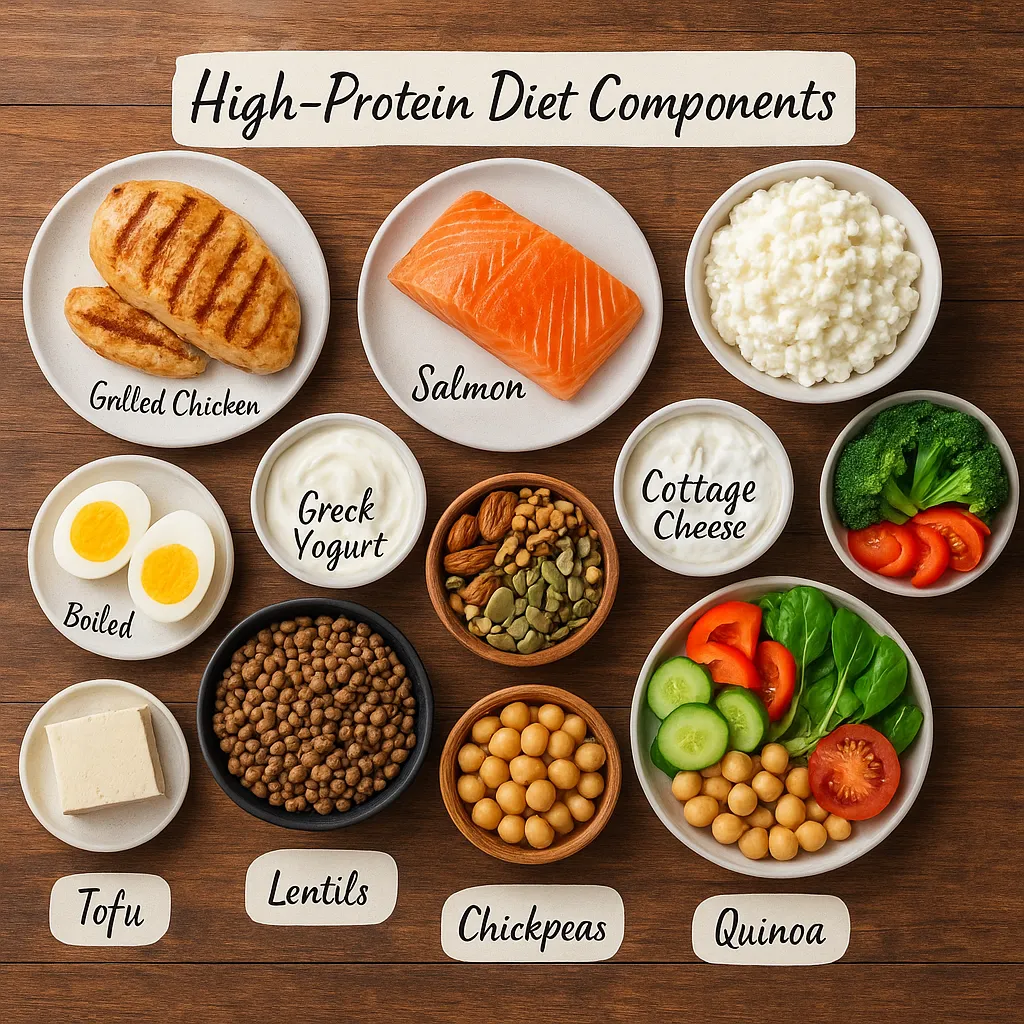
– Chicken breast, turkey, lean beef, pork loin, eggs, fish, and seafood
2. **Dairy and Dairy Alternatives**
– Greek yogurt, cottage cheese, milk, plant-based yogurts and milks fortified with protein (e.g., soy, pea proteins)
3. **Plant-Based Proteins**
– Legumes (beans, lentils, chickpeas), tofu, tempeh, edamame, seitan
4. **Nuts and Seeds**
– Almonds, peanuts, pumpkin seeds, chia seeds, sunflower seeds
5. **Protein Supplements**
– Whey protein, casein, plant-based protein powders (pea, rice, soy)
**Example Table: Protein Content in Common Foods (per 100g)**
| Food | Protein Content (g) |
|——————|——————–|
| Chicken breast | 31 |
| Salmon | 20 |
| Eggs | 13 |
| Greek yogurt | 10 |
| Lentils | 9 |
| Tofu | 8 |
| Almonds | 21 |
—
Why Focus on Protein? (Health Benefits and Context)
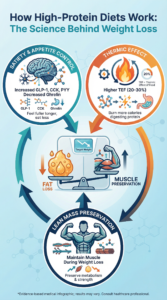
Protein is essential for building and repairing muscles, supporting immune function, and helping you feel full longer. High-protein diets can aid in weight management, increase metabolic rate, and help prevent muscle loss during weight loss or aging.
Related Entities and Concepts
– **Essential Amino Acids**: Proteins consist of amino acids; some are essential and must come from food.
– **Macronutrients**: Alongside carbohydrates and fats, protein is a principal macronutrient.
– **Muscle Protein Synthesis**: The process by which the body builds muscle, dependent on protein intake.
– **Satiety**: Protein increases feelings of fullness more than carbs or fats, supporting appetite control.
—
How to Structure a High-Protein Diet? (Meal Planning)
What Should Each Meal Contain?
Each meal in a high-protein diet typically includes a quality protein source, supported by vegetables, healthy fats, and whole grains or fiber-rich carbohydrates for balance.
Sample High-Protein Meal Structure
– **Breakfast**: Scrambled eggs with spinach, whole-grain toast, Greek yogurt
– **Lunch**: Grilled chicken salad with quinoa and seeds
– **Dinner**: Baked salmon, steamed broccoli, brown rice
– **Snacks**: Cottage cheese, protein shake, roasted chickpeas, almonds
—
What Are Good Plant-Based Protein Sources?
Plant-based diets can also be high in protein if planned well. Top plant sources include:
– **Legumes**: Black beans, chickpeas, lentils
– **Soy Products**: Tofu, tempeh, edamame
– **Whole Grains**: Quinoa, buckwheat, amaranth
– **Seeds and Nuts**: Chia, hemp, flaxseeds, almonds, peanuts
– **Seitan**: A wheat-based protein (for those not sensitive to gluten)
—
Do High-Protein Diets Include Other Nutritional Components?
While protein is the star, a high-protein diet should be balanced with other macronutrients and micronutrients:
Supportive Components
– **Healthy Fats**: Olive oil, avocados, fatty fish, nuts
– **Fiber-Rich Carbohydrates**: Vegetables, fruits, whole grains
– **Micronutrients**: Iron, calcium, B-vitamins, magnesium
**Balance is essential** to ensure long-term adherence and optimal health outcomes.
—
What Are the Different Ways People Ask About High-Protein Diets?
– What are the main foods in a high-protein diet?
– What should you eat on a high-protein diet?
– Which foods are high in protein?
– What are the building blocks of a high-protein meal plan?
– What is included in a high-protein diet?
—
Are All Proteins the Same? (Quality Matters)
The **quality of protein** refers to the spectrum of amino acids and ease of digestion. Animal proteins are “complete,” containing all essential amino acids, while some plant proteins may be “incomplete” but can be combined to provide the full array.
**Complete vs. Incomplete Proteins**
| Protein Source | Complete? | Examples |
|—————-|——————-|———————————-|
| Animal | Yes | Meat, eggs, dairy, fish |
| Soy | Yes | Tofu, tempeh, edamame |
| Other Plant | Usually No | Beans, grains, nuts (combine) |
—
How Much Protein Is Recommended Per Day?
While exact needs vary, common guidelines suggest:
– **General adults**: 0.8–1.0g of protein per kg body weight per day
– **Active adults, athletes**: 1.2–2.0g/kg body weight
– **Older adults**: 1.2g/kg body weight to prevent muscle loss
Consult a registered dietitian or healthcare provider for personalized advice.
—
Potential Considerations and Risks
– **Kidney Health**: Those with kidney disease should avoid excessively high-protein diets.
– **Nutrient Balance**: Overemphasis on protein can lead to deficiencies in other nutrients if not balanced.
– **Digestive Comfort**: Rapid increase in protein intake can cause digestive changes—introduce gradually.
—
Frequently Asked Questions (FAQ)
1. **Can you do a high-protein diet if you’re vegetarian or vegan?**
Yes, focusing on legumes, soy products, whole grains, nuts, and seeds ensures adequate protein intake without animal products.
2. **What are the best high-protein snacks?**
Greek yogurt, cottage cheese, hard-boiled eggs, protein bars, roasted chickpeas, beef jerky, and mixed nuts are convenient and protein-rich snacks.
3. **Is a high-protein diet suitable for weight loss?**
Many studies show high-protein diets help with weight loss by increasing satiety, reducing cravings, and preserving lean muscle mass.
4. **Are there any risks to eating too much protein?**
For healthy adults, high-protein diets are generally safe, but those with existing kidney or liver issues should consult a healthcare professional.
5. **How can you add more protein to your meals?**
Incorporate a protein food into every meal, use Greek yogurt or protein powder in smoothies, top salads with grilled meats or beans, and snack on high-protein foods.
6. **Can you gain muscle without a high-protein diet?**
While exercise is critical, adequate protein intake is necessary for optimal muscle growth and recovery.
7. **What are signs of too little protein in the diet?**
Symptoms may include muscle loss, fatigue, brittle hair or nails, weak immune system, and slow recovery from exercise or injuries.
—
Key Takeaway
The main components of a high-protein diet are quality protein sources (from both animal and plant foods), complemented by whole grains, healthy fats, and plenty of vegetables to provide a balanced approach to nutrition. Prioritize diversity, food quality, and balance to maximize health benefits.
—
“`