What Are the Main Components of a High-Protein Diet?
A high-protein diet mainly consists of foods rich in protein such as lean meats, dairy products, eggs, legumes, and certain grains. The main components also include balanced intake of healthy fats, moderate carbohydrates, and an emphasis on nutrient-dense choices to support overall health.
—
What Does a High-Protein Diet Include?
A high-protein diet is structured around increasing daily protein intake, which typically means consuming more protein than what is recommended in standard dietary guidelines. People often want to know: **”What foods should I eat on a high-protein diet?”** or **”What are the essentials of a protein-rich meal plan?”**
Core Components of a High-Protein Diet
Here’s a quick reference box summarizing the key food groups:
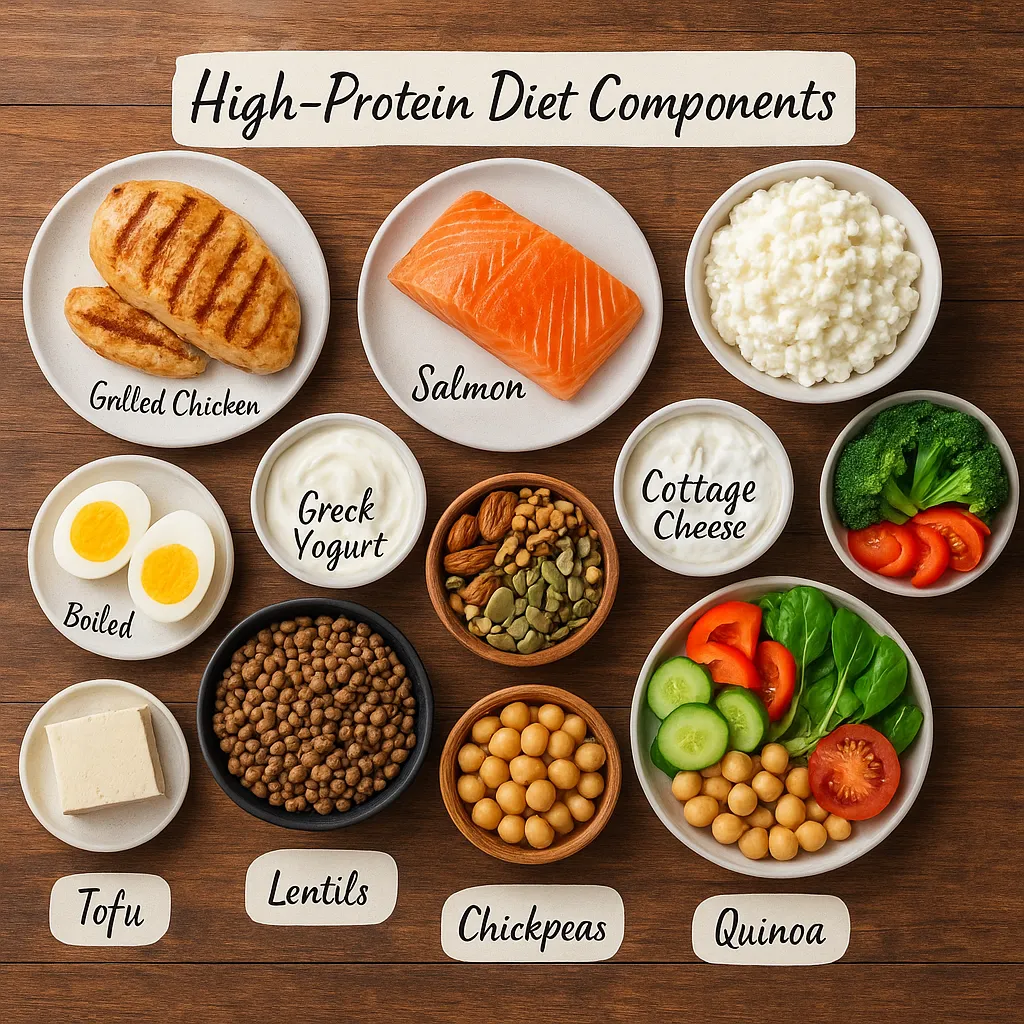
> **High-Protein Diet Components**
> – **Animal proteins:** Chicken, turkey, beef, pork, fish, eggs, dairy
> – **Plant proteins:** Beans, lentils, chickpeas, soy products, quinoa, nuts, seeds
> – **Protein supplements:** Whey, casein, pea protein, protein bars
> – **Low-starch vegetables:** Broccoli, spinach, kale, peppers
—
Why Focus on Protein Intake?
Protein is an essential macronutrient that supports muscle growth, tissue repair, hormone production, and immune function. High-protein diets are popular among athletes, those trying to lose weight, or anyone seeking to feel fuller for longer during the day.
—
What Are the Major Food Sources in a High-Protein Diet?
Animal-Based Protein Sources
– **Lean meats:** Chicken breast, turkey, lean cuts of beef, pork tenderloin
– **Fish and seafood:** Tuna, salmon, haddock, shrimp, tilapia
– **Eggs:** Whole eggs and egg whites
– **Dairy products:** Greek yogurt, cottage cheese, skim or low-fat milk, cheese
Plant-Based Protein Sources
– **Legumes:** Lentils, black beans, kidney beans, chickpeas
– **Soy products:** Tofu, tempeh, edamame
– **Whole grains:** Quinoa, buckwheat, farro
– **Nuts and seeds:** Almonds, peanuts, chia seeds, pumpkin seeds
Protein Source Comparison Table
| **Source** | **Protein Content (per 100g)** | **Other Nutrients** |
|—————–|——————————-|————————|
| Chicken Breast | 31g | B-vitamins, selenium |
| Salmon | 25g | Omega-3 fatty acids |
| Greek Yogurt | 10g | Calcium, probiotics |
| Lentils | 9g | Fiber, iron |
| Tofu | 8g | Calcium, isoflavones |
| Almonds | 21g | Vitamin E, magnesium |
—
Are Carbohydrates and Fats Part of a High-Protein Diet?
Absolutely! While protein is the main focus, healthy fats and carbohydrates remain important for overall balance and energy.
Including Healthy Fats
High-protein diets benefit from unsaturated fat sources for heart health and satiety:
– Avocados
– Olive oil
– Nuts and seeds
– Fatty fish (salmon, mackerel)
Carbohydrates: Quality over Quantity
Complex, high-fiber carbohydrates are often included in moderation:
– Whole grains (quinoa, brown rice)
– Oats
– Sweet potatoes
– Low-starch vegetables
—
How Do Protein Supplements Fit Into the Diet?
For some, protein powders and ready-to-drink shakes are convenient ways to increase daily protein:
– **Whey & Casein:** Derived from milk, fast and slow digesting respectively
– **Plant protein:** Pea, rice, soy-based options for vegetarians/vegans
Remember, whole foods should form the foundation, while supplements fill in nutritional gaps.
—
What About Micronutrients in High-Protein Diets?
A well-structured high-protein diet also considers vital vitamins and minerals. Iron (from red meats and legumes), calcium (from dairy and fortified foods), magnesium (from nuts/seeds), and B-vitamins are important for metabolism and wellness.
—
How Much Protein Should You Eat?
Protein needs depend on age, gender, activity level, and individual goals:
– **General guideline:** 1.2–2.0 grams of protein per kilogram of body weight per day for active individuals
– **Example:** A 70 kg person may aim for 84–140 grams of protein daily
—
What Are Healthy Meal Ideas for a High-Protein Diet?
Here are sample meal components for daily planning:
**Breakfast**
– Scrambled eggs with spinach
– Greek yogurt with chia seeds and berries
**Lunch**
– Grilled chicken salad with quinoa
– Tuna with mixed greens and olive oil
**Dinner**
– Baked salmon with steamed broccoli
– Stir-fried tofu with brown rice and vegetables
—
What Are the Benefits and Considerations of a High-Protein Diet?
Benefits
– Supports muscle mass and repair
– May assist in weight management
– Promotes satiety and reduced appetite
Considerations
– Should be balanced with fiber-rich plants for gut health
– Hydration is important, as higher protein can increase kidney workload
– Variety is key to avoid nutrient deficiencies
—
How Does a High-Protein Diet Differ from Other Diets?
**Related Diets and Concepts:**
– **Keto diet:** High fat, low carb, moderate protein
– **Paleo diet:** Emphasizes protein from whole, unprocessed foods
– **Plant-based high-protein diet:** Focus on legumes, soy, nuts
A high-protein diet is versatile and can be adapted for different dietary preferences, including vegetarian and vegan meal plans.
—
Frequently Asked Questions (FAQ) about High-Protein Diet Components
1. What counts as a high-protein food?
High-protein foods generally provide at least 7–10 grams of protein per serving, such as meats, fish, eggs, beans, and dairy.
2. Can you follow a high-protein diet as a vegetarian or vegan?
Yes! Incorporate tofu, tempeh, legumes, quinoa, nuts, seeds, and dairy (if vegetarian) to meet your protein needs.
3. Are protein bars and shakes necessary?
They are not required but can offer convenient, portable sources of protein if whole food options are limited.
4. Do high-protein diets help with weight loss?
Often, yes. Higher protein can increase satiety, help preserve lean muscle during weight loss, and modestly boost metabolism.
5. Is there a risk to eating a lot of protein?
For most healthy adults, high protein intake from varied sources is safe. People with kidney issues should consult a healthcare provider.
6. How do I meal prep for a high-protein diet?
Focus on batch-cooking staples (like chicken, beans, grilled fish) and mix with veggies, whole grains, and healthy fats.
7. What are some signs you need more protein?
Fatigue, slower muscle recovery, thinning hair, and frequent hunger can suggest your protein intake is too low.
—
Summary Table: Main Components of a High-Protein Diet
| **Component** | **Examples** | **Role in Diet** |
|————————|————————————————|———————————————-|
| Animal protein | Chicken, fish, eggs, dairy | High-quality, complete proteins |
| Plant protein | Beans, lentils, tofu, quinoa, nuts | Fiber, minerals, plant-based nutrition |
| Healthy fats | Avocado, olive oil, nuts, salmon | Satiety, heart health, energy |
| Carbohydrates | Whole grains, vegetables, sweet potatoes | Energy, fiber, vitamins |
| Protein supplements | Whey, casein, plant-based protein powders | Convenience, filling nutrition gaps |
—
Key Takeaways
A high-protein diet revolves around regular intake of diverse protein sources, balanced with healthy fats and complex carbohydrates from whole foods. Whether your goal is muscle growth, weight management, or supporting overall health, understanding the main components and food sources is essential for lasting success.
“`