What are the Main Components of a High-Protein Diet?
A high-protein diet primarily focuses on increasing daily protein intake through various food sources like lean meats, fish, dairy, eggs, legumes, and plant-based proteins. The main components include selecting high-quality protein sources, balancing macronutrients, and supporting the diet with nutrient-rich foods for optimal health and muscle maintenance.
—
What Does a High-Protein Diet Consist Of?
A high-protein diet involves consuming more protein than the standard dietary recommendation, usually making up 20-35% of total daily calories. These diets are often adopted for weight management, muscle growth, metabolic health, and satiety.
Definition Box: High-Protein Diet Explained
> **High-Protein Diet:**
> A nutritional approach emphasizing increased protein intake from both animal and plant sources, often used for muscle building, weight loss, or metabolic support. Typical targets range from 1.2 to 2.0 grams of protein per kilogram of body weight per day.
—
What are the Key Components of a High-Protein Diet?
1. High-Quality Protein Sources
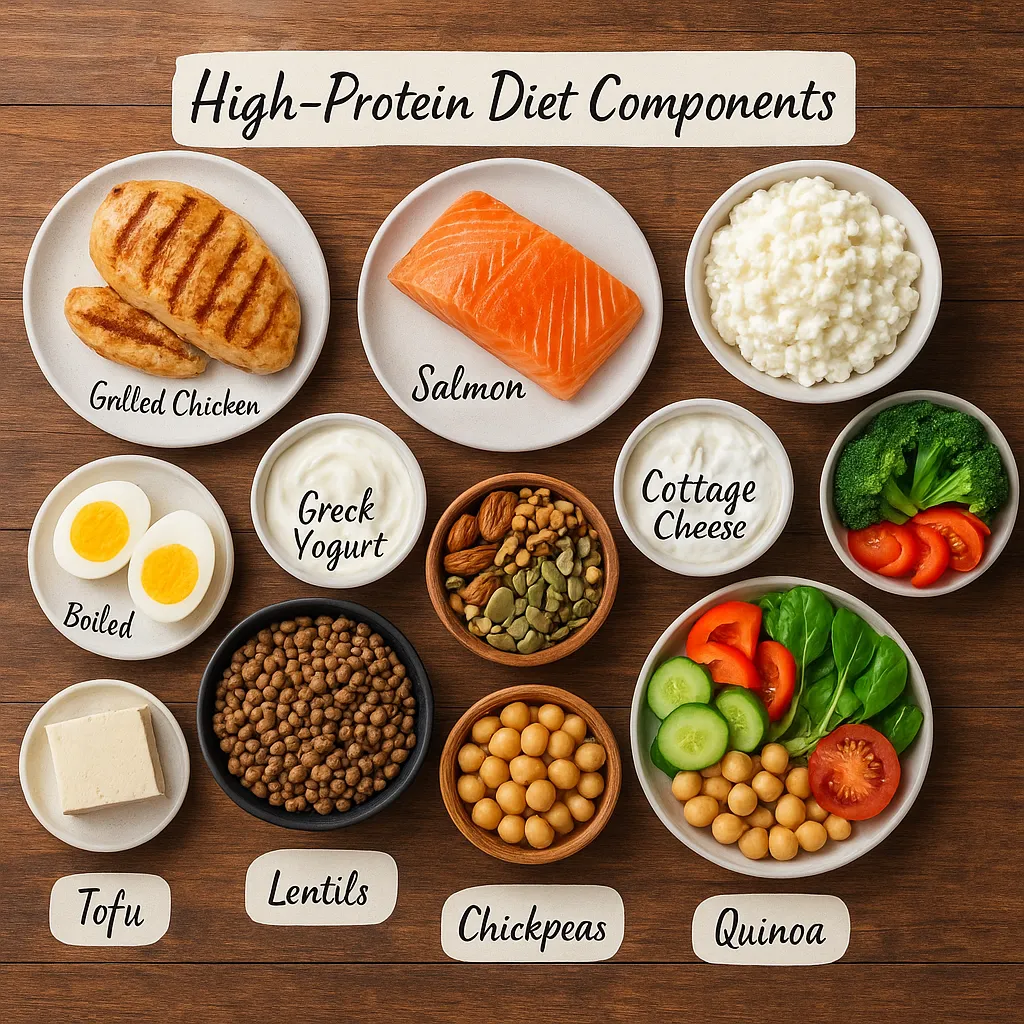
The foundation of a high-protein diet involves choosing nutrient-dense sources, including:
– **Lean Meats:** Chicken, turkey, lean beef, pork tenderloin
– **Fish and Seafood:** Salmon, tuna, shrimp, cod
– **Dairy Products:** Greek yogurt, cottage cheese, milk, cheese
– **Eggs:** Whole eggs and egg whites
– **Plant-Based Proteins:** Lentils, beans, chickpeas, tofu, tempeh, edamame, quinoa, seitan, nuts, and seeds
Table: High-Protein Foods and Protein Content
| Food | Serving Size | Protein (g) |
|—————–|—————|————-|
| Chicken breast | 100g | 31 |
| Salmon | 100g | 22 |
| Greek yogurt | 170g (6 oz) | 17 |
| Eggs | 2 large | 12 |
| Tofu | 100g | 8 |
| Black beans | 1 cup cooked | 15 |
| Lentils | 1 cup cooked | 18 |
| Peanut butter | 2 tbsp | 8 |
—
2. Balanced Macronutrient Distribution
High-protein diets are balanced with moderate levels of fats and carbohydrates to support energy and overall nutrition. The typical macronutrient breakdown is:
– **Protein:** 20–35% of total daily calories
– **Carbohydrates:** 30–50%
– **Fats:** 20–35%
Why Balance Matters
Protein supports muscle repair and growth, while carbohydrates fuel physical activity and fats help with hormone production and vitamin absorption.
—
3. Adequate Calorie Intake
Even when increasing protein, calorie needs should align with your goals (maintenance, weight loss, or gain). High-quality, nutrient-dense foods help avoid empty calories.
—
4. Micronutrient Support
High-protein diets should include fruits, vegetables, and whole grains to ensure sufficient vitamins, minerals, antioxidants, and fiber.
—
5. Hydration
Increased protein intake can place a higher demand on the kidneys, making hydration important. Drinking plenty of water helps the body metabolize protein and remove waste.
—
Which Foods are Typically Included in a High-Protein Diet?
Animal-Based Proteins
– Chicken, turkey, lean beef
– Pork tenderloin, veal, and game meats
– Fish like tuna, salmon, halibut, and sardines
– Eggs and low-fat dairy: Greek yogurt, cottage cheese, milk
Plant-Based Proteins
– Legumes: lentils, black beans, chickpeas, kidney beans
– Soy products: tofu, tempeh, edamame
– Whole grains: quinoa, amaranth, buckwheat
– Nuts and seeds: almonds, peanuts, chia seeds, pumpkin seeds
—
What Nutrients or Food Groups Should I Balance with Protein?
While protein is essential, balance is key for long-term health:
– **Fiber:** From vegetables, fruits, and whole grains for digestive health
– **Healthy Fats:** Avocado, olive oil, nuts, fatty fish (omega-3s)
– **Carbs:** Whole grains, starchy vegetables, fruit for energy
– **Vitamins/Minerals:** B vitamins (meat, leafy greens), calcium (dairy, tofu), iron (meat, beans), magnesium, and potassium
—
How Much Protein Should I Eat Daily?
Protein needs vary based on age, gender, activity, and health goals. Typical recommendations:
– **General health:** 0.8g per kg of body weight
– **Active individuals:** 1.2–2.0g per kg
– **Older adults:** 1.0–1.2g per kg to help prevent muscle loss
Always consult with a healthcare professional for personalized advice.
—
How Do High-Protein Diets Compare to Other Diets?
High-protein diets, such as the “ketogenic diet” and “paleo diet,” often reduce carbs and focus on satiety and muscle preservation. In contrast, “Mediterranean” and “plant-based” diets offer moderate protein, with varying health outcomes.
—
Question Variations: How Else Do People Ask About High-Protein Diets?
– What foods should I include in a high-protein diet plan?
– Which nutrients are essential in a high-protein meal?
– What does a high-protein diet look like?
– What should I avoid when following a high-protein diet?
– Can I do a high-protein diet without eating meat?
—
FAQ: Main Components of a High-Protein Diet
1. **What is considered a high-protein diet?**
A high-protein diet includes at least 20–35% of total caloric intake from protein, often exceeding the standard dietary guidelines of 0.8g per kilogram of body weight.
2. **Which are the best protein sources for a high-protein diet?**
Opt for lean meats, fish, eggs, low-fat dairy, and a variety of beans, lentils, tofu, nuts, and seeds for optimal health.
3. **Can you follow a high-protein diet as a vegetarian or vegan?**
Yes, by focusing on plant-based proteins such as legumes, soy, nuts, seeds, and whole grains, vegetarians and vegans can meet high-protein requirements.
4. **Are there risks to eating too much protein?**
Excessive protein can strain the kidneys, especially for those with pre-existing kidney issues, and may lead to nutrient imbalances if not paired with sufficient fiber and micronutrients.
5. **Should carbohydrates and fats be restricted on a high-protein diet?**
Not necessarily. Carbs and fats are important for energy, hormones, and nutrient absorption. Balance is crucial for long-term health.
6. **How does a high-protein diet benefit muscle growth?**
Protein provides essential amino acids that support muscle repair, maintenance, and growth, especially when combined with resistance training.
7. **How much water should I drink on a high-protein diet?**
Aim for at least 8 cups (2 liters) of water daily, and more if you are active or increasing protein intake, to support kidney function and digestion.
—
Summary: Key Takeaways About High-Protein Diet Components
A well-structured high-protein diet includes a variety of lean animal and plant-based protein sources, balanced macronutrients, adequate calories, micronutrient-rich foods, and proper hydration. Individual protein needs vary, so personalization and variety are essential for effectiveness and sustainability.
“`