What Are the Main Components of a High-Protein Diet?
A high-protein diet is based on regularly consuming foods that are rich in protein to support muscle growth, satiety, and overall health. The main components include lean meats, fish, dairy products, eggs, legumes, nuts, seeds, and certain whole grains that together help meet increased protein needs.
—
What Defines a High-Protein Diet?
A **high-protein diet** emphasizes foods that supply higher amounts of protein than standard dietary guidelines, typically constituting 20%–35% of total daily calorie intake from protein. This dietary approach is popular for weight management, muscle building, and metabolic health.
Quick Definition Table
| Term | Definition |
|———————–|—————————————————————————-|
| High-Protein Diet | A diet with elevated protein percentage (20-35%+ calories from protein) |
| Protein Sources | Foods rich in protein—animal and plant-based |
| Macronutrients | Nutrients needed in large amounts: protein, carbohydrates, fats |
| Amino Acids | Building blocks of proteins essential for body functions |
—
What Foods Are Included in a High-Protein Diet?
People often ask: “What should I eat on a high-protein diet?” or “Which foods are highest in protein?”
List: Main Protein Sources
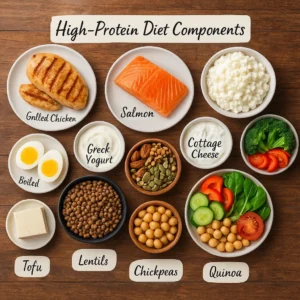
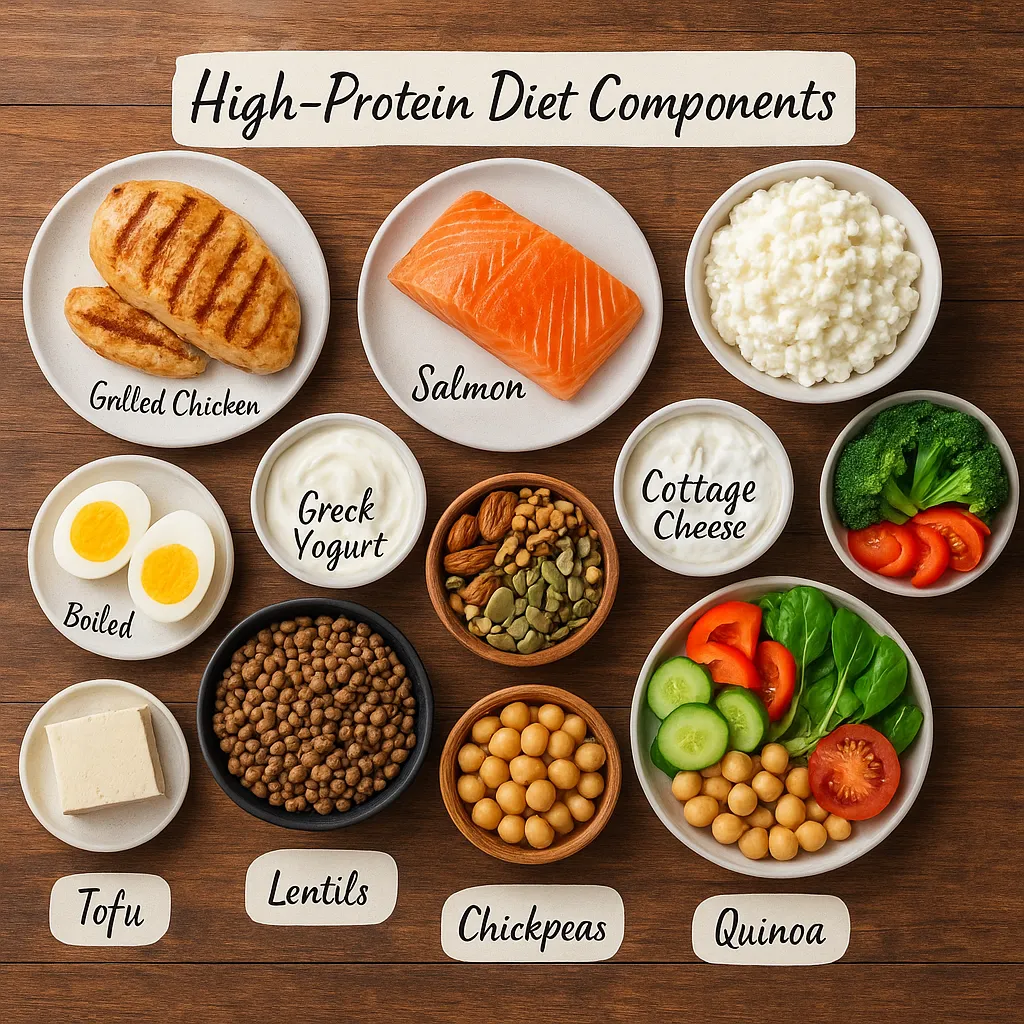
– **Lean Meats** (chicken breast, turkey, lean beef, pork loin)
– **Fish & Seafood** (salmon, tuna, cod, shrimp)
– **Eggs**
– **Dairy Products** (Greek yogurt, cottage cheese, milk, cheese)
– **Legumes** (beans, lentils, chickpeas, peas)
– **Nuts & Seeds** (almonds, peanuts, chia seeds, flaxseeds, pumpkin seeds)
– **Soy Products** (tofu, tempeh, edamame)
– **Select Whole Grains** (quinoa, bulgur, farro)
—
Why Is Protein Important in the Diet?
Protein serves as a crucial **macronutrient** for:
– Building and repairing tissues (muscles, skin, organs)
– Supporting immune function
– Producing hormones and enzymes
– Promoting satiety and aiding weight loss
—
How Does a High-Protein Diet Differ from Standard Diets?
A typical balanced diet includes 10%-15% protein, while a high-protein diet raises this percentage, often by replacing some carbohydrates or fats. This change affects metabolism, appetite, and muscle preservation—especially important for athletes and those managing body weight.
—
What Are the Main Components of a High-Protein Diet?
Let’s break down the primary building blocks:
H2: Animal-Based Protein Sources
H3: What Meats and Fish Provide Complete Proteins?
Animal proteins are considered **complete proteins**, meaning they deliver all essential amino acids required by the body.
– **Poultry**: Chicken, turkey, duck
– **Lean Red Meats**: Beef, pork, lamb (prefer lean cuts to reduce saturated fat)
– **Fish, Seafood, Shellfish**: Salmon, tuna, sardines, mackerel, shrimp
H3: Which Dairy Products Are High in Protein?
– **Low-Fat Dairy**: Skim milk, low-fat yogurt, cottage cheese
– **Cheese**: Parmesan, mozzarella, Swiss cheese
H2: Plant-Based Protein Sources
H3: What Plant Foods Offer Quality Protein?
While some plant proteins lack one or more essential amino acids (incomplete proteins), a mix of varied plant sources can provide all required amino acids.
– **Legumes**: Black beans, kidney beans, chickpeas, lentils, peas
– **Soy Foods**: Tofu, tempeh, soy milk
– **Nuts and Seeds**: Almonds, walnuts, sunflower seeds, chia seeds, pumpkin seeds
H3: Are Any Grains Considered High in Protein?
– **Quinoa** (a complete plant protein)
– **Buckwheat**
– **Teff and Amaranth**
– **Oats**
—
Example Table: Protein Content in Common Foods
| Food Item | Serving Size | Protein (grams) |
|——————|——————|—————–|
| Chicken breast | 100 g (3.5 oz) | 31 |
| Greek yogurt | 170 g (6 oz) | 15 |
| Lentils | 1 cup (cooked) | 18 |
| Tofu | 100 g (3.5 oz) | 8 |
| Salmon | 100 g (3.5 oz) | 20 |
| Eggs | 1 large | 6 |
| Almonds | 1/4 cup (23 nuts)| 6 |
| Quinoa | 1 cup (cooked) | 8 |
—
How Do You Structure a High-Protein Meal Plan?
A typical high-protein day might look like:
– **Breakfast**: Scrambled eggs with spinach and feta
– **Snack**: Greek yogurt with nuts
– **Lunch**: Grilled chicken breast with quinoa and mixed vegetables
– **Snack**: Cottage cheese with berries
– **Dinner**: Baked salmon with lentils and salad
—
Related Entities: Macronutrients & Dietary Balance
A **balanced high-protein diet** should still include adequate servings of:
– **Healthy Fats** (avocado, olive oil)
– **Non-starchy Vegetables** (broccoli, peppers, leafy greens)
– **Whole Grains** (when not following low-carb)
Managing carbohydrates and fats is essential to ensure energy needs and micronutrient intake are met.
—
Common Alternative Questions
– What makes up a high-protein diet?
– Which foods should I eat for a high-protein diet?
– What are examples of high-protein foods?
– Is plant protein enough in a high-protein diet?
– How can I increase protein in my meals?
—
FAQ: High-Protein Diets
1. **How much protein should I eat per day?**
Most adults should aim for 0.8–1.2 grams of protein per kilogram of body weight daily; for high-protein diets, amounts often range from 1.2–2.0 grams/kg, depending on goals and activity levels.
2. **Is it safe to eat a high-protein diet long-term?**
For healthy individuals, long-term high-protein diets are generally safe. However, people with kidney issues should consult healthcare professionals.
3. **Are plant proteins as effective as animal proteins?**
When combined thoughtfully, plant proteins can supply all essential amino acids and support muscle health similarly to animal proteins.
4. **Can high-protein diets help with weight loss?**
Yes, protein increases satiety and preserves muscle mass during weight loss, often making high-protein diets effective for managing weight.
5. **What are possible side effects of a high-protein diet?**
Potential issues include increased kidney workload (in those with pre-existing kidney disease), dehydration, and nutrient imbalances if not planned properly.
6. **What are some easy ways to add more protein to my diet?**
Incorporate protein-rich snacks like Greek yogurt, roasted chickpeas, or protein smoothies; opt for lean meats, eggs, or tofu at every meal.
7. **What is the best time to eat protein for muscle building?**
Distribute protein intake evenly throughout the day to maximize muscle protein synthesis—especially after exercise.
—
Summary
A high-protein diet centers on abundant consumption of protein-rich foods such as lean meats, fish, dairy, eggs, legumes, nuts, and select grains. Balancing animal and plant sources while maintaining overall dietary variety ensures you receive all essential nutrients. Adjust your protein intake based on personal goals, health status, and dietary preferences for optimal results.
—
“`