What are the Main Components of a High-Protein Diet?
A high-protein diet is based on consuming foods rich in protein—such as lean meats, fish, dairy, legumes, eggs, and certain grains—while moderating carbohydrates and fats. The main components include a balance of high-protein food sources, adequate vegetable intake, and careful consideration of overall calorie and nutrient needs. High-protein diets are popular for muscle building, weight management, and supporting metabolism.
—
What Makes a Diet “High-Protein”?
A “high-protein” diet is typically defined as one where protein constitutes 20–35% or more of total daily calorie intake. This usually means eating at least 1.2 grams of protein per kilogram of body weight, compared to the standard Recommended Dietary Allowance (RDA) of 0.8 grams per kilogram.
—
Key Components of a High-Protein Diet
> **Definition Box: High-Protein Diet**
>
> **High-protein diet**: An eating pattern emphasizing a greater proportion of dietary calories from protein sources, usually exceeding 20% of daily energy intake.
1. Protein-Rich Foods
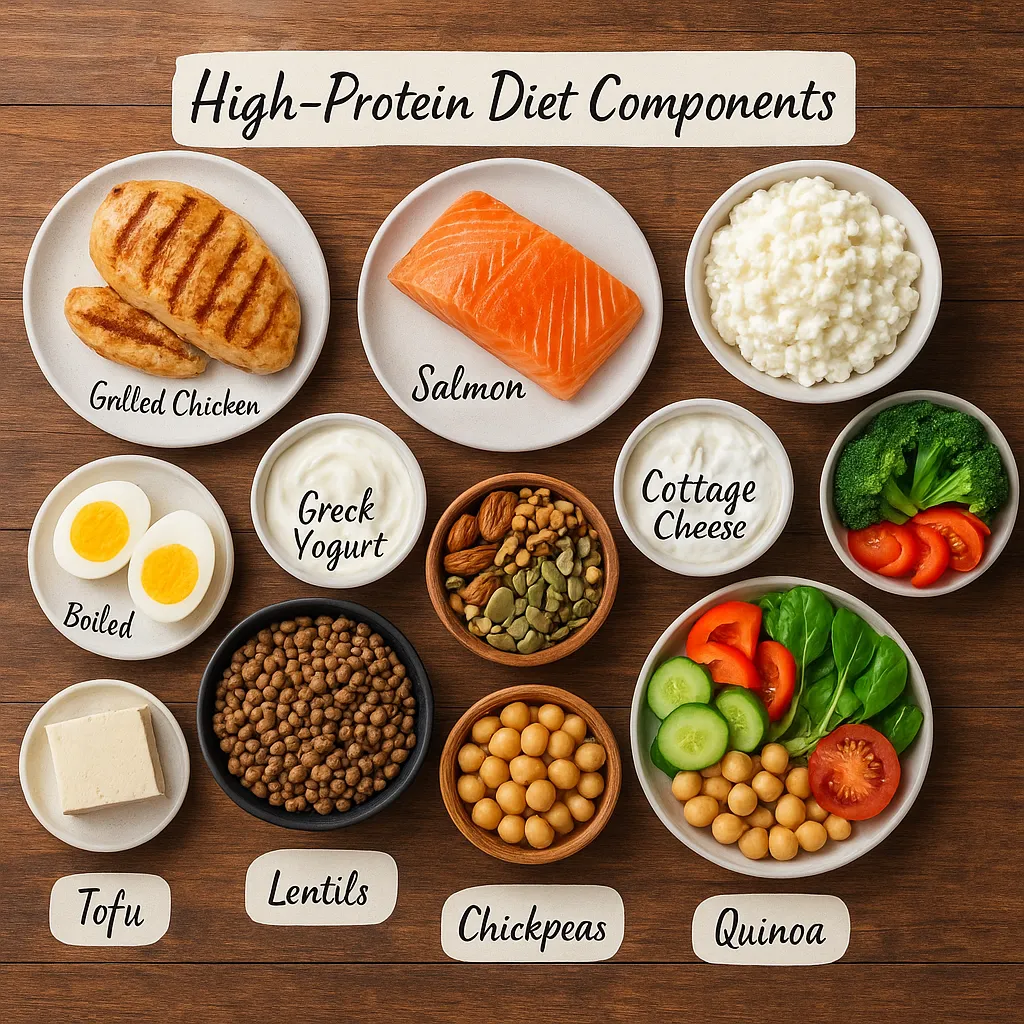
Choosing quality protein sources is essential. These include:
– **Animal-Based Proteins**:
– **Lean meats** (chicken, turkey, beef, pork)
– **Fish and seafood** (salmon, tuna, shrimp, cod)
– **Dairy products** (Greek yogurt, cottage cheese, milk, cheese)
– **Eggs**
– **Plant-Based Proteins**:
– **Legumes** (beans, lentils, chickpeas, peas)
– **Soy products** (tofu, tempeh, edamame)
– **Nuts and seeds** (almonds, chia seeds, pumpkin seeds)
– **Whole grains** (quinoa, buckwheat, amaranth)
2. Supporting Macronutrients
While protein is central, other macronutrients play supporting roles.
| Macronutrient | Role in High-Protein Diet | Typical Sources |
|————–|————————————|—————————————————————————-|
| Carbohydrates| Provide energy, fiber, and vitamins| Vegetables, whole grains, fruits |
| Fats | Help absorb nutrients, hormone function | Avocado, nuts, olive oil, fatty fish |
3. Vegetables & Micronutrients
– **Non-starchy vegetables** (spinach, broccoli, peppers, zucchini) add fiber, vitamins, and minerals, balancing out high-protein meals.
– **Hydration** is also crucial—protein metabolism increases the body’s water requirements.
—
What Types of Foods Should I Eat on a High-Protein Diet?
It’s common to wonder about a day-to-day eating plan. Here’s a breakdown of recommended food categories:
Animal-Based Protein Sources
– Chicken breast (grilled, baked, or poached)
– Salmon, tuna, or white fish
– Low-fat Greek yogurt or cottage cheese
– Eggs (whole or whites)
Plant-Based Protein Sources
– Cooked lentils or chickpeas in salads or stews
– Tofu stir-fries or tempeh sandwiches
– Quinoa as a base for veggie bowls
– Mixed seeds or roasted nuts as snacks
Sample High-Protein Diet Table
| Food Item | Serving Size | Protein (g) per serving |
|——————|————-|————————|
| Chicken breast | 100 g | 31 |
| Salmon | 100 g | 22 |
| Eggs | 2 large | 12 |
| Greek yogurt | 1 cup | 20 |
| Lentils (cooked) | 1 cup | 18 |
| Tofu | 100 g | 8 |
| Quinoa (cooked) | 1 cup | 8 |
—
How Does a High-Protein Diet Work?
Increasing your protein intake supports muscle repair, boosts satiety, and can help manage weight by reducing hunger and promoting a higher metabolic rate. This approach is particularly effective for athletes, those trying to lose fat, and people at risk of muscle loss due to aging (sarcopenia).
—
Related Entities and Concepts
Understanding the broader context of high-protein diets involves recognizing associated nutrients, health considerations, and dietary patterns:
– **Amino acids**: Building blocks of protein, divided into essential and non-essential.
– **Lean proteins vs. fatty proteins**: Choosing lean sources helps manage fat intake.
– **Ketogenic & Paleo diets**: These popular diets also often emphasize higher protein intake.
– **Protein quality & bioavailability**: Animal proteins are typically complete, while some plant proteins may lack certain amino acids.
—
Common Variations of This Question
People may phrase this question in several ways, such as:
– What types of foods are included in a high-protein diet?
– What should you eat on a high-protein diet?
– What are examples of high-protein foods?
– How do I structure a high-protein meal plan?
– Which macronutrients are important in a high-protein diet?
—
What Should I Watch Out For on a High-Protein Diet?
While high-protein diets can be beneficial, it’s important to:
– Ensure adequate fiber by consuming plenty of vegetables and whole grains.
– Balance fat intake by choosing lean protein sources.
– Stay hydrated to assist with protein metabolism.
– Consult a healthcare professional if you have kidney issues or other metabolic conditions.
—
Additional FAQs on High-Protein Diets
1. **How much protein should I consume daily on a high-protein diet?**
Most high-protein diets recommend 1.2–2.0 grams of protein per kilogram of body weight daily, based on goals, activity level, and individual health needs.
2. **Can vegetarians or vegans follow a high-protein diet?**
Yes, by focusing on plant-based options like legumes, soy products (tofu, tempeh), quinoa, nuts, and seeds, vegetarians and vegans can achieve high protein intake.
3. **Is a high-protein diet safe in the long term?**
For most healthy individuals, a high-protein diet is safe. However, those with kidney disease or certain metabolic issues should consult a doctor before increasing protein intake.
4. **Will a high-protein diet help me lose weight?**
High-protein diets can promote weight loss by increasing satiety, reducing appetite, and helping preserve lean muscle mass during calorie restriction.
5. **How do I create balanced meals on a high-protein diet?**
Combine a major protein source (meat, legumes, or dairy) with plenty of vegetables and a small portion of healthy fats or complex carbohydrates for well-rounded nutrition.
6. **Do I need protein supplements on a high-protein diet?**
Supplements like whey or plant-based protein powders can help meet protein goals, especially for athletes or busy individuals, but are not necessary if you get enough from food.
7. **What are the potential risks of eating too much protein?**
Very high protein intake may cause digestive discomfort or strain kidney function in susceptible individuals. Moderation and balance with other nutrients are important.
—
Summary
A high-protein diet revolves around increasing the proportion of protein-rich foods—like lean meats, fish, eggs, dairy, legumes, and select grains—while supporting overall nutrition with vegetables, healthy fats, and complex carbohydrates. Understanding the main components and maintaining balance ensures effective, safe, and sustainable results for various health and fitness goals.
“`