What are the main components of a high-protein diet?
A high-protein diet primarily consists of foods rich in protein such as meats, dairy, eggs, legumes, and certain grains and vegetables. The main components also include balanced amounts of carbohydrates and fats to support overall nutrition and energy needs.
—
What Is a High-Protein Diet? (Definition Box)
A **high-protein diet** is a dietary regimen where a larger percentage of daily calories come from protein-rich foods. Typically, protein makes up 20%–35% of total calorie intake, compared to the average 10%–15% in standard diets.
—
What Foods Make Up a High-Protein Diet?
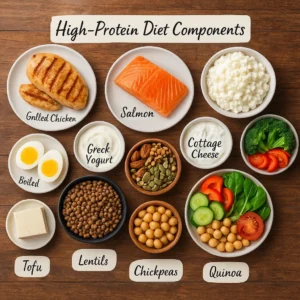
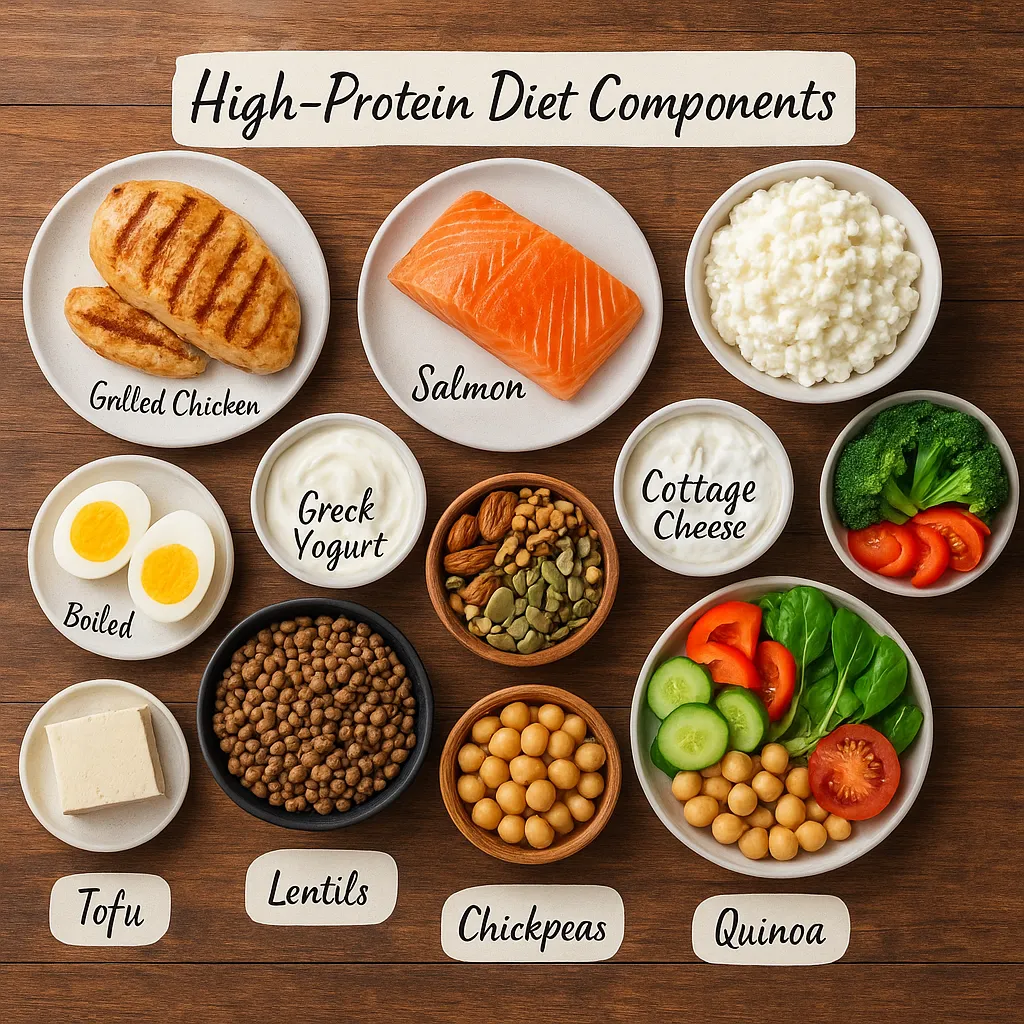
High-protein diets emphasize foods that are naturally dense in protein. Here’s a list of key food groups and examples:
List of Main Protein Sources
– **Lean meats**: Chicken breast, turkey, lean beef, pork loin
– **Fish and seafood**: Salmon, tuna, shrimp, tilapia, sardines
– **Eggs**: Whole eggs and egg whites
– **Dairy**: Greek yogurt, cottage cheese, milk, cheese
– **Legumes**: Lentils, chickpeas, black beans, edamame
– **Nuts and seeds**: Almonds, peanuts, chia seeds, pumpkin seeds
– **Soy products**: Tofu, tempeh, soy milk
– **Protein-rich grains**: Quinoa, amaranth, buckwheat
—
What Are the Primary Components of a High-Protein Diet?
| Component | Description & Examples |
|—————————|—————————————————————|
| Protein Sources | Lean meats, fish, eggs, dairy, legumes, soy products, nuts |
| Carbohydrate Sources | Whole grains, fruits, vegetables |
| Healthy Fats | Avocado, olive oil, nuts, seeds, fatty fish |
| Fiber | Vegetables, whole grains, legumes |
| Micronutrients | Vitamins (B12, D), minerals (iron, zinc, magnesium) |
| Hydration | Water, herbal teas |
—
Why Follow a High-Protein Diet?
What Are the Health Benefits of High Protein Intake?
People choose high-protein diets for several reasons:
– **Muscle building and maintenance**: Protein supports muscle repair and growth, crucial for athletes and active individuals.
– **Weight management**: Protein increases satiety and can help reduce overall calorie intake.
– **Metabolic health**: Higher protein intake supports better blood sugar control and can improve metabolic rate.
—
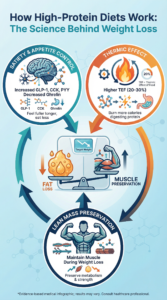
How Does a High-Protein Diet Work?
A high-protein diet works by increasing protein consumption while balancing carbohydrates and fats according to individual needs. This shift in macronutrient ratios can have various effects:
– **Satiety and appetite control**: Protein reduces hunger hormones and increases feelings of fullness.
– **Muscle protection during weight loss**: Maintains lean muscle mass when losing fat.
– **Thermic effect of food**: The body burns more calories digesting protein than carbs or fat.
—
What Nutrients Are Most Important in a High-Protein Diet?
Protein (The Core Entity)
– **Complete proteins vs. incomplete proteins**: Animal sources (meat, eggs, dairy) are complete proteins; most plant sources are incomplete, but combining sources (like rice and beans) can fulfill amino acid needs.
– **Amino acids**: Essential for muscle, tissue, and enzyme production.
Carbohydrates
– Choose complex carbs: whole grains, fruits, and vegetables.
– Supply energy for workouts, brain function, and daily activities.
Fats
– Focus on unsaturated fats: avocados, olive oil, fatty fish.
– Fats support hormone production and nutrient absorption.
Fiber and Micronutrients
– Fiber: Important for digestive health; found in beans, veggies, and whole grains.
– Vitamin B12, zinc, and iron: Often found in animal protein, can be supplemented or obtained from fortified foods for plant-based diets.
—
How Do You Build a Balanced High-Protein Meal?
Example: Structuring a High-Protein Plate
1. **Choose a protein base**: Grilled chicken (30g protein)
2. **Add complex carbs**: Quinoa or brown rice (5–8g protein)
3. **Include vegetables**: Broccoli, spinach, peppers (2–5g protein)
4. **Add healthy fat**: Avocado or olive oil dressing
5. **Optional**: Sprinkle seeds or nuts on salad
—
Do High-Protein Diets Work for Vegetarians or Vegans?
Absolutely! Plant-based eaters can focus on:
– **Beans, lentils, tofu, tempeh, quinoa, seitan, edamame, nuts, and seeds**
– Diverse meal planning ensures adequate intake of all essential amino acids
—
What Should Be Avoided on a High-Protein Diet?
Limit These For Optimal Results
– Highly processed meats (bacon, sausage, deli meats) due to added sodium and preservatives
– Sugary snacks and sodas
– Refined grains (white bread, pastries)
– Trans fats and excessive saturated fats
—
What Are Some Common Questions about High-Protein Diets?
FAQ
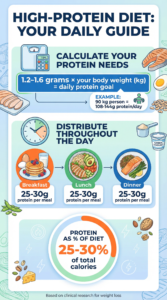
1. How much protein should I eat daily on a high-protein diet?
Most high-protein diets recommend 1.2–2.0 grams of protein per kilogram of body weight, depending on activity level and goals.
2. Can a high-protein diet help with weight loss?
Yes, a high-protein diet can enhance satiety, reduce appetite, and help preserve lean muscle mass during weight loss.
3. Are there risks to a high-protein diet?
For most healthy adults, high-protein diets are safe. However, those with kidney disease should consult a doctor before increasing protein intake.
4. What are the best plant-based protein sources?
Top choices include lentils, chickpeas, tofu, tempeh, edamame, quinoa, hemp seeds, and legumes.
5. Can I follow a high-protein diet if I’m lactose intolerant?
Yes, opt for lactose-free dairy, plant-based proteins, and fortified non-dairy milks.
6. Is it necessary to use protein supplements?
Whole foods are preferred, but supplements like protein powder can help meet protein needs, especially for athletes or vegetarians.
7. Should I balance protein with other nutrients?
Absolutely. A well-designed high-protein diet still includes healthy carbohydrates, fats, vitamins, minerals, and fiber.
—
Summary: Key Takeaways on High-Protein Diet Components
– The main components of a high-protein diet are protein-rich foods; balanced carbs, healthy fats, fiber, and micronutrients.
– Both animal-based and plant-based diets can be high in protein with careful planning.
– Benefits include muscle support, appetite control, and metabolic improvements.
– Whole, minimally processed foods should be prioritized for best results.
—
**If you’re considering a high-protein diet, consult with a registered dietitian or nutritionist to tailor it to your health goals and individual needs.**
“`