What are the Main Components of a High-Protein Diet?
A high-protein diet primarily consists of foods that are rich in protein, such as lean meats, fish, dairy, eggs, legumes, and some plant-based foods. The main components also include an appropriate balance of carbohydrates and healthy fats to ensure nutritional adequacy and support overall health.
—
> **Definition Box**
>
> **High-Protein Diet:**
> A dietary approach focused on consuming a higher-than-average percentage of daily calories from protein sources, typically to support muscle growth, weight loss, or overall health.
—
What Makes Up a High-Protein Diet?
If you’re wondering *what are the essential elements of a high-protein diet*, the answer centers on selecting the right food sources, understanding how much protein you need, and maintaining a balanced intake of other nutrients.
Main Components List
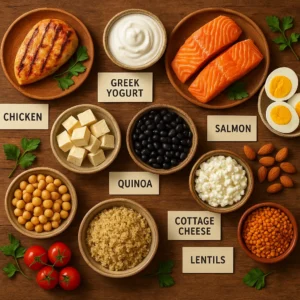
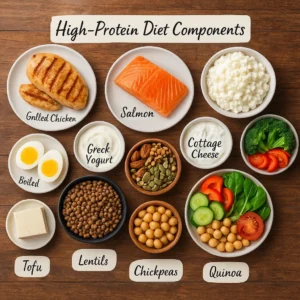
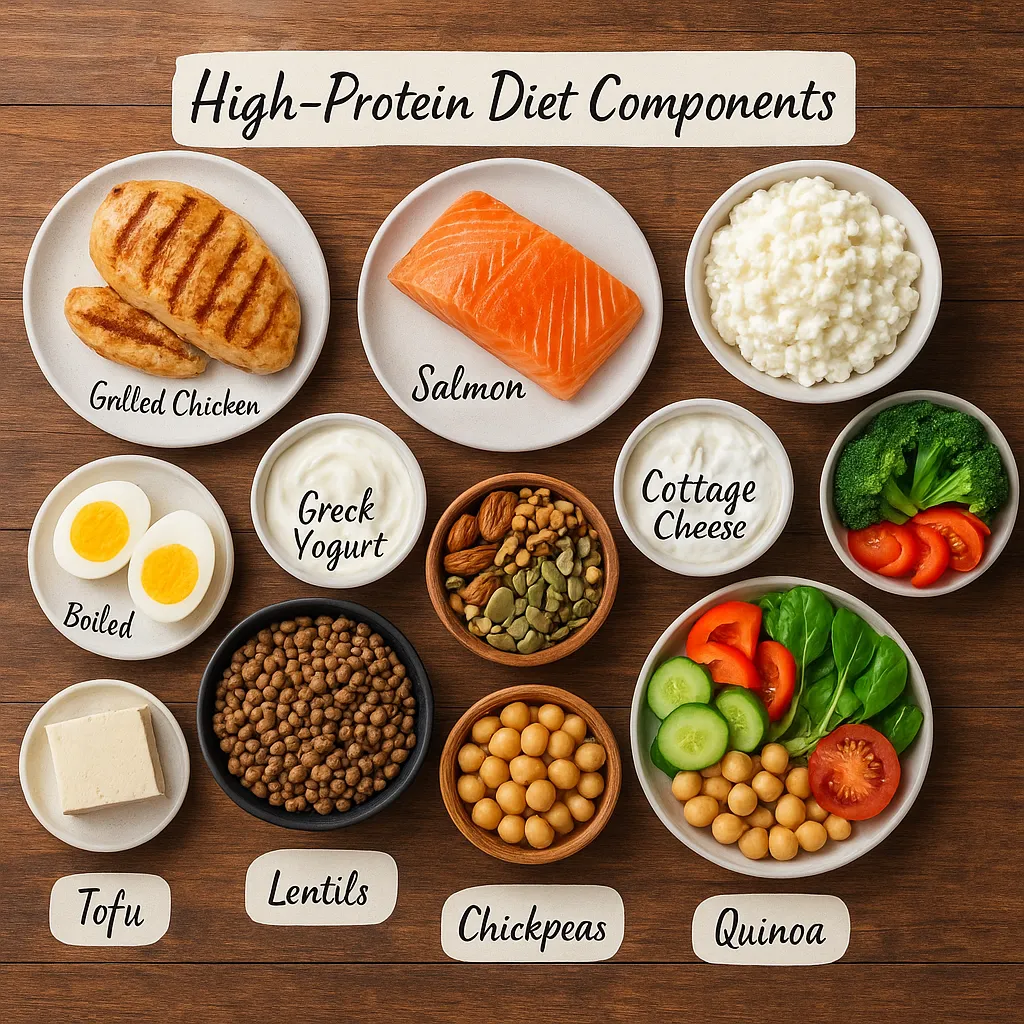
– **Animal-Based Proteins**: Lean meats, poultry, fish, seafood, dairy, eggs
– **Plant-Based Proteins**: Legumes, beans, lentils, tofu, tempeh, quinoa, nuts, seeds
– **Complementary Nutrients**: Healthy fats, complex carbohydrates, fiber, vitamins, and minerals
– **Hydration**: Adequate water intake to support kidney function
—
What Counts as High-Protein Foods?
High-protein foods are those that provide a significant amount of protein per serving relative to carbohydrates and fats. Let’s look at common high-protein food sources and their protein content.
Table: Typical Protein Content in Popular Foods
| Food | Serving Size | Protein (g) |
|——————–|:————:|:———-:|
| Chicken Breast | 100g | 30 |
| Greek Yogurt | 170g | 15 |
| Eggs | 2 large | 13 |
| Lentils (cooked) | 1 cup | 18 |
| Tofu | 100g | 8 |
| Salmon (cooked) | 100g | 20 |
| Almonds | 28g (1 oz) | 6 |
| Cottage Cheese | 100g | 11 |
—
How Much Protein Is Considered High?
The exact amount of protein varies depending on age, activity level, and health goals. However, most high-protein diets recommend **at least 25-35% of daily calories from protein**, or about **1.2 to 2.0 grams of protein per kilogram of body weight**.
—
Which Nutrients Accompany Protein in a Healthy Diet?
When building a high-protein diet, it’s essential to think beyond protein. Let’s explore key supporting nutrients:
– **Healthy Fats**: Avocados, olive oil, fatty fish support heart and brain health.
– **Fiber**: Found in vegetables, legumes, whole grains—important for digestion.
– **Micronutrients**: Calcium, iron, and B vitamins found in animal and plant sources.
– **Complex Carbohydrates**: Whole grains and starchy vegetables for energy.
—
What Are the Benefits of a High-Protein Diet?
People follow high-protein diets for several reasons, including:
– **Muscle Growth & Repair**: Protein supports muscle synthesis and recovery.
– **Weight Management**: Protein increases satiety and thermogenesis, helping with fat loss.
– **Metabolism**: Higher protein intake helps maintain lean mass during calorie deficits.
—
How Does a High-Protein Diet Differ from Other Diet Types?
Compared to low-protein or high-carb diets, high-protein diets shift the calorie composition towards protein while still including some carbohydrates and healthy fats.
Comparison Table: Diet Types
| Diet Type | Protein (%) | Carb (%) | Fat (%) |
|—————-|:———–:|:———–:|:———–:|
| High-Protein | 25-35 | 30-45 | 20-35 |
| Low-Carb | 15-25 | 10-30 | 45-65 |
| Traditional | 10-15 | 55-60 | 25-30 |
—
What Foods Should Be Limited on a High-Protein Diet?
Some foods are less compatible with high-protein diets, including:
– **Refined Carbohydrates**: White bread, pastries, sugar-sweetened beverages
– **Highly Processed Meats**: Sausages, hot dogs, bacon (due to high sodium and additives)
– **Excessively Fatty Foods**: Deep-fried items, high-saturated fat foods
—
Can a High-Protein Diet Be Plant-Based?
Absolutely! Plant-based high-protein diets focus on:
– Legumes: Beans, lentils, chickpeas
– Soy Products: Tofu, tempeh, edamame
– Whole Grains: Quinoa, farro, buckwheat
– Nuts & Seeds: Almonds, chia, flaxseed
—
Related Entities and Concepts
– **Macronutrients**: Protein, carbohydrates, fats
– **Amino Acids**: Essential building blocks of protein
– **Muscle Protein Synthesis**: The process by which muscle mass is built
– **Caloric Balance**: The relationship between calories consumed and expended
—
What Is a Typical Day on a High-Protein Diet?
**Sample Day:**
– **Breakfast**: Scrambled eggs with spinach and feta
– **Snack**: Greek yogurt with almonds
– **Lunch**: Grilled chicken breast with quinoa and roasted vegetables
– **Snack**: Cottage cheese with berries
– **Dinner**: Baked salmon with steamed broccoli and brown rice
—
Question Variations
– What foods are included in a high-protein diet?
– How do you build a balanced high-protein meal plan?
– What are the best protein sources for a high-protein diet?
– Can vegetarians follow a high-protein diet?
– What are key nutrients needed alongside protein?
—
Frequently Asked Questions About High-Protein Diets
1. How much protein should I eat per day on a high-protein diet?
Most recommendations suggest **1.2-2.0 grams of protein per kilogram of body weight per day**, depending on activity level and goals.
2. Can you get enough protein from plant sources?
Yes, with careful planning! Combine legumes, soy, whole grains, nuts, and seeds to reach protein goals.
3. Is a high-protein diet safe for everyone?
Generally safe for healthy adults, but people with kidney issues or certain medical conditions should consult a healthcare provider.
4. What are the risks of a high-protein diet?
Potential risks include kidney strain (in those with pre-existing disease), dehydration, or nutrient imbalance if not carefully structured.
5. Do high-protein diets help with weight loss?
Yes. Protein can increase fullness and metabolism, helping with appetite control and fat loss.
6. What are the best sources of lean protein?
Chicken breast, turkey, white fish, tofu, Greek yogurt, beans, and lentils are excellent lean protein sources.
7. How can I tell if I’m eating enough protein?
Track your food intake and monitor your body composition, energy levels, and recovery after exercise for feedback.
—
Key Takeaways
– **A high-protein diet centers on quality protein sources**, balanced with healthy fats and carbohydrates.
– Both animal and plant-based foods can provide high levels of protein.
– Supportive nutrients and hydration are critical for maximizing the benefits of a high-protein diet.
– High-protein diets may aid in muscle gain, metabolism, and satiety.
– Consult a medical professional before making significant dietary changes, especially if you have health concerns.
—
> **Summary Box**
>
> **Main Components of a High-Protein Diet:**
> – Animal-based and plant-based protein sources
> – Balanced intake of carbohydrates, fats, and fiber
> – Supportive micronutrients
> – Adequate water intake
“`