What Are the Most Effective Strategies for Achieving Sustainable Weight Loss?
Short Answer: The most effective strategies for sustainable weight loss involve adopting healthy eating habits, increasing physical activity, and making gradual lifestyle changes that can be maintained long-term. These strategies focus on behavior modification, nutrient-dense foods, regular exercise, and supportive environments rather than restrictive dieting or quick fixes.
—
What Does “Sustainable Weight Loss” Mean?
Definition: Sustainable weight loss refers to losing weight at a gradual, steady rate and maintaining that weight loss for an extended period, typically six months or longer, by adopting healthy behaviors that can be continued for life.
Short-term weight loss is often achieved through rapid diets, but these results commonly reverse once old habits return.
Sustainable weight loss focuses on permanent behavior and mindset changes.
—
What Are the Core Principles of Effective, Sustainable Weight Loss?
Behavior change over quick fixes
Balanced, whole-food nutrition
Consistent physical activity
Setting realistic goals
Building a supportive environment
—
How Can You Achieve and Maintain Weight Loss Long-Term?
Let’s break down the most effective strategies for sustainable weight loss:
1. Build Balanced, Nutrient-Dense Eating Habits
Focus on whole foods: Eat plenty of vegetables, fruits, whole grains, lean proteins, and healthy fats.
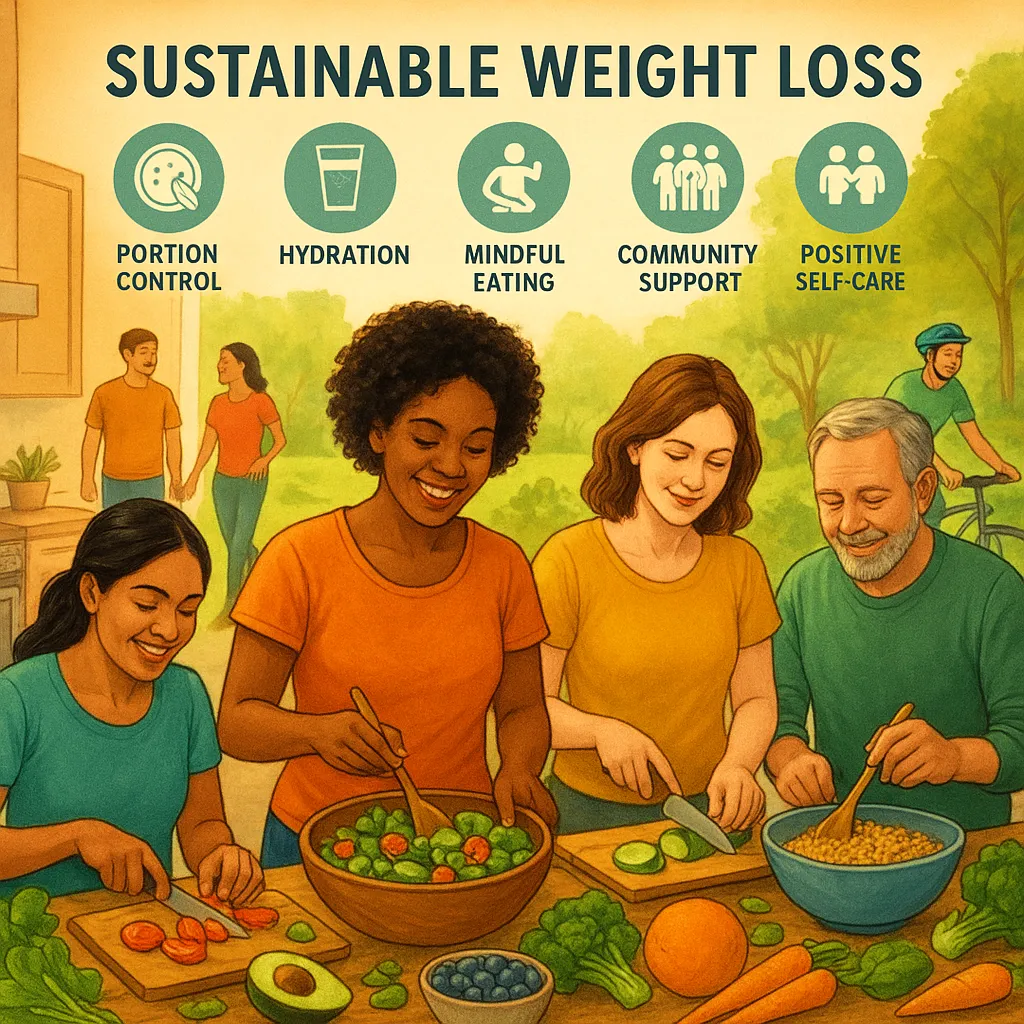
Practice portion control: Monitor serving sizes and avoid overeating, even with healthy foods.
Limit processed foods: Reduce intake of added sugars, refined grains, and high-calorie, low-nutrition foods.
Mindful eating: Eat slowly, avoid distractions, and listen to hunger and fullness cues.
2. Increase Physical Activity
Aim for at least 150 minutes of moderate-intensity exercise per week (e.g., brisk walking, cycling).
Incorporate strength training at least 2 days a week to preserve muscle mass.
Find enjoyable activities to stay consistent and avoid burn-out.
3. Set Realistic, Attainable Goals
Start with small, incremental changes for lasting impact.
Target 0.5-2 pounds (0.2-0.9 kg) of weight loss per week, which is safe and more maintainable.
Use non-scale victories—like improved energy and mood—as motivators.
4. Develop Healthy Habits and Routines
Create regular meal times and plan meals in advance.
Prioritize sleep (7-9 hours per night), as lack of sleep is linked to weight gain.
Manage stress with techniques like mindfulness, meditation, or yoga.
5. Build a Supportive Environment
Seek support from friends, family, or weight loss groups.
Remove temptations (unhealthy snacks) from your home or workspace.
Celebrate progress, not just the scale.
—
What Are the Most Common Weight Loss Strategies That Work?
Strategy
How It Helps
Calorie Awareness
Helps maintain a healthy energy balance by monitoring food intake
Meal Planning
Supports healthier choices and reduces impulsive eating
Consistent Exercise
Boosts calorie expenditure & preserves muscle mass
Mindful Eating
Reduces overeating, recognizes true hunger signals
Social Support
Increases motivation and accountability
—
Are Fad Diets or Quick Fixes Effective for Sustainability?
Popular quick-fix diets—like juice cleanses, drastic calorie restrictions, or eliminating entire food groups—usually result in short-term weight loss followed by weight regain. Sustainable strategies, recommended by entities like the World Health Organization (WHO) and Centers for Disease Control and Prevention (CDC), emphasize gradual change and enjoyment of food and activity for lifelong results.
—
How Can Someone Stay Motivated During the Weight Loss Journey?
Track progress using tools like journals, apps, or photos.
Set short-term achievable goals.
Reward yourself for healthy behaviors with non-food treats (like new workout gear or a massage).
Join a community or support group for encouragement.
—
What Are Related Concepts and Entities in Sustainable Weight Loss?
Calorie deficit: Consuming fewer calories than your body burns.
Metabolism: The process by which your body converts food into energy.
Macronutrients: Proteins, carbs, and fats—building blocks of nutrition.
Hypothalamus: Brain region involved in hunger and satiety regulation.
Gut microbiome: The collection of bacteria in your digestive tract affecting weight.
Behavioral therapy: Mindset and habit change interventions for weight management.
—
What Are the Top Myths About Sustainable Weight Loss?
Myth: “Carbs cause weight gain.”
Truth: Excess calories, not specific food groups, cause weight gain.
Myth: “All calories are the same.”
Truth: Quality of calories matters for health and satiety.
Myth: “Supplements and fat-burning pills are necessary.”
Truth: Most lack evidence and can pose health risks.
Myth: “Faster weight loss is better.”
Truth: Gradual loss is more likely to last.
—
FAQ: Frequently Asked Questions About Sustainable Weight Loss
1. How quickly should I aim to lose weight for sustainability?
Aim for 0.5-2 pounds (0.2-0.9 kg) per week, as recommended by major health organizations. Faster rates can lead to muscle loss and are harder to maintain in the long run.
2. Can I achieve sustainable weight loss without exercise?
While weight loss is possible through dietary changes alone, adding regular physical activity improves success rates, preserves muscle, and enhances overall well-being.
3. What foods should I avoid for long-term weight loss?
Limit processed foods high in added sugars, trans fats, and refined grains. Instead, emphasize whole foods like vegetables, fruits, whole grains, lean proteins, and healthy fats.
4. How do behavioral changes support sustainable weight loss?
Developing healthier behaviors—such as mindful eating, stress management, and creating routines—makes it easier to maintain weight loss and avoid regaining weight.
5. Why do most diets fail in the long term?
Restrictive or unrealistic diets are hard to stick to and often ignore the importance of lasting lifestyle changes. Sustainable weight loss focuses on adaptable, enjoyable habits.
6. Is calorie counting necessary for sustainable weight loss?
Calorie awareness can help, but it’s not always necessary. Focusing on hunger cues, portion control, and nutrient-dense food often leads to successful weight management.
7. How important is sleep for weight loss?
Sleep is crucial—insufficient rest disrupts hormones linked to hunger and satiety, increasing the risk of overeating and weight gain.
—
Summary: How to Achieve Lasting Weight Loss Results
Embrace gradual, achievable changes in eating and activity habits.
Prioritize whole, nutrient-rich foods and regular physical movement.
Practice mindful eating and keep a supportive environment.
Remember: true sustainability means adopting habits you can enjoy for life.
“`