What are the Main Components of a High-Protein Diet?
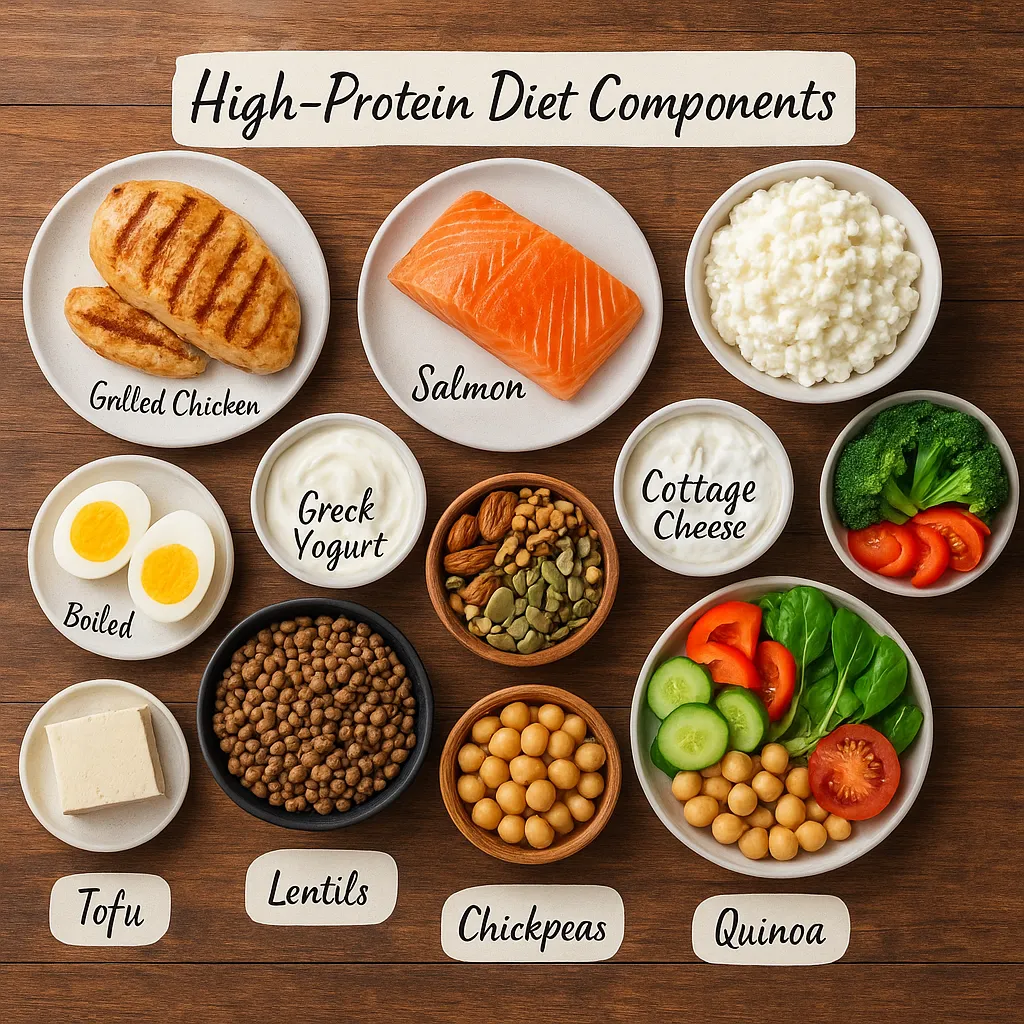
A high-protein diet focuses on increasing the intake of protein-rich foods, typically to support muscle growth, weight management, and overall health. The main components of a high-protein diet include lean meats, poultry, seafood, eggs, dairy products, legumes, nuts, and certain whole grains and vegetables.
—
What Foods Make Up a High-Protein Diet?
A high-protein diet centers on foods naturally rich in protein and those that are low in unhealthy fats and added sugars. Here’s a breakdown of the most common sources:
Animal-Based Protein Sources
– **Lean meats**: Chicken breast, turkey, lean beef, pork tenderloin
– **Seafood**: Salmon, tuna, haddock, shrimp, tilapia
– **Eggs**: Whole eggs and egg whites
– **Dairy products**: Greek yogurt, cottage cheese, low-fat milk, cheese
Plant-Based Protein Sources
– **Legumes**: Lentils, black beans, chickpeas, peas
– **Nuts and seeds**: Almonds, peanuts, chia seeds, walnuts, sunflower seeds
– **Soy products**: Tofu, tempeh, edamame
– **Whole grains**: Quinoa, buckwheat, amaranth
—
Definition Box: What is a High-Protein Diet?
**High-Protein Diet, Defined:**
A high-protein diet is a meal pattern that increases protein intake above the standard dietary recommendation, often ranging from 20% to 35% of total daily calories from protein. It is popular among those seeking to build muscle, manage weight, or support certain health conditions.
—
How Does a High-Protein Diet Work?
High-protein diets work by emphasizing protein over other macronutrients (carbohydrates and fats). Protein is essential for building and repairing tissues, supporting immune function, and serving as a building block for hormones and enzymes. By consuming more protein, you may feel fuller for longer, maintain lean muscle, and support metabolism.
Table: Common Foods and Their Protein Content
| Food Item | Serving Size | Protein (g) |
|———————|————-|————–|
| Chicken Breast | 100g | 31 |
| Salmon | 100g | 25 |
| Eggs | 1 large | 6 |
| Greek Yogurt | 170g | 15 |
| Lentils | 1 cup cooked| 18 |
| Tofu | 100g | 8 |
| Almonds | 28g (1 oz) | 6 |
—
What Are the Key Entities in a High-Protein Diet?
Understanding the main entities helps clarify the diet structure:
– **Macronutrients**: Protein, carbohydrate, and fat
– **Amino acids**: Essential and non-essential building blocks of proteins
– **Protein quality**: Measured by amino acid profile and digestibility
– **Lean vs. fatty protein sources**: Preference for lower-fat, higher-nutrient foods
—
What Are the Major Variations of High-Protein Diets?
People might ask about the types or variations available. Some well-known high-protein diet plans are:
– **Atkins Diet**
– **Paleo Diet**
– **Dukan Diet**
– **Ketogenic Diet (Keto)** (usually high in fat, but many versions are also high-protein)
– **Zone Diet**
Each emphasizes protein-rich foods, often with restrictions on carbohydrates or fats.
—
Why Are Protein Sources Important?
Different protein sources offer unique benefits:
– **Animal proteins** are “complete,” providing all essential amino acids. They also contain nutrients like vitamin B12, iron, and omega-3 fatty acids (especially fish).
– **Plant proteins** may lack one or more essential amino acids, but combining sources (like beans and rice) can create a complete protein profile. They’re also rich in fiber, antioxidants, and micronutrients.
—
How Much Protein Should You Eat on a High-Protein Diet?
Recommended Intake
– **General population:** 0.8 grams per kilogram of body weight per day (*minimum*)
– **High-protein diet:** 1.2-2.0 grams per kilogram of body weight per day, depending on activity level, age, and health goals
– **Athletes/bodybuilders:** May go higher, under professional guidance
Considerations
– Overconsumption of protein is usually not a concern for healthy adults but may not be suitable for individuals with kidney issues or certain metabolic disorders.
—
Which Vegetables Are High in Protein?
While vegetables are not the primary protein source, certain ones do contribute:
– **Edamame**
– **Spinach**
– **Broccoli**
– **Brussels sprouts**
– **Asparagus**
These contain more protein per calorie than most other vegetables and add valuable vitamins and minerals.
—
What Role Do Protein Supplements Play?
Protein supplements can help meet higher daily protein needs, especially for athletes or those with increased requirements.
Common Protein Supplements:
– **Whey protein:** Quickly absorbed, complete protein, rich in BCAAs (branched-chain amino acids)
– **Casein protein:** Slow-digesting, ideal for sustained absorption
– **Plant-based protein powders:** Pea, hemp, brown rice, or blends
Supplements are best used to fill gaps rather than replace whole food sources.
—
How Does a High-Protein Diet Impact Health?
A well-planned high-protein diet can:
– Support muscle growth and repair
– Aid in weight management and fat loss
– Promote satiety and reduce hunger
– Help maintain metabolic health
However, balance with other nutrients (fiber, healthy fats, vitamins) is critical for overall well-being.
—
Question Variations Answered
People often ask about high-protein diets in different ways. Here are several common question variations addressed:
– **What foods should I eat on a high-protein diet?**
Prioritize lean meats, fish, eggs, dairy, legumes, nuts, and certain grains.
– **What does a high-protein diet consist of?**
It consists of meals where protein is the dominant nutrient, supported by vegetables, healthy fats, and moderate carbohydrates.
– **Which protein is best for high-protein diets?**
Both animal and plant proteins are effective; variety ensures a balanced nutrient intake.
– **What is considered high-protein?**
Generally, 20-35% of total daily calories from protein, or 1.2-2.0 grams per kilogram of body weight.
—
FAQ: High-Protein Diets
1. What are the benefits of a high-protein diet?
A high-protein diet supports muscle building, weight loss, improved metabolism, and helps you feel fuller for longer.
2. Can you follow a high-protein diet as a vegetarian or vegan?
Yes, by focusing on plant-based sources like legumes, tofu, tempeh, seitan, nuts, seeds, and high-protein grains such as quinoa.
3. Is it safe to eat a high-protein diet long-term?
For most healthy adults, it’s safe when balanced with other nutrients and adequate hydration. Those with kidney disease or metabolic issues should consult a doctor.
4. How can I get enough protein without red meat?
Opt for poultry, fish, eggs, dairy, plant proteins (lentils, beans, tofu), and protein-rich whole grains.
5. Do I need protein supplements?
Not necessarily; whole foods are preferred. Supplements can help fill dietary gaps, especially in athletes or people with higher needs.
6. How much protein is too much?
Consuming more than 2.0-2.5 grams per kilogram of body weight per day is rarely necessary and may stress your kidneys if you have pre-existing health conditions.
7. What are signs of not getting enough protein?
Common signs include muscle loss, weakened immunity, fatigue, hair loss, and slow recovery from injuries.
—
Summary Table: Main Components of a High-Protein Diet
| Component | Examples | Nutritional Benefits |
|———————-|————————————————–|——————————-|
| Lean Meats & Poultry | Chicken breast, turkey, lean beef | Complete protein, iron, B12 |
| Seafood | Salmon, tuna, shrimp, tilapia | Omega-3s, vitamin D, protein |
| Dairy & Eggs | Greek yogurt, cottage cheese, eggs | Calcium, complete protein |
| Legumes | Lentils, black beans, chickpeas | Fiber, plant protein, iron |
| Nuts & Seeds | Almonds, chia seeds, sunflower seeds | Healthy fats, protein, fiber |
| Whole Grains | Quinoa, amaranth, buckwheat | Plant protein, complex carbs |
| Soy Products | Tofu, tempeh, edamame | Complete plant-based protein |
—
Final Thoughts
A high-protein diet prioritizes a variety of protein-rich foods from both animal and plant sources. Balance, variety, and attention to overall nutrition are essential for long-term health and optimal results. Always tailor protein intake to your individual needs, lifestyle, and health goals.
—
“`